Friday, January 4, 2019

More than 100 million Alexa devices have been sold

Over 100 million devices with Amazon’s Alexa assistant pre-installed have been sold, the company said Friday.

The new metric, revealed by Amazon devices SVP Dave Limp in an interview with The Verge, showcases just how quickly the company has crammed the voice assistant into disparate hardware devices and shoved them out the door. The company did not distinguish further how many of these items were Amazon-built Echo devices and how many were designed by third-party OEMs.

The company’s vision of encapsulating Alexa in anything with a circuit board was evident at its September hardware event where it announced more than a dozen new devices, including a clock, a microwave and some redesigns of existing products like the Echo. In the interview, Limp shares that there are more than 150 Alexa-integrated hardware devices on the market, most of which shipped in 2018.

When it comes to the 100 million number, that metric seems impressive for a platform that still seems to have so much room left to mature, but it also shows how aggressive the company has had to be to keep up with Google Assistant and Siri which obviously have significant reach on Android and iOS respectively. Alexa seems to occupy a more exclusive smart home presence than Google, which has managed to ship quite a few of its Google Home devices, especially the Google Home Mini.

Amazon’s low-cost Echo Dot similarly seems to be capturing the bulk of attention. The device was updated in September with a new design and a louder speaker. The company is also seeing success with hardware it hasn’t released yet, the company revealed that they’ve had more than 1 million people sign-up for an invite to buy an Alexa Auto device ahead of its launch.


Source: TechCrunch http://j.mp/2Qn3eMb

In Price and Value, Chinese Phone Makers Outpace Apple in Much of the World

The tech giant’s recent warning about disappointing iPhone sales in China obscured the fact that it is also losing out to Chinese brands in places like France, Germany, India and Southeast Asia.

Source: NYT > Technology http://j.mp/2F7g681

TikTok’s quietly launched ‘Lite’ app has reached over 12 million downloads since August

Short-form video app TikTok has been growing in popularity across international markets, including in the U.S. where a merger with Musical.ly has seen the app topping the App Store charts. Facebook and Snapchat have been hastily trying to copy TikTok’s features as a result. A part of TikTok’s ambitious global expansion plan has been its more recent targeting of emerging markets – like India and Indonesia – where the company’s quietly launched “TikTok Lite” app has been gaining ground in the latter half of 2018.

TikTok hasn’t yet made much fuss over its Lite version, which actually consists of two separate apps.

The first was launched on August 6, 2018 in Thailand, but is now available across other primarily Asian markets, including Indonesia where it’s most popular, as well as Vietnam, Malaysia, and the Philippines.

This version of TikTok Lite has grown to 5 million installs since its August debut. (It’s actually written with a lowercase “l” in “Lite” in the Play store, which is how you can tell the difference between this and the other app.)

This version was also briefly live in India, Brazil, and Russia, but now these countries are served by a separate Lite app (written as “Lite” with an uppercase “L”), which launched on November 1, 2018.

This second version of TikTok Lite has now become the larger of the two, thanks to India. It has around 7.1 million total downloads, according to Sensor Tower data.

It has also now been installed across 15 additional non-Asian countries, including Egypt, Brazil, Algeria, Tunisia, Russia, Ecuador, South Africa, Dominican Republic, Guatemala, Kenya, Costa Rica, El Salvador, Nigeria, Angola, and Ghana.

Combined, the two TikTok Lite apps have gained over 12 million downloads in around six months’ time, TechCrunch confirmed with Sensor Tower.

However, TikTok Lite is not being heavily promoted at this time – especially when compared with the outsize marketing that TikTok’s flagship app has been seeing as of late.

This advertising is courtesy of TikTok’s Chinese parent company, ByteDance, which has had an infusion of billions in outside capital recently. The company is valued at $78 billion, as of October.

And it’s spending, apparently:

E.g.:

Sensor Tower found that more than half of TikTok Lite’s downloads came over the past month, following TikTok Lite’s return to India. Combined, the two Lite apps’ downloads reached around 6.7 million in December, which was a 158 percent increase over November’s 2.6 million installs, it said.

Despite TikTok Lite’s growth, 12 million+ downloads is only a drop in the bucket when it comes to TikTok’s larger user base. This represents only 4.5 percent of TikTok’s downloads on Google Play since August 2018, and only about 3.6 percent of all TikTok downloads since then across both the iOS and Google Play app stores combined.

To date, TikTok’s main app has been downloaded over 887 million times on Google Play. That doesn’t count the downloads from the Chinese version called Douyin, which is found on third-party Android app stores. That means TikTok’s true install base is even bigger.

ByteDance itself had publicly said last July the TikTok user base had grown to 500 million+ monthly active users – a way of counting who’s regularly using the app, instead of just installing it on their phone.
Given that Facebook Lite grew to 200 million users in under two years‘ time, it seems like a “Lite” version of TikTok, now one of the world’s biggest apps, could be doing a bit better than 12 million installs over a six month period.

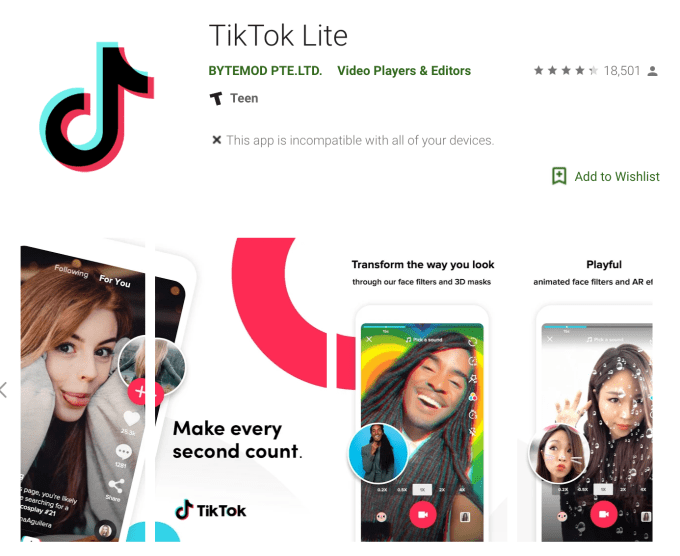
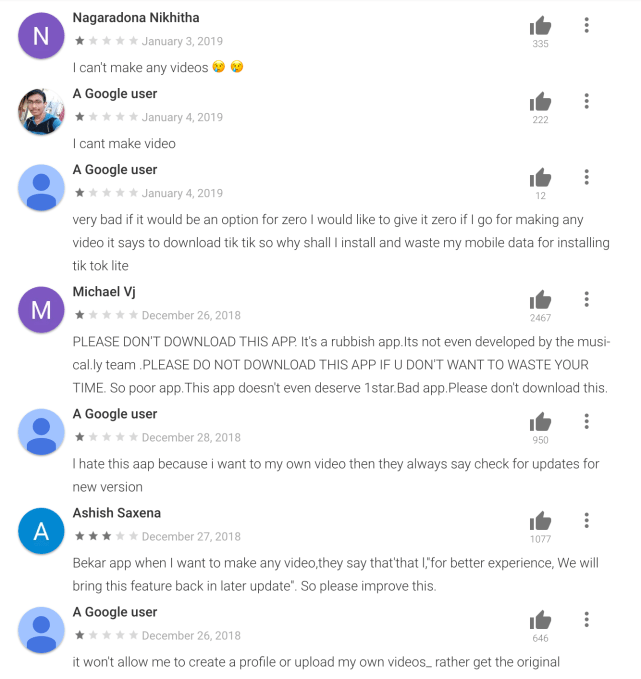
The problem seems to stem from a variety of factors, including how TikTok Lite is marketed in the Play Store. The app uses screenshots and a description that make it seem like it’s just another version of TikTok. But according to user reviews, people were disappointed to find it’s a consumption-only app. Many have left reviews complaining about how they can’t make videos. They call it “fake” and “bad” as a result.

TikTok would do better to clarify how its Lite version is different, to eliminate this confusion.
It’s common for major tech companies to offer a “lighter” version of their app for emerging markets where low bandwidth is a concern. These apps tend to be smaller in size, more performant, and sometimes either have reduced capabilities or special features aimed at low-bandwidth users.

Google, for example, has a suite of light apps – the “Go” edition apps – like Gmail Go, YouTube Go, Files Go, Google Go, Google Maps Go, and Google Assistant Go. Uber now offers Uber Lite. Facebook operates apps like Facebook Lite, Messenger Lite, and Instagram Lite – the latter which launched just ahead of TikTok Lite, in fact.

Like most “Lite” apps, TikTok Lite clocks in at a smaller size – it’s only 10MB to 11MB (depending on the version) versus the much larger 71MB of TikTok’s main app.

A rep for TikTok confirmed the company is now offering a Lite version in some markets so users can choose a smaller app if they have concerns around data or the storage space on their phone. No other information about the Lite versions or strategy was provided.

So far, ByteDance’s efforts around TikTok Lite seem more experimental, given it hasn’t put up a proper description on Google Play; runs two separate Lite versions; and had offered the app in some markets briefly, pulled out, then returned with another version. It will be interesting to see what TikTok Lite becomes when it gets the sort of attention that the main TikTok app is receiving today.


Source: TechCrunch http://j.mp/2AFuDnN

Huawei reportedly punishes staff for New Year’s Eve tweet sent from an iPhone

As predicted, Twitter’s subtle new feature showing which clients tweets are sent from is already embarrassing brands.

Following on from a Korean boyband sponsored by LG and Apple’s own Music staff, Huawei is the latest to be embarrassed after it sent a New Year’s Eve message using an iPhone.

A since-deleted message included the embarrassing tell-tale detail: “Twitter for iPhone” indicating that the Huawei account had tweeted from an iPhone. The tweet was replaced by another sent from Twitter Media Studio client, which is developed for brands and advertisers and isn’t a fierce rival’s smartphone, but the damage was done.

The internet being the internet, the gaffe was noticed and preserved by many keen people who were to point out the contradiction. The mistake also gained lots of attention on Chinese social network Weibo.

Embarrassed by the episode, the Chinese smartphone firm has slapped those responsible with a fine.

That’s according to Reuters, which got its hands on an internal memo which reveals that two employees responsible have had their salaries reduced by 5,000 yuan, that’s around $730. In addition, one of the pair — reportedly Huawei’s digital marketing director — will have their income “frozen” for a year. While we don’t know their full salary packages and a $730 drop may be less than the cost of an iPhone, it is still bound to sting.

Worst of all, perhaps, it seems that they were not directly at fault for the mistake, which Huawei senior VP Chen Lifang said had “caused damage to the Huawei brand.”

The incident, Reuters reports, was due an error by an agency hired by Huawei:

The mistake occurred when outsourced social media handler Sapient experienced “VPN problems” with a desktop computer so used an iPhone with a roaming SIM card in order to send the message on time at midnight, Huawei said in the memo.

The irony here is that Apple’s near-blanket ban on VPN apps means it would probably have been easier to get access to Twitter using an Android phone. Instead, the agency apparently went to the trouble of acquiring a Hong Kong-based SIM card in order to hop over the Great Firewall and send this ultimately ill-fated missive.

It’s fun to joke about consumer companies relying on their archrivals, but the incident comes at a particularly challenging time for Huawei.

The company’s CFO is currently on bail in Canada where she awaits extradition to the U.S. on charges of fraud that could see her jailed for up to 30 years. But its core business is also under pressure.

Huawei may be best-known for its smartphone business, which ranked second in Q3 2018 with 14.6 market share according to IDC, but its telecom equipment unit has always been its biggest seller and now its future is uncertain. Intelligence leaders from Australia, Canada, New Zealand, the U.K. and the U.S — the so-called ‘Five Eyes’ — are reported to have agreed to a ban on all equipment from Huawei and fellow Chinese firm ZTE, and that’s something that allies such as Japan appear to be joining in on.


Source: TechCrunch http://j.mp/2CMsrMo

Thursday, January 3, 2019

Whatever This Mysterious Bendy Screen Phone Is, I Want It

Phones with bendable screens are coming whether you like it or not.

Read more...


Source: Gizmodo http://j.mp/2C2CtHB

Apple’s App Store pulled in $1.22B over the holidays plus a record $322M on New Year’s

Apple today is sharing some good news in the wake of yesterday’s reveal of a significant, market-moving cut to its revenue forecast, attributed to declining iPhone sales in China’s slowing economy. The company says its App Store, at least, was having a good holiday. This year, customers spent $1.22 billion during the 2018 holiday season and broke a new single-day record on New Year’s Day.

The $1.22 billion in App Store spending occurred between Christmas Eve and New Year’s Eve, Apple said. This is typically the peak season for App Store consumer spend, as customers load up new iPhones and iPads with apps, and use their App Store Gift Cards to buy paid apps and games.

Apple also said customers spent over $322 million on New Year’s Day 2019, which set a new record for single-day spend.

Over the holidays, games and self-care apps were the most popular categories, with Fortnite and PUBG among the most downloaded games, along with Brawl Stars, Asphalt 9 and Monster Strike, Apple said.

Meanwhile, as the New Year kicks off, customers are now turning to health and fitness apps, educational apps, and productivity apps – likely to some extent inspired by their New Year’s Resolutions. The apps leading these categories include 1Password, Sweat, and Luminosity.

Last year, Apple had also announced a record-breaking holiday season, with $890 million spent during the week of Christmas Eve and $300 milion on New Year’s Day 2018.

Apple CEO Tim Cook, in his letter yesterday, signaled that the App Store was one of the bright spots in the company’s “Services” category, even as he delivered the crushing news of a slowdown in iPhone sales.

The company said it is now expecting $84 billion in the quarter that ended Saturday, down from its earlier estimate of $89 billion to $93 billion. However, “Services” generated over $10.8 billion in revenue during the quarter, with each geography hitting a new quarterly record. The company noted, too, it’s still on track to achieve its goal of doubling the size of this business from 2016 to 2020.

Today, Apple said the “Services” business set all-time records beyond the App Store in Apple Music, Cloud Services, App Pay, and the App Store’s search ad business.

A record-breaking end of the year for the App Store shouldn’t come as a surprise, given that the overall app economy is continuing to grow, with mobile games still driving revenues and the subscription app business also making gains. App Annie recently predicted app stores will surpass $122 billion globally in 2019, including the App Store, Google Play, and third-party Android app stores in China, combined.

Prior to Apple’s report, app store intelligence firm Sensor Tower had last week noted that the U.S. App Store broke spending records on Christmas, with a record of $54 million on that day alone – up 31 percent over the year before. It had also passed the $52 million spent on Black Friday 2018, the firm said.


Source: TechCrunch http://j.mp/2SAhmUm

Red’s Follow-Up to its Wild Holographic Phone Is a Cinema-Grade 3D Camera

With its high price, outdated specs, lackluster holographic screen, and absent mod support, Red’s Hydrogen One may have been the biggest smartphone flop of 2018. However, on the last day of the year, Red teased that something could be coming in 2019 that could potentially redeem the over-hyped handset.

Read more...


Source: Gizmodo http://j.mp/2SzFfLP

Wednesday, January 2, 2019

Magic Leap and other AR startups have a rough 2019 ahead of them

Very rarely does an early technology garner such an air of inevitability like AR has in the past few years.

2018 was supposed to be a year where the foundational tech for augmented reality was built out a bit and the industry took a couple big leaps. Things started off well-enough but momentum really doesn’t seem be on the side of some of the industry’s heaviest hitters heading into 2019, suggesting that life for earlier stage startups may not be much easier.

There are plenty of reasons to be long-term bullish on AR, but the time horizons some have espoused seems to be bogus and pitch decks organized around a near-term spike in phone-based or glasses-based users are going to have a tougher time being taken seriously in 2019.

The ghost with the most

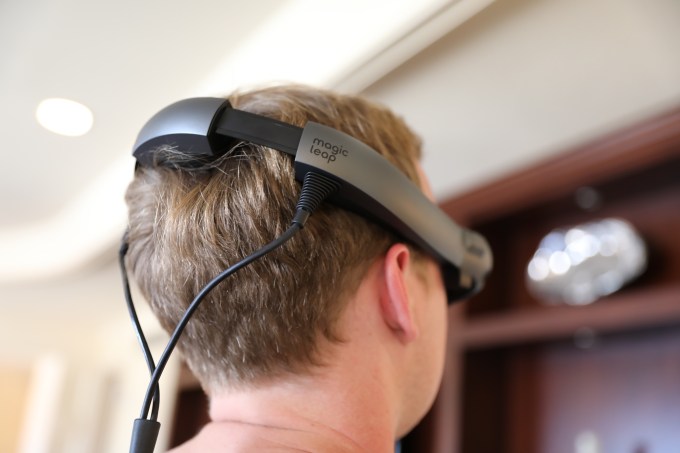
For all of the AR advances made this year, the company most emblematic story of AR’s numerous challenges was clearly Magic Leap.

The company spent the past few years trashing industry standards and lauding their own approaches with braggadocio but ended up releasing a product that largely iterated on its competitors. With the release of their “developer kit” this year, a product that clearly seems to have stopped being a first-gen product only when the reality of the climate availed itself, the startup seems to be finding that optics and infra progress is going to come more slowly than foretold.

I’ve talked to more than a few people who think Magic Leap hindered progress in the AR industry by siphoning investor attention and discouraging other hardware startups from joining the fray in the face of a billions-backed unknown. But in 2019, there are fewer available plays for the funding juggernaut. They spent years trying to distinguish themselves from the corporate mission of Microsoft and their HoloLens headset, now it seems they’ve begun to see that the only hopes of justifying their sitting valuation in the next few years is enlisting support from the big customers that MSFT is chasing, as opposed to single-handedly birthing a consumer market. Magic Leap recently lost a bid to Microsoft for a $480 million military contract to outfit troops with AR headsets, and as Microsoft prepares to release a second-generation HoloLens with the enterprise in full concentration, it seems like Magic Leap is going to reshuffle its deck.

Dead-on-arrival content plays

Magic Leap’s struggles are well-documented but what plagues the overall AR industry seems less discussed.

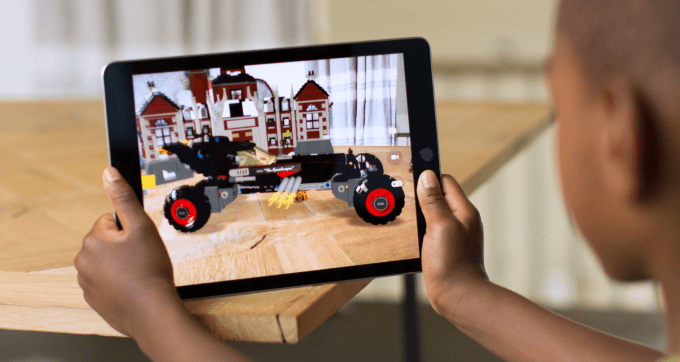
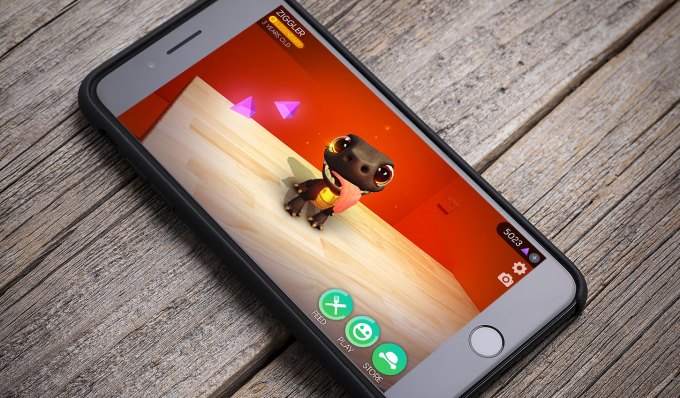
The consumer appetite for phone-based AR content is obviously lacking. Even Apple’s reality distortion field isn’t enough to convince people that its ARKit releases have led to anything other than some weird experimentation for iOS users. Few Android OEMs are boasting about compatibility with Google’s ARCore platform anymore, suggesting that approachable hardware standards for device makers wasn’t all that was missing from the failed Tango brand.

The most apparent mobile AR opportunities are probably in user-generated content, but there seems to be a disconnect between platforms and users in terms of how complex these AR experiences can and should become. At this point, selfie masks still seem to be at the edge of users’ comfort levels, leaving a lot of solved tech problems stuck in limbo waiting for a problem that makes them worthwhile.

Niantic is probably one of the most revenue-heavy startup dabbling in phone AR, even if it is a bit of a false idol for the industry. Nobody seems to think of Niantic as a capital-A augmented reality startup, but it’s clear that team behind Pokémon Go sees the technology as a not-fully-tapped reservoir of potential for future gaming experiences that feel more social and more immersive than any mobile RPG that’s sucking up the majority of your playtime today. The company’s new Harry Potter title still doesn’t have a release date, we haven’t seen any gameplay, but we do know that AR plays a part in the title in some capacity. We’ll see if they figure out things the rest of the industry hasn’t.

Platform tech opportunities

Part of this broader content pain is the fact that some known platform fundamentals are still getting tackled. In 2018, the startups in the AR that were raising the most buzz were so-called “AR cloud” startups, teams that were largely focused on solving more fundamental back-end problems around localization and mapping. It turns out “simple” problems like getting a bunch of users in a single session or keeping tracking of objects you’ve moved around between sessions are actually incredibly complex.

A big issue is that AR fundamentally relies on a level of spatial understanding that goes far beyond grasping geometry. For all the ground that has been traversed by computer vision researchers this year, issues like segmenting environments by objects and accurately identifying them are still in the earliest stages. When you think of AR tech as a subset of vision problems, you realize that products today are being approached in a kind of bizarre manner.

Google has been making worthwhile movements in proliferating their Lens computer vision engine across new apps and devices. In a very round about way the company seems to have come to the worthwhile perspective that mapping an environment spatially doesn’t really help you that much if you can’t parse the contextual nuances of what the camera is actually looking at as well.

A lot of the AR startups in this space have raised some cash on the backs of the smartphone AR trend and the hundreds of millions of potential users, but it still seems pretty dubious whether this market has legs. Fortunately, most of these solutions have wide applicability across future industries like robotics and autonomous vehicles as well, helping computers interface with the real world through visual and geographic cues, but their utility might not be as ripe as they’d hope.

This is an area where Magic Leap could be poised to find some relatively near-term success. The startup’s top brass spent a hefty amount of time at their developer conference talking about the “Magicverse,” basically their vision for bringing localized AR layers onto geographic spaces where users with Magic Leap glasses could observe the content. Without having taken a peek at the tech they’re working with, their biggest advantage seems to rely on their partnership with AT&T which is poised to start working more seriously with 5G in 2019.

The backend still remains a much more exciting market than hardware in 2019, but there may still be some interesting movement with devices this year. I don’t trust most of the predictive data that exists surrounding headset sales so I’m not even going to reference it but suffice to say that AR headset sales aren’t going to explode anytime soon.

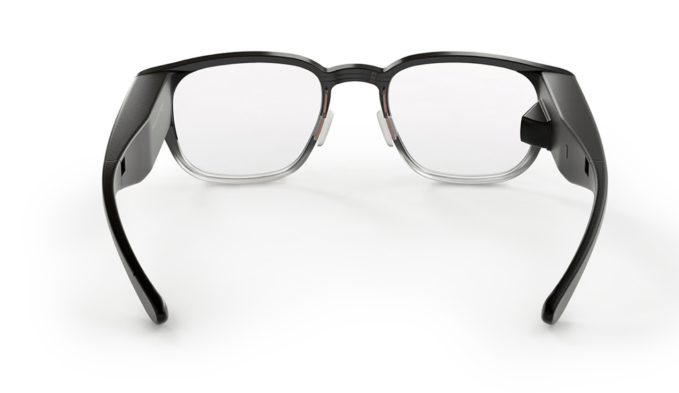
North Focals

More conservative AR hardware

One trend that I am curious to see shake out is the more simplistic version of AR where the glasses basically just offer users a heads-up display for notifications and lightweight apps.

Companies like North and Vuzix have been talking a lot about their work here. Apple’s rumored AR glasses have been talked about for ages at this point, with 2020/2021 seeming to be the rumor mill sweet spot for a release timeframe and if that’s the case I’d bet it falls more into this design ethos than a HoloLens type device. The hardware just isn’t small enough yet but it is getting close and there could be some interesting early ground that the industry could gain by moving in more heavily on traditional wearable use cases though high component costs will be an early limiter as well.

This is probably a hardware space Snap has their eyes on; Spectacles jogged a lot of the current thinking on glasses-type wearables, but at this point, the company needs something that has wide appeal and can feed users back into its own app. The company isn’t in a position to hock something with razor-thin or non-existent margins and it doesn’t gain that much from a product that sells a few thousand units in terms of building its platform.

Bottom line

For the Facebooks and Apples of the world, immediate market conditions and user interest obviously hold a different weight. US investment firms with good track records spent a lot of time this year rejiggering their expectations for their first waves of investments. For the more ambitious privately-held AR startups of the world, there’s probably going to be an issue with raising capital this year as a lot of the top hardware companies have been seeking more free-flowing late stage cash from Chinese firms which have been growing harder to pin down as the trade climate worsens.  This is going to be a problem for hardware companies especially.

For the most part, the BS is going to continue to get easier to parse this year.

Platform plays are going to have to dial in their their target audience a bit more than “everyone with an AR-enabled phone”; more realistic expectations are something the industry should benefit from. ARKit and ARCore are going to level-up and game engine-makers are going to get better solutions for AR content creators. Backend vision challenges are going to get solved and enable things like more seamless multi-player, but there are plenty of reasons why these tech problem solutions won’t lead to big changes in user behavior. Users failing to take off in the second year of some of these big platforms probably won’t dissuade Apple, but it definitely will dissuade some investors from continuing to bet big on the near-term future of mobile AR.


Source: TechCrunch http://j.mp/2BWCInP

Shine brings its female-focused self-care app to Android

Shine, one of the many apps capitalizing on the growing self-care trend, has now brought its app used by 3 million people to Android devices. Originally launched as a simple messaging bot that doled out life advice and motivation, Shine has grown over the years to become a larger self-help platform aimed largely at the millennial crowd – and in particular, millennial women.

As of Shine’s $5 million Series A round last April, the app’s user base was 70 percent female, and 88 percent were under the age of 35.

Since then, it has added another million to its then 2 million users. That growth came despite Shine having missed the mark at times, as with its failed life-coaching subscription product that never emerged from testing.

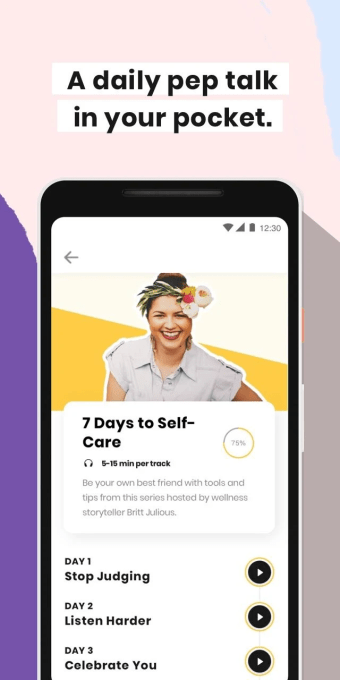
Today, Shine’s focus is on personal growth, motivational messaging, and other self-improvement topics, which are delivered by way of both text and audio. Through short-form audio, users can get help across a number of areas, including things like productivity, mindfulness, focus, stress and anxiety, burn out, acceptance, self-care for online dating, creativity, forgiveness, work frustrations, and more.

The app also sends daily motivational texts based on research-backed materials that help users better understand the topic at hand. These are presented in a more casual style – almost like it’s a friend chatting with you.
Shine now monetizes through a Premium subscription that offers expanded access to Shine’s audio talks and challenges, as well as additional features like offline listening and the ability to save favorite texts. This is either $4.50/month if you pay the $53.99 annual fee at once, or $9.99 per month. That’s roughly in line with what some meditation apps charge – for instance, the top meditation app Calm is $59.99 per year. And it’s cheaper than Headspace, which is $95.88 annually, by comparison.

Shine had said last year that one of its plans for its Series A was to build out the Android experience as nearly half its customers were accessing Shine on Android devices. In those cases they were using the texting service due to the lack of an official app.

On iOS, Shine is fairly popular in its category. It has jumped to become the No. 16 “Health & Fitness” app in the U.S., following the Christmas holiday – a time of the year when people get serious about wellness and self-care. However, it’s only the No. 86 ranked app on the “Health & Fitness” Top Grossing chart, which puts it far behind other wellness apps including meditation apps like Calm, weight loss apps like Lose It!, and workout apps like the No. 1 app, Sweat from Kayla Itsnes.

Given the app stores’ larger shift to subscriptions over paid downloads in recent years, it will be interesting to see how many apps the average consumer will actually pay for through the subscription model – and to what extent more niche apps like Shine will be sustainable in the long term, as a result.

Shine is a free download on Google Play.


Source: TechCrunch http://j.mp/2BT5oOp

Chinese app developers have invaded India

If you’ve conquered China, then India — the world’s second-largest country based on population — is the obvious next port of call, and that’s exactly what has happened in the world of consumer apps.

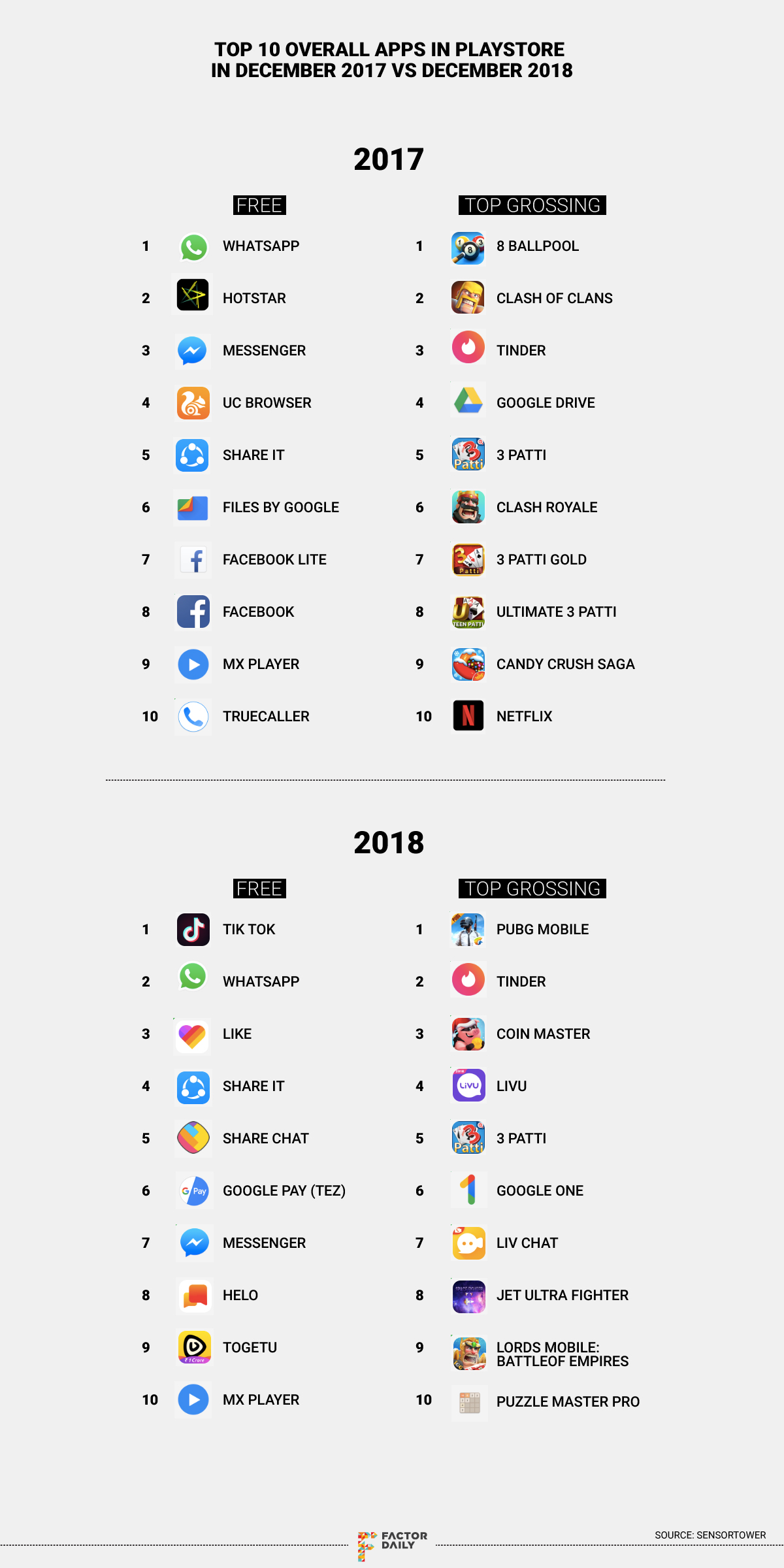
Following the lead of Chinese smartphone makers like Xiaomi and Oppo, who have dominated mobile sales in India for some time, the content behind the touchscreen glass in India is increasingly now from China, too. That’s according to a report from FactorDaily which found that 44 of the top 100 Android apps in India were developed by Chinese companies up from just 18 one year prior. (The focus is on Android because it is the overwhelming choice of operating system among India’s estimated 500 million internet users.)

The list of top Chinese apps includes major names like ByteDance, the world’s highest-valued startup which offers TikTok and local language news app Helo in India, and Alibaba’s UCbrowser as well as lesser-known quantities like Tencent-backed NewsDog and quiet-yet-prolific streaming app maker Bigo.

Citing data from Sensor Tower, the report found that five of the top ten Android apps in India are from China, up from just two at the end of 2017.

For anyone who has been watching the Indian technology scene in recent years, this ‘Chinese app store invasion’ will be of little surprise, although the speed of change has been unexpected.

China’s two biggest companies, Alibaba and Tencent, have poured significant amounts into promising Indian startups in recent years setting the stage for others to follow suit and move into India in search of growth.

Alibaba bought into Snapdeal and Paytm via multi-hundred million dollar invests in 2015, and the pace has only quickened since then. In 2017, Tencent invested in Gaana (music streaming) and Swiggy (food delivery) in major deals having backed Byju’s (education) and Ola (ride-hailing) the year prior. The pair also launched local cloud computing services inside India last year.

Beyond those two, Xiaomi has gone beyond selling phones to back local companies and develop local services for its customers.

That local approach appears to have been the key for those app makers who have found success in India. Rather than taking a very rigid approach like Chinese messaging app WeChat — owned by Tencent which failed in India — the likes of ByteDance have developed local teams and, in some cases, entirely local apps dedicated to India. With the next hundreds of millions of internet users in India tipped to come from more rural parts of the country, vernacular languages, local content and voice-enabled tech are some of the key strategies that, like their phone-making cousins, Chinese app developers will need to focus on to ensure that they aren’t just a flash in the pan in India.

You can read more at FactorDaily.


Source: TechCrunch http://j.mp/2R0zSsd