Wednesday, March 6, 2019

Google brings its Duplex AI restaurant booking assistant to 43 states

No moment wowed the audience at last year’s I/O more than Duplex. The demo of the artificial intelligence restaurant and appointment booking program left many in the audience wondering whether Google had just pulled a fast one over on them.

Turns out, it’s real.

Over the summer, I got a chance to test drive Duplex at a Thai restaurant in Manhattan. And later in the year, the company rolled the program out in limited testing to restaurants in four U.S. cities. Today, it announced that it’s opening things up even more.

Starting this week, Pixel 3 owners in 43 U.S. states will be able to use the Duplex technology to book appointments. The tech should work with any restaurants that use booking services that partner with the Reserve with Google Program.

In the coming weeks, the service will be rolled out to users on other Android and iOS devices, as the company continues to tweak the program based on user feedback. Meanwhile, that may or may not give the rest of time to come to grips with the creepily natural interactions of Google’s new AI.


Source: TechCrunch http://j.mp/2TxDTVn

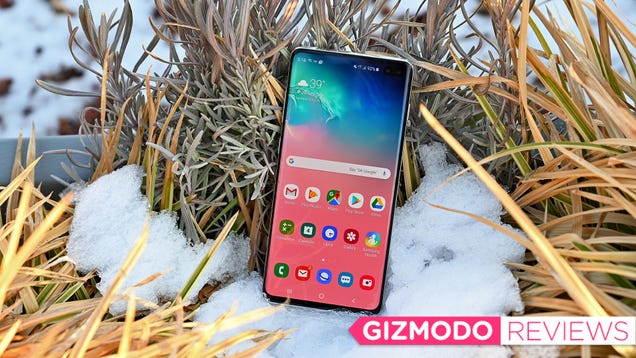
Samsung Galaxy S10 Review: An Android Champ to Get Excited About

If the Pixel 3 was Google’s crowning achievement for showing how good a software-first approach to phone design can be, then the Galaxy S10 is a tribute to the hardware gods. Between a new take on the tired notched selfie cam, a redesigned rear camera setup with three different lenses, and incredible battery life, the…

Read more...


Source: Gizmodo http://j.mp/2C7xXst

Google introduces educational app Bolo to improve children’s literacy in India

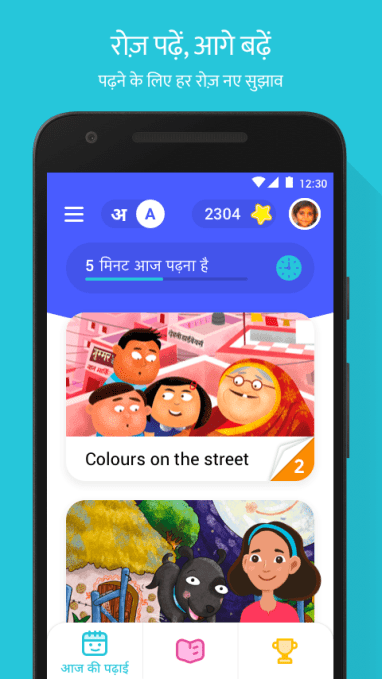
Google is expanding its suite of apps designed for the Indian market with today’s launch of a new language-learning app aimed at children, called Bolo. The app, which is aimed at elementary school-aged students, leverages technology like Google’s speech recognition and text-to-speech to help kids learn to read in both Hindi and English.

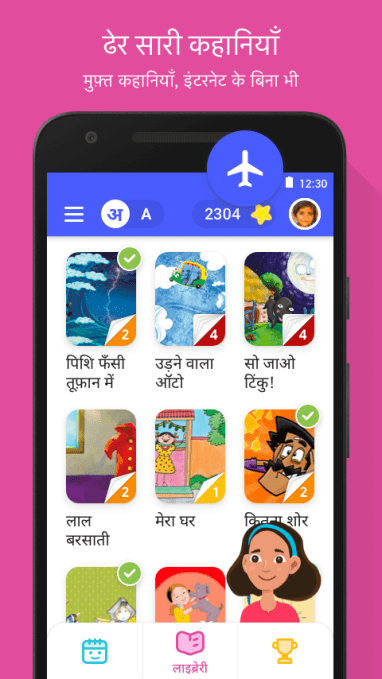
To do so, Bolo offers a catalog of 50 stories in Hindi and 40 in English, sourced from Storyweaver.org.in. The company says it plans to partner with other organizations in the future to expand the story selection further.

Included in the app is a reading buddy, “Diya,” who encourages and corrects the child when they read aloud. As kids read, Diya can listen and respond with feedback. (Google notes all personal information remains on device to protect kids’ privacy.) Diya can also read the text to the child and explain the meaning of English words. As children progress in the app, they’ll be presented with word games in the app which win them in-app rewards and badges to motivate them.

The app works offline – a necessity in large parts of India – where internet access is not always available. Bolo can be used by multiple children, as well, and will adjust itself to their own reading levels.

Google says it had been trialing Bolo across 200 villages in Uttar Pradesh, India with the help of nonprofit ASER Centre. During testing, it found that 64 percent of children who used the app showed an improvement in reading proficiency in three months’ time.

To run the pilot, 920 were given the app and 600 were in a control group without the app, Google says.

In addition to improving their proficiency, more students in group with the app (39%) reached the highest level of ASER’s reading assessment than those without it (28%), and parents also reported improvements in their children’s reading abilities.


Illiteracy remains a problem in India. The country has one of the largest illiterate populations in the world, where only 74 percent are able to read, according to a study by ASER Centre a few years back. It found then that more than half of students in fifth grade in rural state schools could not read second grade textbooks in 2014. By 2018, that figure hadn’t changed much – still, only about half can read at a second grade level, ASER now reports.

While Google today highlights its philanthropic efforts in education, it’s worth noting that Google’s interest in helping improve India’s literacy metrics benefits its bottom line, too. As the country continues to come online to become one of the largest internet markets in the world, literate users capable of using Google’s products like Search, Ads, Gmail, and others – are of increased importance to Google’s business.

Already, Google has shipped a number of applications designed specifically for Indian internet users, like data-friendly versions of YouTube, Search, and other popular services, payments app Tez (now rebranded Google Pay), a food delivery service, a neighborhood and communities networking app, blogging app, and more.

Today, Bolo is launching across India as an open beta, while Google will continue to work with its nonprofit partners – including Pratham Education Foundation,  Room to Read, Saajha and Kaivalya Education Foundation – a Piramal Initiative – to bring the app to more children.

Bolo is available now on the Google Play Store in India, and works on Android smartphones running Android 4.4 (Kit Kat) and higher. The app is currently optimized for native Hindi speakers.


Source: TechCrunch http://j.mp/2XGm99O

Tuesday, March 5, 2019

Google Pulls Photos Feature From Android TV After Bug Exposed Users

Following the discovery of a bug that showed hundreds of Google accounts as being linked to unrelated individual users, Google has temporarily shut down Photos on Android TV. The mysterious software flaw demonstrated potential privacy concerns, and the company said a fix is in the works.

Read more...


Source: Gizmodo http://j.mp/2SM25yW

Monday, March 4, 2019

This handy Twitter video downloader bot is now seeing 7,500 requests a day

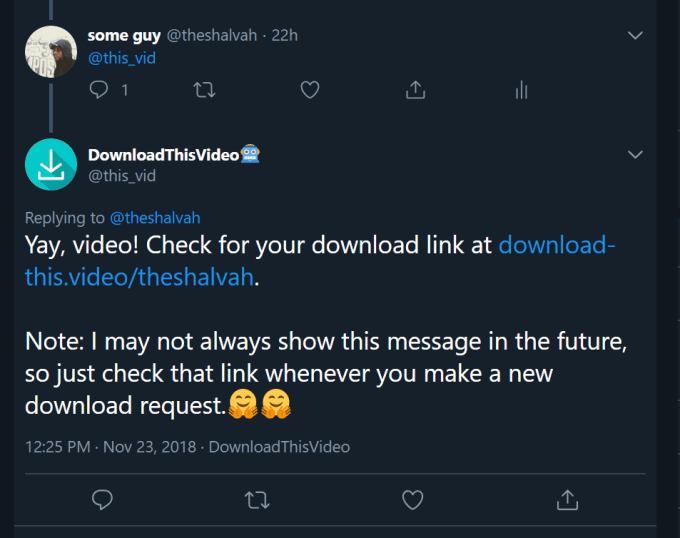
Not all the bots on Twitter are spammers or democracy hackers. You may recall seeing requests to the Thread Reader app bot to “unroll” a long thread into readable copy, for example, and in more recent days you may have spotted Twitter users tagging a newer bot, @this_vid, on tweets with a video file attached. The handy bot (aka DownloadThisVideo) offers a way to download both videos and GIFs from Twitter’s site for easier offline viewing.

The idea for @this_vid comes from Shalvah Adebayo, a backend developer born and raised in Nigeria, and currently living in Lagos. Shalvah says he got into development back in 2013, during his final year of secondary school (high school).

“There was a kid in a lower class that people talked about in awe — ‘he knows programming!,'” explains Shalvah. “I had no idea what it was then,” he continues. “I watched a command-line quiz application he’d made, and I was impressed. I’d won a laptop in a competition a few months back, so the next day, I walked into the only computer shop I knew and asked them for ‘Programming videos.’ They gave me something on C++. I watched those at home that day and went back the next day to buy the actual software (the IDE). That was how I started writing C++,” he says.

Since then, Shalvah moved from C++ to Android development, then web development. He went to university and then quit, and began working in the tech industry. Today, Shalvah works full-time as a remote software engineer for an engineering consultancy and product design company in South Africa called Deimos Cloud.

He builds apps in his spare time as side projects, and has previously open-sourced other bots like @RemindMe_OfThis, which lets you set reminders by tweets, and TwitterThrowback, which is like Twitter’s version of Facebook’s “On This Day” feature.

However, the Twitter video downloader bot has become one of his more popular creations, and is now seeing around 7,500 user requests per day, and as many as 9,500 at peak times.

Shalvah explains he got the idea because it was a personal pain point. Internet access where he lives can be spotty, and the Twitter app’s video experience was not ideal. He said he preferred to download the videos to watch them offline, but couldn’t find any easy way to do so.

“I knew of a couple of sites and apps that did that, but I don’t like installing apps, and I didn’t like the friction involved in using a site,” the developer says. “Plus, I wanted an asynchronous process, where you could just say ‘hey, I want to download this’ and continue browsing Twitter and come back later to pick up your download.”

Plus, Shalvah says he saw a lot of other Twitter users asking how they can get the video posted in nearly every popular thread where someone had tweeted a video.

The bot, @this_vid, has been up and running since May 2018. After sending it out first to his own followers, Shalvah then began to point people to it whenever he saw them asking on a thread how to get a particular video that was shared. This led to its increasing popularity around Twitter.

“I think it really solved a problem for a lot of people, and that was what made it so popular. So there were quite a lot of people, both friends and strangers, that tweeted about it to their followers, and it just kind of grew organically,” he says.

There are some videos that @this_vid can’t download, because the poster — often a sports organization (e.g. The NFL ) — has restricted it from downloads. But in most cases, all you need to do is mention @this_vid in a reply to the original tweet, and you’ll receive a link with the video download in a few minutes.

The bot works by querying the Twitter API for the tweet data, and then retrieves the media URL along with a few other fallbacks.

Because Twitter is rate-limited, allowing the bot only 300 tweets every three hours, Shalvah made the download link for each user easy to remember at: download-this.video/Twitter_username. That way you can get to your downloads even when the bot can’t reply.

The bot itself is free to use, open source and supported through Patreon donations.

There’s some concern that people could download videos they don’t have the rights to through a bot like this, or publish them elsewhere and take credit. Shalvah says he doesn’t believe the bot is in violation of Twitter’s copyright policy, developer terms or rules.

So far, most people seem to be using the bot for personal use. But Twitter hasn’t always been kind to third-party developers, so it remains to be seen how long @this_vid will last.

Shalvah says he intends to keep @this_vid free and will continue to develop it.


Source: TechCrunch http://j.mp/2NJFWAh

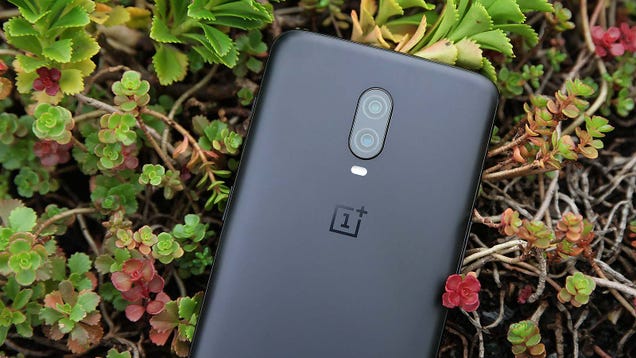
Hey OnePlus, Are You Sure About This?

When whispers started swirling that OnePlus was going for a fully bezel-less design on its next major phone, the immediate question became: How would the company do it?

Read more...


Source: Gizmodo http://j.mp/2EAafoT

Sunday, March 3, 2019

Transportation Weekly: Polestar CEO speaks, Tesla terminology, and a tribute

Welcome back to Transportation Weekly; I’m your host Kirsten Korosec, senior transportation reporter at TechCrunch. This is the fourth edition of our newsletter, a weekly jaunt into the wonderful world of transportation and how we (and our packages) move.

This week we chat with Polestar CEO Thomas Ingenlath, dig into Lyft’s S-1, take note of an emerging trend in AV development, and check out an experiment with paving. Oh, and how could we forget Tesla.

Never heard of TechCrunch’s Transportation Weekly? Catch up here, here and here. As I’ve written before, consider this a soft launch. Follow me on Twitter @kirstenkorosec to ensure you see it each week. (An email subscription is coming). 


ONM …

There are OEMs in the automotive world. And here, (wait for it) there are ONMs — original news manufacturers. (Cymbal clash!) This is where investigative reporting, enterprise pieces and analysis on transportation lives.

This week, we’re featuring excerpts taken from a one-on-one interview with Polestar CEO Thomas Ingenlath.

On February 27, Volvo’s standalone electric performance brand Polestar introduced its first all-electric vehicle, a five-door fastback called the Polestar 2. The EV, which has a 78 kWh battery pack and can travel 275 miles (estimated EPA guidance) on a single charge, will be manufactured at a new factory in Chengdu, China. Other notable specs: The infotainment system will be powered by Android OS, Polestar is offering subscriptions to the vehicle, and production starts in 2020.

yellow-jacket-polestar

Here is what Ingenlath had to say to me about …

EV charging infrastructure

To be very unpolitical, I think it would be totally stupid if we were to aim to develop electric charging infrastructure on our own or for our brand specifically. If you join the electric market today, of course, you would see partnerships; that’s sensible thing to do. Car companies together are making a big effort in getting out a network of necessary charging stations along the highway. 

That’s what we’re doing; we’re teaming up and have the contracts being designed and soon signed.

On the company’s approach to automation 

The terminology is important for us. We very clearly put that into a different picture, we’re not talking about, and we clearly do not ever want to label it, an “autopilot.” The focus of this system is a very safe distance control, which breaks for you and accelerates for you, and of course, the lane keeping. This is not about developing an autopilot system, it is about giving your safety. And that’s where we don’t want to provoke people thinking that they have full rollout autopilot system there. But it is a system that helps you being safe and protected on the road.

I also reached out to Transportation Weekly readers and asked what they wanted to know and then sent some of those questions to Ingenlath.

TW Reader: How did it feel taking one of your personal styling elements – the C shaped rear lamps – from your previous brand over to Polestar?
Ingenlath: It’s an evolutionary process. Polestar naturally builds on its “mothers” DNA and as a new branch develops its own personality. Thor’s hammer, the rear light signature -—with each new model launch (Volvo and Polestar) those elements diverge into a brand specific species.
TW Reader: How much do you still get to do what you love, which is design?
Ingenlath: Being creative is still my main job, now applied on a broader scope — trying to lead a company with a creative and  brand building mindset. Still, I love the Fridays when I meet up with Robin and Max to review the models, sketches and new data. We really enjoy driving the design of both brands to new adventures.

Dig In

Tesla is finally going to offer customers a $35,000 Model 3. How the automaker is able to sell this electric vehicle at the long-awaited $35,000 price point is a big piece of that story — and one that some overlooked. In short, the company is blowing up its sales model and moving to an online only strategy. Tesla stores will close or be converted to “information centers” and retail employees will be laid off.

But this is not what we’re going to talk about today. Tesla has also brought back its so-called “full self-driving” feature, which was removed as an option on its website last year. Now it’s back. Owners can opt for Autopilot, which has automatic steering on highways and traffic-aware cruise control, or FSD.

FSD capability includes several features such as Navigate on Autopilot that is supposed to guide a car from a highway on-ramp to off-ramp, including navigating interchanges and making lane changes. FSD also includes Advanced Summon, Auto Lane Change, and Autopark. Later this year, the system will recognize and respond to traffic lights in more complex urban environments, Tesla says.

All of these features require the driver to be engaged (or ready to take over), yet it’s called “full self-driving.” Now Tesla has two controversially named automation features. (The other is Autopilot). As Andrew Hawkins at The Verge noted in his coverage, “experts are beginning to realize that the way we discuss, and how companies market, autonomy is significant.”

Which begs the obvious question, and one that I asked Musk during a conference call on Thursday. “Isn’t it a problem that you’re calling this full self-driving capability when you’re still going to require the driver to take control or be paying attention?” (I also wanted to ask a followup on his response, but the moderator moved onto the next reporter).

His response:

“We are very clear when you buy the car what is meant by full self driving. It means it’s feature complete, but feature complete requiring supervision.

As we get more — we really need billions of miles, if not maybe 10 billion sort of miles or kilometers on that order collectively from the fleet — then in our opinion probably at that point supervision is not required, but that will still be up to regulators to agree.

So we’re just very clear.  There’s really three steps: there’s being feature complete of full self driving that requires supervision, feature complete but not requiring supervision, and feature complete not requiring supervision and regulators agree.

In other Tesla news, the National Transportation Safety Board is investigating a crash, that at first glance seems to be similar to the fatal crash that killed Tesla owner Joshua Brown.


A little bird …

We hear a lot. But we’re not selfish. Let’s share.

blinky-cat-bird

It’s no secret that Pittsburgh is one of the hubs of autonomous vehicle development in the world. But what’s not so widely known — except for a group of government and company insiders — is that Mayor William Peduto is on the verge of issuing an executive order that will give more visibility into testing there. 

The city’s department of mobility and infrastructure is the central coordinator of this new executive order that aims to help guide testing and policy development there. The department is going to develop guidelines for AV testing, we’re told. And it appears that information on testing will be released to the public at least once a year.

Got a tip or overheard something in the world of transportation? Email me or send a direct message to @kirstenkorosec.


Deal of the week

Daimler and BMW are supposed to be competitors. And they are, except with mapping (both part of the HERE consortium), mobility services (car sharing, ride-sharing), and now the development of highly automated driving systems. The deal is notable because it illustrates a larger trend that has emerged as the AV industry hunkers down into the “trough of disillusionment.” And that’s consolidation. If 2016, was the year of splashy acquisitions, then 2019 is shaping up to be chockfull of alliances and failures (of some startups).

Also interesting to note, and one that will make some AV safety experts cringe, both companies are working on Level 3 driving automation, a designation by the SAE that means conditional driving automation in which multiple high levels of automation are available in certain conditions, but a human driver must be ready to take over. This level of automation is the most controversial because of the so-called “hand off” problem in which a human driver is expected to take control of the wheel in time.

Speaking of partnerships, another deal that got our attention this week involved New York-based mapping and data analytics startup Carmera and Toyota Research Institute-Advanced Development. TRI-AD is an autonomous drive unit started by Toyota with Denso and Aisin. TRI-AD’s mission is to take the research being done over at the Toyota Research Institute and turn its into a product.

The two companies are going to test a concept that will use cameras in Toyota test vehicles to collect data from downtown Tokyo and use it to create high definition maps for urban and surface roads.

TRI-AD considers this the first step towards its open software platform concept known as Automated Mapping Platform that will be used to support the scalability of highly automated driving, by combining data gathered from vehicles of participating companies to generate HD maps. AMP is new and has possible widespread implications at Toyota. And TRI-AD is full of A-listers, including CEO James Kuffner, who came from the Google self-driving project and Nikos Michalakis, who built Netflix’s cloud platform, and Mandali Khalesi, who was at HERE.

Read more on Khalesi and the Toyota’s open source ambitions here.

Other deals:


Snapshot

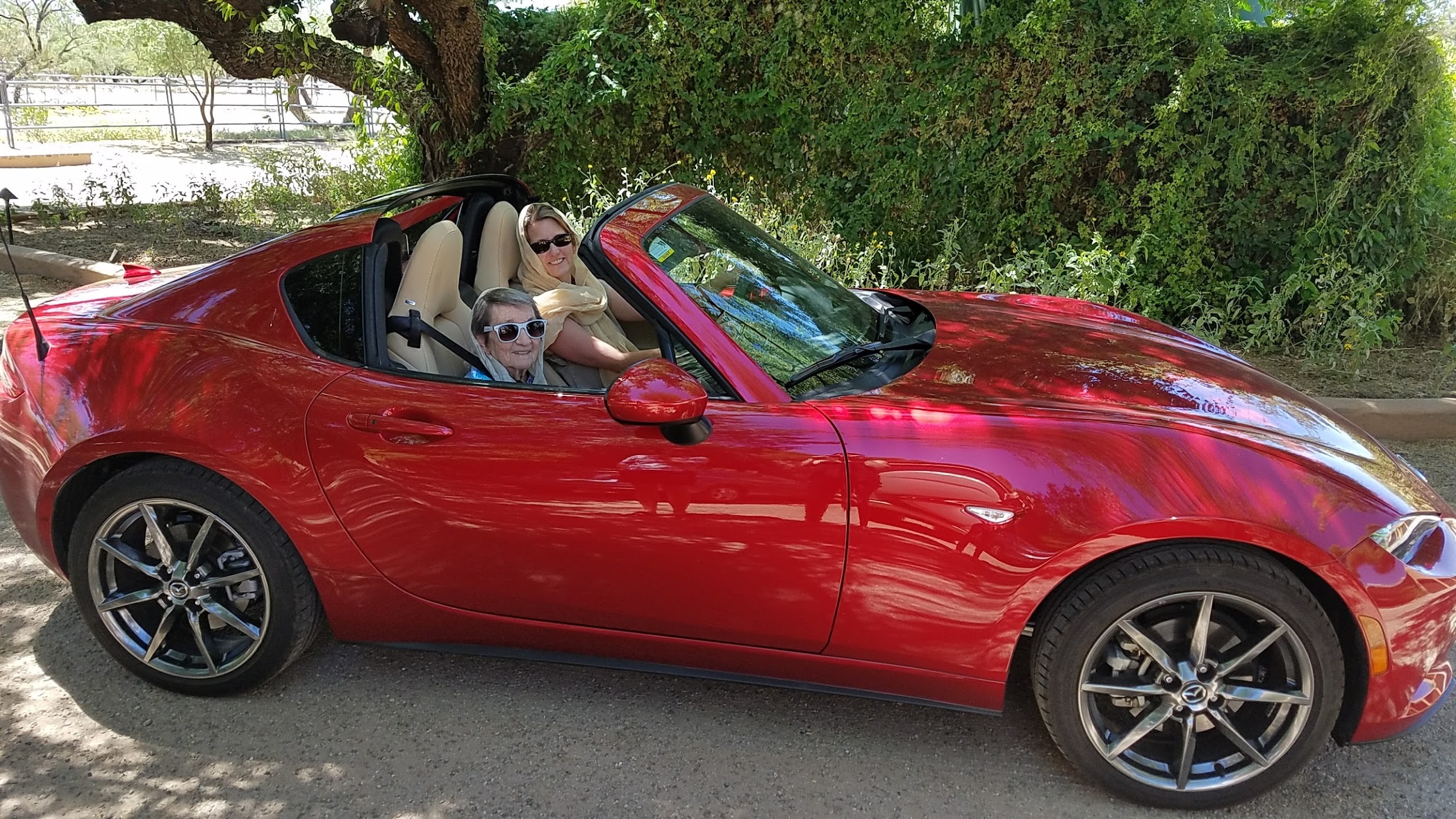
Snapshot this week is a bit untraditional. It’s literally a snapshot of myself and my grandmother, months before her 100th birthday. Her memorial service was held Saturday. She died at 101. She loved cars and fast ones, but not so much driving them. And every time I got a new press car, we’d hit the road and she’d encourage me to take the turns a bit faster.

She also loved road trips and in the 1920s, her father would drive the family on the mostly dirt roads from New Jersey to Vermont and even Canada. In her teens, she loved riding in the rumble seat, a feature found in a few vehicles at the time including the Ford Model A.

She was young at heart, until the very end. Next week, we’ll focus on the youngest drivers and one automotive startup that is targeting that demographic.


Tiny but mighty micromobility

Lyft’s S-1 lays out the risks associated with its micromobility business and its intent to continue relying on third parties to manufacture its bikes and scooters. Here’s a key nugget about adoption:

“While some major cities have widely adopted bike and scooter sharing, there can be no assurance that new markets we enter will accept, or existing markets will continue to accept, bike and scooter sharing, and even if they do, that we will be able to execute on our business strategy or that our related offerings will be successful in such markets. Even if we are able to successfully develop and implement our network of shared bikes and scooters, there may be heightened public skepticism of this nascent service offering.”

And another about seasonality:

“Our limited operating history makes it difficult for us to assess the exact nature or extent of the effects of seasonality on our network of shared bikes and scooters, however, we expect the demand for our bike and scooter rentals to decline over the winter season and increase during more temperate and dry seasons.”

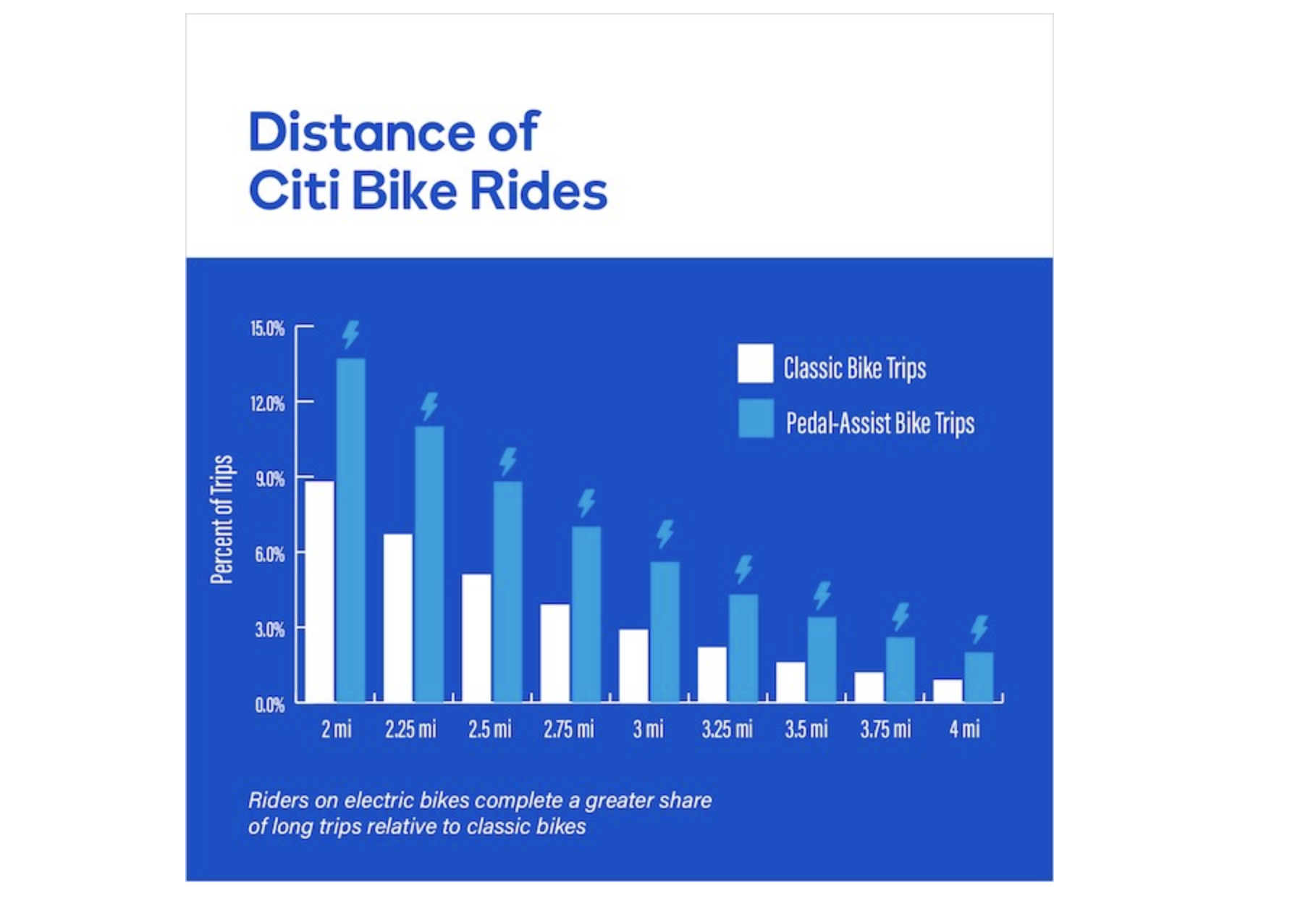
Lyft, which bought bike-share company Motivate back in July, also released some data about its electric pedal-assist bikes this week, showing that the pedal assist bikes are, unsurprisingly, more popular than the traditional bikes. They also traveled longer distances and improved winter ridership numbers. Now, Lyft is gearing up to deploy 4,000 additional electric bikes to the Citi Bike system in New York City.

One more thing …

Google Maps has added a feature that lets users see Lime scooters, pedal bikes and e-bikes right from the transit tab in over 80 new cities around the world. Users can click the tab to find out if Lime vehicle is available, how long it’ll take to walk to the vehicle, an estimate of how much their ride could cost, along with total journey time and ETA.


Notable reads

If take the time to read anything this week (besides this newsletter), spend some time with Lyft’s S-1. The ride-hailing company’s prospectus mentions autonomous 109 times. In short, yeah, it’s something the company’s executives are thinking about and investing in.

Lyft says it has a two-pronged strategy to bring autonomous vehicles to market. The company encouraging developers of autonomous vehicle technology to use its open platform to get access to its network and enable their vehicles to fulfill rides on the Lyft platform. And Lyft is trying to build its own autonomous vehicle system at its confusingly named “Level 5 Engineering Center.”

  • The company’s primary investors are Rakuten with a 13 percent stake, GM with 7.8 percent, Fidelity with 7.7 percent, Andreessen Horowitz with 6.3 percent and Alphabet with 5.3 percent. GM and Alphabet have business units, GM Cruise and Waymo respectively, that are also developing AV technology.
  • Through Lyft’s partnership with AV systems developer and supplier Aptiv, people in Las Vegas have taken more than 35,000 rides in Aptiv autonomous vehicles with a safety driver since January 2018.
  • One of the “risks” the company lists is “a failure to detect a defect in our autonomous vehicles or our bikes or scooters”

Other quotable notables:

Check out the Pedestrian Traffic Fatalities by State report, a newly released report from Volvo Car USA and The Harris Poll called  The State of Electric Vehicles in America.


Testing and deployments

Again, deployments doesn’t always mean the latest autonomous vehicle pilot.

On Saturday, Sidewalk Labs hosted its Open Sidewalk event in Toronto. This is part of Sidewalk Toronto, a joint effort by Waterfront Toronto and Alphabet’s Sidewalk Labs to create a “mixed-use, complete community” on Toronto’s Eastern Waterfront

The idea of this event was to share ideas and prototypes for making outdoor public space the “social default year-round.” One such prototype “hexagonal paving” got our attention because of its use case for traffic control and pedestrian and bicyclist safety. (Pictured below)

These individual precast concrete slabs are movable and permeable, can light up and give off heat. The idea is that these hexagonal-shaped slabs and be used to clear snow and ice in trouble spots and light up to warn drivers and pedestrians of changes to the street use or to illuminate an area for public uses or even designate bike lanes and hazard zones. And because they’re permeable they can be used to absorb stormwater or melted snow and guide it to underground stormwater management systems.

Sidewalk Labs tell me that the pavers have “plug and play” holes, which allow things like bike racks, bollards, and sign posts to be inserted. Sidewalk Labs initially built these with wood, and the new prototype is the next iteration, featuring modules built from concrete.


On our radar

There is a lot of transportation-related activity this month.

The Geneva Motor Show: Press days are March 5 and March 6. Expect concept, prototype and production electric vehicles from Audi, Honda, Kia, Peugeot, Pininfarina, Polestar, Spanish car company Hispano Suiza, and Volkswagen.

SXSW in Austin: TechCrunch will be at SXSW this coming week. Here’s where I’ll be.

  • 2 p.m. to 6:30 p.m. March 9 at the Empire Garage for the Smart Mobility Summit, an annual event put on by Wards Intelligence and C3 Group. The Autonocast, the podcast I co-host with Alex Roy and Ed Niedermeyer, will also be on hand.
  • 9:30 a.m. to 10:30 a.m. March 12 at the JW Marriott. The Autonocast and founding general partner of Trucks VC, Reilly Brennan will hold a SXSW podcast panel on automated vehicle terminology and other stuff.
  • 3:30 p.m over at the Hilton Austin Downtown, I’ll be moderating a panel Re-inventing the Wheel: Own, Rent, Share, Subscribe. Sherrill Kaplan with Zipcar, Amber Quist, with Silvercar and Russell Lemmer with Dealerware will join me.
  • TechCrunch is also hosting a SXSW party from 1 pm to 4 pm Sunday, March 10, 615 Red River St., that will feature musical guest Elderbrook. RSVP here. 

Self Racing Cars

Finally, I’ve been in contact with Joshua Schachter who puts on the annual Self Racing Car event, which will be held March 23 and March 24 at Thunderhill Raceway near Willows, California.

There is still room for participants to test or demo their autonomous vehicles, drive train innovation, simulation, software, teleoperation, and sensors. Hobbyists are welcome. Sign up to participate or drop them a line at contact@selfracingcars.com.

Thanks for reading. There might be content you like or something you hate. Feel free to reach out to me at kirsten.korosec@techcrunch.com to share those thoughts, opinions or tips. 

Nos vemos la próxima vez.


Source: TechCrunch http://j.mp/2NHcNWK

Saturday, March 2, 2019

How to Enable Facebook Messenger's Secret Dark Mode on Android

I’m a tremendous fan of using “dark mode” or ”night mode” on my phone whenever possible. Beyond just being easier to look at, dark modes use less battery power since your phone’s not having to power that bright white screen.

Read more...


Source: Gizmodo http://j.mp/2XB9Awb

Stream To Your Hearts Content With This $50 Android TV Box

Xiaomi’s Mi Box S is one of the best deals in streaming boxes, and right now you can get one for cheaper than usual with a bonus VUDU credit. For $50, it works like any other Android TV-powered device, is Chromecast-enabled, and outputs 4K HDR at 60fps. Plus you get the added benefit of buying a digital copy of…

Read more...


Source: Gizmodo http://j.mp/2TpCdx7

5G phones are here but there’s no rush to upgrade

This year’s Mobile World Congress — the CES for Android device makers — was awash with 5G handsets.

The world’s No.1 smartphone seller by marketshare, Samsung, got out ahead with a standalone launch event in San Francisco, showing off two 5G devices, just before fast-following Android rivals popped out their own 5G phones at launch events across Barcelona this week.

We’ve rounded up all these 5G handset launches here. Prices range from an eye-popping $2,600 for Huawei’s foldable phabet-to-tablet Mate X — and an equally eye-watering $1,980 for Samsung’s Galaxy Fold; another 5G handset that bends — to a rather more reasonable $680 for Xiaomi’s Mi Mix 3 5G, albeit the device is otherwise mid-tier. Other prices for 5G phones announced this week remain tbc.

Android OEMs are clearly hoping the hype around next-gen mobile networks can work a little marketing magic and kick-start stalled smartphone growth. Especially with reports suggesting Apple won’t launch a 5G iPhone until at least next year. So 5G is a space Android OEMs alone get to own for a while.

Chipmaker Qualcomm, which is embroiled in a bitter patent battle with Apple, was also on stage in Barcelona to support Xiaomi’s 5G phone launch — loudly claiming the next-gen tech is coming fast and will enhance “everything”.

“We like to work with companies like Xiaomi to take risks,” lavished Qualcomm’s president Cristiano Amon upon his hosts, using 5G uptake to jibe at Apple by implication. “When we look at the opportunity ahead of us for 5G we see an opportunity to create winners.”

Despite the heavy hype, Xiaomi’s on stage demo — which it claimed was the first live 5G video call outside China — seemed oddly staged and was not exactly lacking in latency.

“Real 5G — not fake 5G!” finished Donovan Sung, the Chinese OEM’s director of product management. As a 5G sales pitch it was all very underwhelming. Much more ‘so what’ than ‘must have’.

Whether 5G marketing hype alone will convince consumers it’s past time to upgrade seems highly unlikely.

Phones sell on features rather than connectivity per se, and — whatever Qualcomm claims — 5G is being soft-launched into the market by cash-constrained carriers whose boom times lie behind them, i.e. before over-the-top players had gobbled their messaging revenues and monopolized consumer eyeballs.

All of which makes 5G an incremental consumer upgrade proposition in the near to medium term.

Use-cases for the next-gen network tech, which is touted as able to support speeds up to 100x faster than LTE and deliver latency of just a few milliseconds (as well as connecting many more devices per cell site), are also still being formulated, let alone apps and services created to leverage 5G.

But selling a network upgrade to consumers by claiming the killer apps are going to be amazing but you just can’t show them any yet is as tough as trying to make theatre out of a marginally less janky video call.

“5G could potentially help [spark smartphone growth] in a couple of years as price points lower, and availability expands, but even that might not see growth rates similar to the transition to 3G and 4G,” suggests Carolina Milanesi, principal analyst at Creative Strategies, writing in a blog post discussing Samsung’s strategy with its latest device launches.

“This is not because 5G is not important, but because it is incremental when it comes to phones and it will be other devices that will deliver on experiences, we did not even think were possible. Consumers might end up, therefore, sharing their budget more than they did during the rise of smartphones.”

The ‘problem’ for 5G — if we can call it that — is that 4G/LTE networks are capably delivering all the stuff consumers love right now: Games, apps and video. Which means that for the vast majority of consumers there’s simply no reason to rush to shell out for a ‘5G-ready’ handset. Not if 5G is all the innovation it’s got going for it.
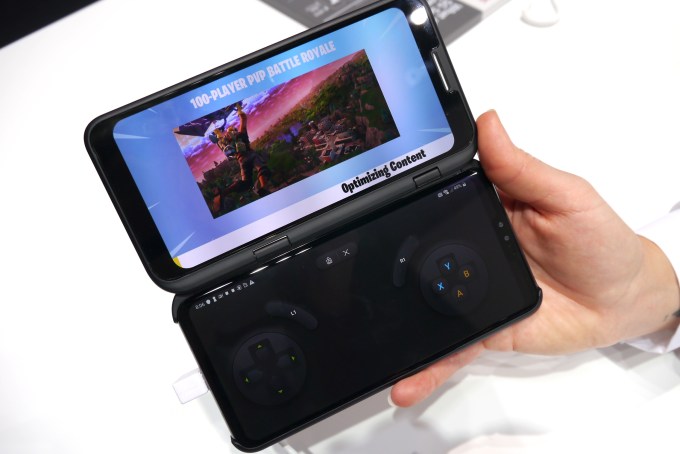
LG V50 ThinQ 5G with a dual screen accessory for gaming

Use cases such as better AR/VR are also a tough sell given how weak consumer demand has generally been on those fronts (with the odd branded exception).

The barebones reality is that commercial 5G networks are as rare as hen’s teeth right now, outside a few limited geographical locations in the U.S. and Asia. And 5G will remain a very patchy patchwork for the foreseeable future.

Indeed, it may take a very long time indeed to achieve nationwide coverage in many countries, if 5G even ends up stretching right to all those edges. (Alternative technologies do also exist which could help fill in gaps where the ROI just isn’t there for 5G.)

So again consumers buying phones with the puffed up idea of being able to tap into 5G right here, right now (Qualcomm claimed 2019 is going to be “the year of 5G!”) will find themselves limited to just a handful of urban locations around the world.

Analysts are clear that 5G rollouts, while coming, are going to be measured and targeted as carriers approach what’s touted as a multi-industry-transforming wireless technology cautiously, with an eye on their capex and while simultaneously trying to figure out how best to restructure their businesses to engage with all the partners they’ll need to forge business relations with, across industries, in order to successfully sell 5G’s transformative potential to all sorts of enterprises — and lock onto “the sweep spot where 5G makes sense”.

Enterprise rollouts therefore look likely to be prioritized over consumer 5G — as was the case for 5G launches in South Korea at the back end of last year.

“4G was a lot more driven by the consumer side and there was an understanding that you were going for national coverage that was never really a question and you were delivering on the data promise that 3G never really delivered… so there was a gap of technology that needed to be filled. With 5G it’s much less clear,” says Gartner’s Sylvain Fabre, discussing the tech’s hype and the reality with TechCrunch ahead of MWC.

“4G’s very good, you have multiple networks that are Gbps or more and that’s continuing to increase on the downlink with multiple carrier aggregation… and other densification schemes. So 5G doesn’t… have as gap as big to fill. It’s great but again it’s applicability of where it’s uniquely positioned is kind of like a very narrow niche at the moment.”

“It’s such a step change that the real power of 5G is actually in creating new business models using network slicing — allocation of particular aspects of the network to a particular use-case,” Forrester analyst Dan Bieler also tells us. “All of this requires some rethinking of what connectivity means for an enterprise customer or for the consumer.

“And telco sales people, the telco go-to-market approach is not based on selling use-cases, mostly — it’s selling technologies. So this is a significant shift for the average telco distribution channel to go through. And I would believe this will hold back a lot of the 5G ambitions for the medium term.”

To be clear, carriers are now actively kicking the tyres of 5G, after years of lead-in hype, and grappling with technical challenges around how best to upgrade their existing networks to add in and build out 5G.

Many are running pilots and testing what works and what doesn’t, such as where to place antennas to get the most reliable signal and so on. And a few have put a toe in the water with commercial launches (globally there are 23 networks with “some form of live 5G in their commercial networks” at this point, according to Fabre.)

But at the same time 5G network standards are yet to be fully finalized so the core technology is not 100% fully baked. And with it being early days “there’s still a long way to go before we have a real significant impact of 5G type of services”, as Bieler puts it. 

There’s also spectrum availability to factor in and the cost of acquiring the necessary spectrum. As well as the time required to clear and prepare it for commercial use. (On spectrum, government policy is critical to making things happen quickly (or not). So that’s yet another factor moderating how quickly 5G networks can be built out.)

And despite some wishful thinking industry noises at MWC this week — calling for governments to ‘support digitization at scale’ by handing out spectrum for free (uhhhh, yeah right) — that’s really just whistling into the wind.

Rolling out 5G networks is undoubtedly going to be very expensive, at a time when carriers’ businesses are already faced with rising costs (from increasing data consumption) and subdued revenue growth forecasts.

“The world now works on data” and telcos are “at core of this change”, as one carrier CEO — Singtel’s Chua Sock Koong — put it in an MWC keynote in which she delved into the opportunities and challenges for operators “as we go from traditional connectivity to a new age of intelligent connectivity”.

Chua argued it will be difficult for carriers to compete “on the basis of connectivity alone” — suggesting operators will have to pivot their businesses to build out standalone business offerings selling all sorts of b2b services to support the digital transformations of other industries as part of the 5G promise — and that’s clearly going to suck up a lot of their time and mind for the foreseeable future.

In Europe alone estimates for the cost of rolling out 5G range between €300BN and €500BN (~$340BN-$570BN), according to Bieler. Figures that underline why 5G is going to grow slowly, and networks be built out thoughtfully; in the b2b space this means essentially on a case-by-case basis.

Simply put carriers must make the economics stack up. Which means no “huge enormous gambles with 5G”. And omnipresent ROI pressure pushing them to try to eke out a premium.

“A lot of the network equipment vendors have turned down the hype quite a bit,” Bieler continues. “If you compare this to the hype around 3G many years ago or 4G a couple of years ago 5G definitely comes across as a soft launch. Sort of an evolutionary type of technology. I have not come across a network equipment vendors these days who will say there will be a complete change in everything by 2020.”

On the consumer pricing front, carriers have also only just started to grapple with 5G business models. One early example is TC parent Verizon’s 5G home service — which positions the next-gen wireless tech as an alternative to fixed line broadband with discounts if you opt for a wireless smartphone data plan as well as 5G broadband.

From the consumer point of view, the carrier 5G business model conundrum boils down to: What is my carrier going to charge me for 5G? And early adopters of any technology tend to get stung on that front.

Although, in mobile, price premiums rarely stick around for long as carriers inexorably find they must ditch premiums to unlock scale — via consumer-friendly ‘all you can eat’ price plans.

Still, in the short term, carriers look likely to experiment with 5G pricing and bundles — basically seeing what they can make early adopters pay. But it’s still far from clear that people will pay a premium for better connectivity alone. And that again necessitates caution. 

5G bundled with exclusive content might be one way carriers try to extract a premium from consumers. But without huge and/or compelling branded content inventory that risks being a too niche proposition too. And the more carriers split their 5G offers the more consumers might feel they don’t need to bother, and end up sticking with 4G for longer.

It’ll also clearly take time for a 5G ‘killer app’ to emerge in the consumer space. And such an app would likely need to still be able to fallback on 4G, again to ensure scale. So the 5G experience will really need to be compellingly different in order for the tech to sell itself.

On the handset side, 5G chipset hardware is also still in its first wave. At MWC this week Qualcomm announced a next-gen 5G modem, stepping up from last year’s Snapdragon 855 chipset — which it heavily touted as architected for 5G (though it doesn’t natively support 5G).

If you’re intending to buy and hold on to a 5G handset for a few years there’s thus a risk of early adopter burn at the chipset level — i.e. if you end up with a device with a suckier battery life vs later iterations of 5G hardware where more performance kinks have been ironed out.

Intel has warned its 5G modems won’t be in phones until next year — so, again, that suggests no 5G iPhones before 2020. And Apple is of course a great bellwether for mainstream consumer tech; the company only jumps in when it believes a technology is ready for prime time, rarely sooner. And if Cupertino feels 5G can wait, that’s going to be equally true for most consumers.

Zooming out, the specter of network security (and potential regulation) now looms very large indeed where 5G is concerned, thanks to East-West trade tensions injecting a strange new world of geopolitical uncertainty into an industry that’s never really had to grapple with this kind of business risk before.

Chinese kit maker Huawei’s rotating chairman, Guo Ping, used the opportunity of an MWC keynote to defend the company and its 5G solutions against U.S. claims its network tech could be repurposed by the Chinese state as a high tech conduit to spy on the West — literally telling delegates: “We don’t do bad things” and appealing to them to plainly to: “Please choose Huawei!”
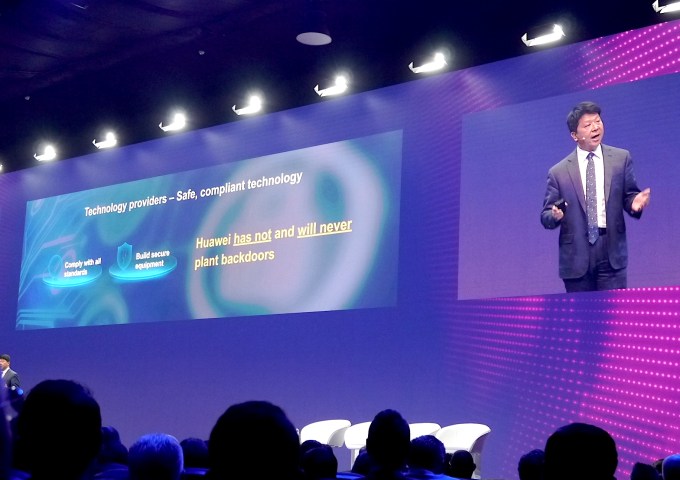
Huawei rotating resident, Guo Ping, defends the security of its network kit on stage at MWC 2019

When established technology vendors are having to use a high profile industry conference to plead for trust it’s strange and uncertain times indeed.

In Europe it’s possible carriers’ 5G network kit choices could soon be regulated as a result of security concerns attached to Chinese suppliers. The European Commission suggested as much this week, saying in another MWC keynote that it’s preparing to step in try to prevent security concerns at the EU Member State level from fragmenting 5G rollouts across the bloc.

In an on stage Q&A Orange’s chairman and CEO, Stéphane Richard, couched the risk of destabilization of the 5G global supply chain as a “big concern”, adding: “It’s the first time we have such an important risk in our industry.”

Geopolitical security is thus another issue carriers are having to factor in as they make decisions about how quickly to make the leap to 5G. And holding off on upgrades, while regulators and other standards bodies try to figure out a trusted way forward, might seem the more sensible thing to do — potentially stalling 5G upgrades in the meanwhile.

Given all the uncertainties there’s certainly no reason for consumers to rush in.

Smartphone upgrade cycles have slowed globally for a reason. Mobile hardware is mature because it’s serving consumers very well. Handsets are both powerful and capable enough to last for years.

And while there’s no doubt 5G will change things radically in future, including for consumers — enabling many more devices to be connected and feeding back data, with the potential to deliver on the (much hyped but also still pretty nascent) ‘smart home’ concept — the early 5G sales pitch for consumers essentially boils down to more of the same.

“Over the next ten years 4G will phase out. The question is how fast that happens in the meantime and again I think that will happen slower than in early times because [with 5G] you don’t come into a vacuum, you don’t fill a big gap,” suggests Gartner’s Fabre. “4G’s great, it’s getting better, wi’fi’s getting better… The story of let’s build a big national network to do 5G at scale [for all] that’s just not happening.”

“I think we’ll start very, very simple,” he adds of the 5G consumer proposition. “Things like caching data or simply doing more broadband faster. So more of the same.

“It’ll be great though. But you’ll still be watching Netflix and maybe there’ll be a couple of apps that come up… Maybe some more interactive collaboration or what have you. But we know these things are being used today by enterprises and consumers and they’ll continue to be used.”

So — in sum — the 5G mantra for the sensible consumer is really ‘wait and see’.



Source: TechCrunch http://j.mp/2tJhvtR