Monday, June 3, 2019

Apple updates CarPlay with new home screen and Siri Suggestions

Today at Apple’s annual developer’s conference, Apple revealed the biggest update to CarPlay since its release. The revamped in-car system looks dramatically better, leaving behind the faux iPhone layout for something that looks better suited for us in cars.

Until now, CarPlay was left largely forgotten since its debut in 2014. Most vehicles are now compatible with the system, but since its release, in-car systems have dramatically improved to the point where most are better than what Apple developed. This update looks like a large step in the right direction.

The biggest change seems to be the amount of information that can be displayed using CarPlay. The previous version’s home screen is just a grid of apps. It’s not helpful. Now, with this new version, the home screen can display a map, media playback and HomeKit devices like a garage door or lights.

Last month Google announced a large update to its Android Auto platform, which has long outclassed CarPlay. The difference have always been profound with Android Auto able to handle tasks and display apps in a manner better suited for cars. But now, with the new version of CarPlay, Apple’s in-vehicle system seems to have a lot of the functionality found in Google’s counterpart.

The announcement left a lot of questions. Will this work on older model vehicles built on older hardware? What versions of the iPhone will it work on? How does it handle scaling to different resolutions found in different vehicles?


Source: TechCrunch http://j.mp/2WmA7jO

Apple’s iOS 13 will include a system-wide Dark Mode

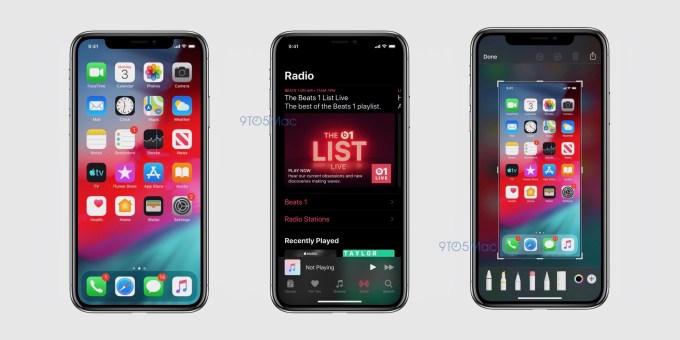
Apple’s iOS 13 is getting a dark mode, the company announced today at its Worldwide Developers Conference in San Jose. Confirming an earlier leak, the new dark mode will be system-wide and can be turned on or off from iOS’s Settings or through a new Control Center toggle. Once enabled, Dark Mode will change the color of the Home screen dock, the background colors of iOS screens, and Apple’s built-in apps like Apple Music, Notes, Messages, Photos, Calendar, Music, and more.

Other system features have also been prepped for dark mode like the dock and share sheet, so it’s a seamless experience.

Dark themes for apps have become fairly popular, thanks to the rise of OLED smartphones in recent years. Because a dark mode lights up fewer pixels, it can help conserve battery life on phone’s OLED screens. Dark themes may have other benefits as well, in terms of lessening device addiction and improving sleep, some claim.

Apple is not the first to launch a system-wide dark mode, however. At Google’s developer conference in May, the company introduced Dark Theme for Android Q which will work across its mobile OS and in first-party Android apps, with developers able to code for it in their own applications.

Several third-party apps today support darker themes of their own, including Twitter, YouTube, Google, Medium, Reddit, Wikipedia, Instapaper, Pocket, IMDb, iBooks, Kindle, Google Maps, Waze, Opera Mini and many more.

Below, is the leaked image of Dark Mode for comparison:


Source: TechCrunch http://j.mp/2IeX0ff

US/China trade uncertainty adds to global smartphone growth woes

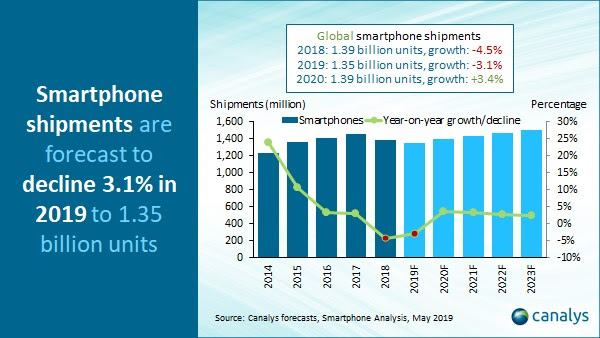
Analyst Canalys has updated its forecast of global smartphone shipments — saying it expects just 1.35 billion units to ship in 2019, a year-on-year decline of 3.1%.

This follows ongoing uncertainty around US-China trade talks and the presidential order signed by Trump last month barring US companies from using kit by Chinese device makers, including Huawei, on national security grounds — which led to reports that Google would withdraw supply of key Android services to Huawei.

“Due to the many uncertainties surrounding the US/China trade talks, the US Executive Order signed on 15 May and subsequent developments, Canalys has lowered its forecasts to reflect an uncertain future,” the analyst writes.

It says its forecast is based on the assumption that restrictions will be stringently applied to Huawei once a 90-day reprieve which was subsequently granted expires — the temporary licence run from May 20, 2019, through August 19, 2019 — making it difficult for the world’s second largest smartphone maker by sales to roll out new devices in the short term, especially outside China, even as it takes steps to mitigate the effect of component and service supply issues.

“Its overseas potential will be hampered for some time,” the analyst suggests. “The US and China may eventually reach a trade deal to alleviate the pressure on Huawei, but if and when this will happen is far from clear.”

“It is important to note that market uncertainty is clearly prompting vendors to accelerate certain strategies to minimize the short- and long-term impact in a challenging business environment, for example, shifting manufacturing to different countries to hedge against the risk of tariffs. But with recent US announcements on tariffs on goods from more countries, the industry will be dealing with turmoil for some time,” added Nicole Peng, Canalys VP, mobility, in a statement.

It expects other smartphone makers to seek to capitalize on short term opportunities created by the uncertainty hitting the Chinese tech giant, and predicts that South Korea’s Samsung will benefit the most — “thanks to its aggressive device strategy and its ability to quickly ramp up production”.

By 2020, it expects the market to have settled a little — with active contingency plans to be in place in major mobile supply chains and channels to “mitigate Huawei’s decline”, as well as gear up for 5G device rollouts.

Canalys takes the view that 5G and other hardware innovations will be positive drivers for consumer demand — expecting smartphone shipments to return to soft growth globally in 2020, rising 3.4% to 1.39BN, albeit with some subtle regional variations that it says will allow some to recover faster than others.


Source: TechCrunch http://j.mp/2Ib06kw

How to watch the live stream for today’s Apple WWDC keynote

Apple is holding a keynote today on the first day of its developer conference, and the company is expected to talk about a ton of software updates. At 10 AM PT (1 PM in New York, 5 PM in London, 6 PM in Paris), you’ll be able to watch the event as the company is streaming it live.

Rumor has it that the company plans to unveil the next versions of all its operating systems. Get ready for iOS 13 with system-wide dark mode, macOS 10.15, watchOS with some new apps from Apple and more.

The most interesting news of the show should be about a project called Marzipan. Apple plans to bridge the gap between iOS and macOS by letting developers release iOS apps on the Mac. It could change everything for the Mac. Apple could also unveil a new Mac Pro, so this should be interesting as well.

If you have an Apple TV, you can download the Apple Events app in the App Store. It lets you stream today’s event and rewatch old ones. The app icon was updated a few days ago for the event.

And if you don’t have an Apple TV, the company also lets you live-stream the event from the Apple Events section on its website. This video feed now works in all major browsers — Safari, Microsoft Edge, Google Chrome and Mozilla Firefox.

So to recap, here’s how you can watch today’s Apple event:

  • Your favorite web browser on the Mac or Windows 10.
  • An Apple TV with the Apple Events app in the App Store.
  • Google Chrome on your Android phone.
  • And here’s the link to the live stream.

Of course, you also can read TechCrunch’s live blog if you’re stuck at work and really need our entertaining commentary track to help you get through your day. We have a team in the room.


Source: TechCrunch http://j.mp/2wzGqS0

Sunday, June 2, 2019

Week-in-Review: Apple’s shipping a refresh for its worst device, but why?

Hello, weekend warriors. This is Week-in-Review where I get hopped up on caffeine and scour the hundred of stories that emerged on TechCrunch this week and surface my favorites for your reading pleasure.

First, an update on my newsletter last week: I dove into Trump’s Huawei ban and talked about some of the ill effects it could spell for American tech companies caught in the fray. Well, it looks like China is starting to build a list of “unreliable” foreign firms, most likely the partners that are severing ties with Huawei. This might just be a preliminary step, but I’m sure U.S. companies on the list won’t be psyched to be at the frontlines of a massive trade war/ tech cold war…

Onto this week’s topic, which is a new iPod from Apple. There’s really not much to it, it’s an iPod Touch with an A10 chipset, so why do I think this was even vaguely interesting?
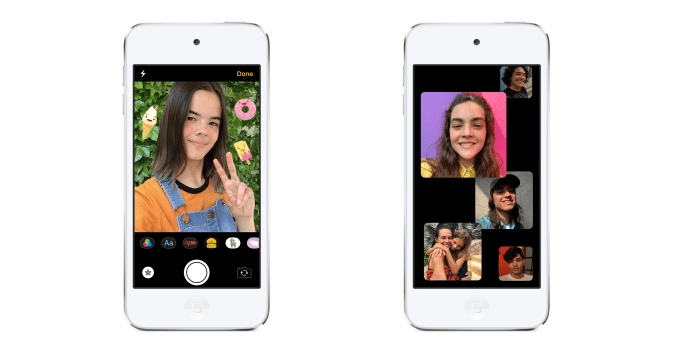
Nobody was expecting an update for this device, it hadn’t been updated since 2015 and it remains Apple’s last pocketable mobile device without access to a mobile network. It’s the dumbest device Apple sells — a total anomaly — so why throw it a new refresh? As with every perplexing move that Apple makes lately, it comes down to how the Cupertino giant is acquiring customers and making revenue in 2019.

It doesn’t take much scouring through Apple’s marketing materials to understand who the new iPod Touch is for, the answer hits you in the face, it’s for kids. It’s a starter iPhone.

The company needs to wrench more revenue from high-value users buying their most expensive devices, but that equation doesn’t bode well for the youngest Apple users getting their first device. When the iPod Touch was last refreshed in 2015, the iPhone 6S had just been announced and 2-year carrier contract deals meant you could get your hands on one for $199. That’s not the case anymore.

In 2016, an oft-quoted study declared 10.3-years-old as the average age that kids got their first smartphone, there hasn’t been anything too serious done since then but it’s not unreasonable to suspect that number has gone anywhere but down. Parents are likely already on the fence about taking the plunge on the device that comes even earlier than a smartphone and devices running Android are cheaper and more plentiful. While Apple has maintained the $329 entry price of the iPad, the iPad Mini has jumped in price and the higher-end iPads are more expensive than ever.

The crazy thing is that as Apple and Google’s cloud services are getting more sand-boxed, it’s becoming more and more likely that these first devices could determine what operating system a kid sticks with once they have more of a say in what smartphone they’re getting. Where are their photos stored? What can they play the games they’ve already bought? At a certain point, will higher upfront costs for these entry-level devices hamper iOS growth further down the road?

Shoot me tips or feedback
on Twitter @lucasmtny or email
lucas@techcrunch.com

It’s all just an interesting head-scratcher, but more fundamentally while Apple is trying to wrench more cash out of its hardware acolytes, it still can’t afford to shy away from low-cost devices that entice people into high-cost services. In this way its torn between two strategies, and left in this strange evolutionary stage where it has to ensure it doesn’t screw itself over down the road.

Something like Apple Arcade could theoretically be a great sell for parents, games can be played offline and there are none of the pesky in-app purchases, but that only works when the parents aren’t buying a bargain Android tablet in the first place.

We’ll see how much Apple continues to support older hardware with its iOS 13 release Monday, but we’ll also see how much they continue to build out features and products to get kids engaged with Apple and iOS earlier and earlier. Likely with the goal of keeping them away from the cheap stuff that their skyrocketing hardware prices might push them towards.

What to expect at Apple’s WWDC 2019

On to the rest of the week’s news…

JOHANNES EISELE/AFP/Getty Images

Trends of the week

Here are a few big news items from big companies, with green links to all the sweet, sweet added context.

  • Your Uber rating is: go order a Lyft
    Every Uber driver has a horror story and there’s a decent chance that for a lot of Uber drivers those horror stories involve some of the same riders. The company announced this week that they’re just straight-up banning some of the lowest-rated users, though it sounds like you’ll get a few warnings to clean up your act before any action takes place. Previously, drivers have faced potential deactivations if they drop below a 4.6 rating, but there’s no specific word on what the threshold is for unruly riders.
  • RIP: BBM
    This generation of tech giants has been riding high for the better part of the past decade, but it’s important to remember that everything has a way of crumbling. Case in point, Blackberry Messaging officially shut down on Friday. You can read more about the gradual degradation of the once-ubiquitous platform in our story.
  • Google harshes legal weed’s mellow
    Google is chasing after weed smokers and the reefer inclined with its latest announcement that companies can’t sell weed products through their apps if they’re downloaded off the Play Store. The apps will still be able to exist and showcase products, but the apps can’t host a shopping cart for users. The company isn’t leading the way in being a narc, Apple had already banned in-app purchases like these.
  • Leap Motion throws up its hands
    After $94 million in funding, missed opportunities and Apple acquisition offers, Leap Motion is packing its hand-tracking tech away and shipping it to London, after being acquired by UK-based UltraHaptics for a reported $30 million. That number might not sound too awful, but considering Leap Motion’s status as the rising star of the consumer tech world not too long ago, it’s hard to see the exit as anything but a disappointing end for the startup.
PreShow facial recognition

GAFA Gaffes

How did the top tech companies screw up this week? This clearly needs its own section, in order of awfulness:

  1. Amazon punts taking stance on facial recognition
    [Amazon defeated shareholder’s vote on facial recognition by a wide margin]
  2. Apple gets defensive after Supreme Court ruling:
    [Apple’s new App Store website takes aim at antitrust anti-competitive claims]
NOAH BERGER/AFP/Getty Images

Extra Crunch

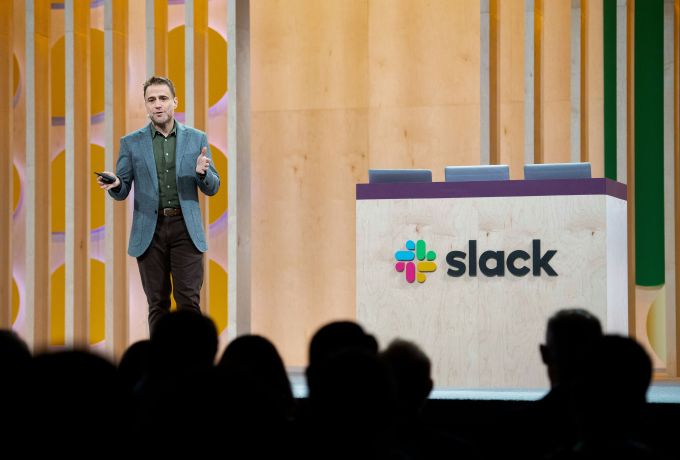
Our premium subscription service had another week of interesting deep dives. TechCrunch’s Kate Clark wrote about Slack’s odd beginnings as a weird little online game studio called Tiny Speck and how some of the young startup’s storied investors weren’t thrilled about its dramatic pivot into enterprise messaging.

The Slack origin story: How a whimsical online game became an enterprise software giant

“With the support of more than $15 million in venture capital funding — all before the game began beta testing — Tiny Speck hired more than 40 employees, wrote hundreds of lines of code and concocted big dreams for its zany, whimsical and absurdist universe.”

Here are some of our other top reads this week for premium subscribers. This week TechCrunch writers talked a bit about SoftBank, and how to get VCs fighting over your startup idea…

Want more TechCrunch newsletters? Sign up here.


Source: TechCrunch http://j.mp/2Mpi8VF

Saturday, June 1, 2019

Foxconn halts production lines for Huawei phones, according to reports

Huawei, the Chinese technology giant whose devices are at the center of a far-reaching trade dispute between the U.S. and Chinese governments, is reducing orders for new phones, according to a report in The South China Morning Post.

According to unnamed sources, the Taiwanese technology manufacturer Foxconn has halted production lines for several Huawei phones after the Shenzhen-based company reduced orders. Foxconn also makes devices for most of the major smart phone vendors including Apple and Xiaomi (in addition to Huawei).

In the aftermath of President Donald Trump’s declaration of a “national emergency” to protect U.S. networks from foreign technologies, Huawei and several of its affiliates were barred from acquiring technologies from U.S. companies.

The blacklist has impacted multiple lines of Huawei’s business including it handset manufacturing capabilities given the company’s reliance on Google’s Android operating system for its smartphones.

In May, Google reportedly suspended business with Huawei, according to a Reuters report. Last year, Huawei shipped over 200 million handsets and the company had a stated goal to become the world’s largest vendor of smartphones by 2020.

These reports from The South China Morning Post are the clearest indication that the ramifications of the U.S. blacklisting are beginning to be felt across Huawei’s phone business outside of China.

Huawei was already under fire for security concerns, and will be forced to contend with more if it can no longer provide Android updates to global customers.

Contingency planning is already underway at Huawei. The company has built its own Android-based operating system, and can use the stripped down, open source version of Android that ships without Google Mobile Services. For now, its customers also still have access to Google’s app store. But if the company is forced to make developers sell their apps on a siloed Huawei-only store, it could face problems from users outside of China.

Huawei and the Chinese government are also retaliating against the U.S. efforts. The company has filed a legal motion to challenge the U.S. ban on its equipment, calling it “unconstitutional.”  And Huawei has sent home its American employees deployed at R&D functions at its Shenzhen headquarters.

It has also asked its Chinese employees to limit conversations with overseas visitors, and cease any technical meetings with their U.S. contacts.

Still, any reduction in orders would seem to indicate that the U.S. efforts to stymie Huawei’s expansion (at least in its smartphone business) are having an impact.

A spokesperson for Huawei U.S. did not respond to a request for comment.


Source: TechCrunch http://j.mp/2W7AZUF