Tuesday, September 3, 2019

Google releases Android 10

Android 10 is now available, assuming you have a phone that already supports Google’s latest version of its mobile operating system. For now, that’s mostly Google’s own Pixel phones, though chances are that most of the phones that were supported during the beta phase will get updated to the release version pretty soon, too.

Since the development of Android pretty much happens in the open these days, the release itself doesn’t feature any surprises. Just like with the last few releases, chances are you’ll have to look twice after the update to see whether your phone actually runs the latest versions. There are plenty of tweaks in Android 10, but some of the most interesting new features are a bit hidden and (at least in the betas) off by default.

The one feature everybody has been waiting for is a dark mode and here, Android 10 doesn’t disappoint. The new dark theme is now ready for your night-time viewing, with the promise of improved battery life for your OLED phone and support from a number of apps like Photos and Calendar. Over time, more apps will automatically switch to a dark theme as well, but right now, the number seems rather limited and a bit random, with Fit offering a dark mode while Gmail doesn’t.

The other major tweak is the updated gesture navigation. This remains optional — you can still use the same old three-button navigation Android has long offered. It’s essentially a tweak of the navigation system the launched with Android Pie. For the most part, the new navigation gestures work just fine and feel more efficient than those in Pie, especially when you try to switch between apps. Swiping left and right from the screen replaces the back button, which isn’t immediately obvious, and a slightly longer press on the side of the screen occasionally opens a navigation drawer. I say ‘occasionally,’ because I think this is the most frustrating part of the experience. Sometimes it works, sometimes it doesn’t. The trick to opening the drawer, it seems, is to swipe at an angle that’s well above 45 degrees.

Also new is an updated Smart Reply feature that now suggests actions from your notifications. If a notification includes a link, for example, Smart Reply will suggest opening it in Chrome. Same for addresses, where the notification can take you right to Google Maps, or YouTube videos that you can play in — you guessed it — Youtube. This should work across all popular messaging apps.

There are also a couple of privacy and security features here, including the ability to only share location data with apps while you use them and a new Privacy section in Settings that gives you access to controls for managing your web and app history, as well as your ad settings in a slightly more prominent place.

The new Google Play system updates, the company can now also push important security and privacy fixes right to the phone from the Google Play store, which allows it to patch issues without having to go through the system update process. Given the slow Android OS upgrade cycles, that’s an important new feature, though it, too, is an evolution of Google’s overall strategy to decouple these updates and core features from the OS updates.

Two other interesting new features are still in beta or won’t be available until later this year, but Google prominently highlights Focus mode, which allows you to silence specific apps for a while and which is now in beta, and Live Caption, which will launch in the fall on Pixel phones and which can automatically caption videos and audio across all apps. I’ve been beta testing Focus Mode for a bit and I’m not sure it has really made a difference in my digital wellbeing, but the ability to mute notifications from YouTube during the workday, for example, has probably made me a tiny bit more productive.

Oh, and there’s also native support for foldable phones, but for the time being, there are no foldable phones on the market.

Like with most recent releases, those are just some of the highlights. There are plenty of small tweaks, too, and chances are you’ll notice a few new fonts and visual tweaks here and there. For the most part, though, you can continue to use Android like you always have. Even major changes like the updated gesture controls are optional. It’s very much an evolutionary update, but that’s pretty much the case for any mobile OS these days.


Source: TechCrunch http://j.mp/2NQRnZ9

Daily Crunch: Facebook might remove Like counts

The Daily Crunch is TechCrunch’s roundup of our biggest and most important stories. If you’d like to get this delivered to your inbox every day at around 9am Pacific, you can subscribe here.

1. Now Facebook says it may remove Like counts

Instagram is already testing something similar in seven countries, including Canada and Brazil. Instead of showing the total number of Likes for a post, it displays the names of just a few mutual friends who have Liked it.

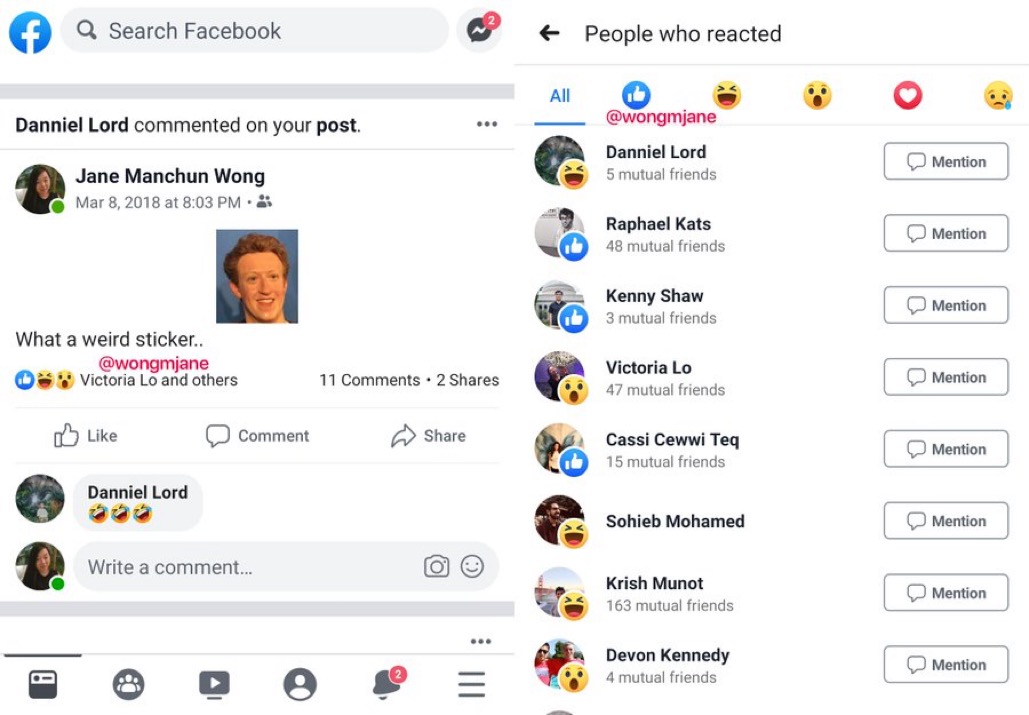
Jane Manchun Wong spotted Facebook prototyping the hidden Like counts in its Android app. When we asked the company, it confirmed that it’s considering a test to remove Like counts, though this isn’t live for any users yet.

2. WeChat restricts controversial video face-swapping app Zao, citing ‘security risks’

Zao went viral in China this weekend for its realistic face-swapping videos. But following controversy about its user policy, messaging platform WeChat restricted access to the app.

3. OpenGov raises $51M to boost its cloud-based IT services for government and civic organizations

The company was co-founded by Palantir’s Joe Lonsdale to help governments and other civic organizations organize, analyze and present financial data and more, using cloud-based architecture.

GettyImages 981328812

ANAHEIM, CA – JUNE 21: YouTube Chief Product Officer Neal Mohan speaks onstage during the YouTube Keynote: Building Communities and the Next Generation of Media Companies Panel during VidCon. (Photo by FilmMagic/FilmMagic for YouTube)

4. YouTube’s Neal Mohan is coming to Disrupt SF

YouTube has found itself front-and-center in the recent debates about free speech, the internet and how the online world is shaping our offline lives, so there will be plenty to talk about when Mohan joins us at Disrupt.

5. Kabbage acquires Radius Intelligence, the marketing tech firm with a database of 20M small businesses

It’s been a tumultuous period for Radius, which announced a merger with its big competitor Leadspace last year, only to quietly cancel the deal three months later. Two months after that, it replaced its longtime CEO.

6. Apple still has work to do on privacy

Natasha Lomas examines whether iPhones are generally superior to Android devices when it comes to security. (Extra Crunch membership required.)

7. This week’s TechCrunch podcasts

On Equity, Alex and Kate share their thoughts on Peloton’s finances and prospects. And on this week’s Original Content, we review the Netflix series “The Dark Crystal: Age of Resistance.”


Source: TechCrunch http://j.mp/2NNFhAc

Mozilla flips the default switch on Firefox tracking cookie blocking

From today Firefox users who update to the latest version of the browser will find a pro-privacy setting flipped for them on desktop and Android smartphones, assuming they didn’t already have the anti-tracking cookie feature enabled.

Mozilla launched the Enhanced Tracking Protection (ETP) feature in June as a default setting for new users — but leaving existing Firefox users’ settings unchanged at that point.

It’s now finishing what it started by flipping the default switch across the board in v69.0 of the browser.

The feature takes clear aim at third party cookies that are used to track Internet users for creepy purposes such as ad profiling. (Firefox relies on the Disconnect list to identify creepy cookies to block.)

The anti-tracking feature also takes aim at cryptomining: A background practice which can drain CPU and battery power, negatively impacting the user experience. Again, Firefox will now block cryptomining by default, not only when user activated.

In a blog post about the latest release Mozilla says it represents a “milestone” that marks “a major step in our multi-year effort to bring stronger, usable privacy protections to everyone using Firefox”.

“Currently over 20% of Firefox users have Enhanced Tracking Protection on. With today’s release, we expect to provide protection for 100% of ours users by default,” it predicts, underlining the defining power of default settings.

Firefox users with ETP enabled will see a shield icon in the URL bar to denote the tracker blocking is working. Clicking on this icon takes users to a menu where they can view a list of all the tracking cookies that are being blocked. Users are also able to switch off tracking cookie blocking on a per site basis, via this Content Blocking menu.

While blocking tracking cookies reduces some tracking of internet users it does not offer complete protection for privacy. Mozilla notes that ETP does not yet block browser fingerprinting scripts from running by default, for example.

Browser fingerprinting is another prevalent privacy-hostile technique that’s used to track and profile web users without knowledge or consent by linking online activity to a computer’s configuration and thereby tying multiple browser sessions back to the same device-user.

It’s an especially pernicious technique because it can erode privacy across browser sessions and even different browsers — which an Internet user might be deliberately deploying to try to prevent profiling.

A ‘Strict Mode’ in the Firefox setting can be enabled by Firefox users in the latest release to block fingerprinting. But it’s not on by default.

Mozilla says a future release of the browser will flip fingerprinting blocking on by default too.

The latest changes in Firefox continue Mozilla’s strategy — announced a year ago — of pro-actively defending its browser users’ privacy by squeezing the operational range of tracking technologies.

In the absence of a robust regulatory framework to rein in the outgrowth of the adtech ‘industrial data complex’ that’s addicted to harvesting Internet users’ data for ad targeting, browser makers have found themselves at the coal face of the fight against privacy-hostile tracking technologies.

And some are now playing an increasingly central — even defining role — as they flip privacy and anti-tracking defaults.

Notably, earlier this month, the open source WebKit browser engine, which underpins Apple’s Safari browser, announced a new tracking prevention policy that puts privacy on the same footing as security, saying it would treat attempts to circumvent this as akin to hacking.

Even Google has responded to growing pressure around privacy — announcing changes to how its Chrome browser handles cookies this May. Though it’s not doing that by default yet.

It has also said it’s working on technology to reduce fingerprinting. And recently announced a long term proposal to involve its Chromium browser engine in developing a new open standard for privacy.

Though cynics might suggest the adtech giant is responding to competitive pressure on privacy by trying to frame and steer the debate in a way that elides its own role in data mining Internet users at scale for (huge) profit.

Thus its tardy privacy pronouncements and long term proposals look rather more like an attempt to kick the issue into the long grass and buy time for Chrome to keep being used to undermine web users’ privacy — instead of Google being forced to act now and close down privacy-hostile practices that benefit its business.


Source: TechCrunch http://j.mp/2Zu2WfO

Monday, September 2, 2019

Now Facebook says it may remove Like counts

Facebook could soon start hiding the Like counter on News Feed posts to protect users’ from envy and dissuade them from self-censorship. Instagram is already testing this in 7 countries including Canada and Brazil, showing a post’s audience just a few names of mutual friends who’ve Liked it instead of the total number. The idea is to prevent users from destructively comparing themselves to others and potentially feeing inadequate if their posts don’t get as many Likes. It could also stop users from deleting posts they think aren’t getting enough Likes or not sharing in the first place.

CEDA6502 FBFE 4C92 BDFE C77F81D58E45

Facebook prototypes hiding like counts [via Jane Manchun Wong]

Reverse engineering master Jane Manchun Wong spotted Facebook prototyping the hidden Like counts in its Android app. When we asked Facebook, the company confirmed to TechCrunch that it’s considering testing removal of Like counts. However it’s not live for users yet. Facebook declined to share results from the Instagram Like hiding tests, its exact motives, or any schedule for starting testing.

Still, the prototype might indicate positive results from hiding Like tallies in Instagram, which we first reported in April after it was spotted by Wong there as well. After beginning testing in Canada later that month. Instagram added Brazil, Australia, New Zealand, Italy, Ireland, and Japan to the test in July. There, a post’s author can still see the Like total, but everyone else can’t. The expansion of that Instagram test and Facebook potentially trying it in its own app signals that it might have positive or negligible impacts on sharing while aiding mental health, or at least be worth a slight drop in engagement.

E5BAE141 89D6 4F76 9C19 6E8F3FD1CB3C

Instagram is already testing hiding Like counts and Facebook may soon do the same.

Facebook has gradually been relegated to the place for sharing showy life events like marriages or new jobs while Instagram and Snapchat take over for day-to-day sharing. The problem is that people have so many fewer of those big moments, and the large Like counts they attract can make other users self-conscious of their of own lives and content. That’s all problematic for Facebook’s ad views. Facebook wants to avoid scenarios such as “Look how many Likes they get. My life is lame in comparison” or “why even share if it’s not going to get as many Likes as her post and people will think I’m unpopular”.

Removing Like counts could put less pressure on users and encourage them to share more freely and frequently, as I wrote in 2017. It could also obscure Facebook’s own potential decline in popularity as users switch to other apps. Posts not getting as many Likes as they used to could hasten the exodus.


Source: TechCrunch http://j.mp/2zHYmeT

Sunday, September 1, 2019

The iPhone-Hacking Sites Google Found Apparently Went After Android and Windows Users Too

Those hackers Google’s researchers sussed out earlier this week apparently went after more than just iPhone users. Microsoft’s operating system along with Google’s own were also targeted, according to Forbes, in what some reports are calling a possibly state-backed effort to spy on the Uighur ethnic group in China.

Read more...


Source: Gizmodo http://j.mp/30QcL4w

What you missed in cybersecurity this week

There’s not a week that goes by where cybersecurity doesn’t dominates the headlines. This week was no different. Struggling to keep up? We’ve collected some of the biggest cybersecurity stories from the week to keep you in the know and up to speed.

Malicious websites were used to secretly hack into iPhones for years, says Google

TechCrunch: This was the biggest iPhone security story of the year. Google researchers found a number of websites that were stealthily hacking into thousands of iPhones every week. The operation was carried out by China to target Uyghur Muslims, according to sources, and also targeted Android and Windows users. Google said it was an “indiscriminate” attack through the use of previously undisclosed so-called “zero-day” vulnerabilities.

Hackers could steal a Tesla Model S by cloning its key fob — again

Wired: For the second time in two years, researchers found a serious flaw in the key fobs used to unlock Tesla’s Model S cars. It’s the second time in two years that hackers have successfully cracked the fob’s encryption. Turns out the encryption key was doubled in size from the first time it was cracked. Using twice the resources, the researchers cracked the key again. The good news is that a software update can fix the issue.

Microsoft’s lead EU data watchdog is looking into fresh Windows 10 privacy concerns

TechCrunch: Microsoft could be back in hot water with the Europeans after the Dutch data protection authority asked its Irish counterpart, which oversees the software giant, to investigate Windows 10 for allegedly breaking EU data protection rules. A chief complaint is that Windows 10 collects too much telemetry from its users. Microsoft made some changes after the issue was brought up for the first time in 2017, but the Irish regulator is looking at if these changes go far enough — and if users are adequately informed. Microsoft could be fined up to 4% of its global annual revenue if found to have flouted the law. Based off 2018’s figures, Microsoft could see fines as high as $4.4 billion.

U.S. cyberattack hurt Iran’s ability to target oil tankers, officials say

The New York Times: A secret cyberattack against Iran in June but only reported this week significantly degraded Tehran’s ability to track and target oil tankers in the region. It’s one of several recent offensive operations against a foreign target by the U.S. government in recent moths. Iran’s military seized a British tanker in July in retaliation over a U.S. operation that downed an Iranian drone. According to a senior official, the strike “diminished Iran’s ability to conduct covert attacks” against tankers, but sparked concern that Iran may be able to quickly get back on its feet by fixing the vulnerability used by the Americans to shut down Iran’s operation in the first place.

Apple is turning Siri audio clip review off by default and bringing it in house

TechCrunch: After Apple was caught paying contractors to review Siri queries without user permission, the technology giant said this week it will turn off human review of Siri audio by default and bringing any opt-in review in-house. That means users actively have to allow Apple staff to “grade” audio snippets made through Siri. Apple began audio grading to improve the Siri voice assistant. Amazon, Facebook, Google, and Microsoft have all been caught out using contractors to review user-generated audio.

Hackers are actively trying to steal passwords from two widely used VPNs

Ars Technica: Hackers are targeting and exploiting vulnerabilities in two popular corporate virtual private network (VPN) services. Fortigate and Pulse Secure let remote employees tunnel into their corporate networks from outside the firewall. But these VPN services contain flaws which, if exploited, could let a skilled attacker tunnel into a corporate network without needing an employee’s username or password. That means they can get access to all of the internal resources on that network — potentially leading to a major data breach. News of the attacks came a month after the vulnerabilities in widely used corporate VPNs were first revealed. Thousands of vulnerable endpoints exist — months after the bugs were fixed.

Grand jury indicts alleged Capital One hacker over cryptojacking claims

TechCrunch: And finally, just when you thought the Capital One breach couldn’t get any worse, it does. A federal grand jury said the accused hacker, Paige Thompson, should be indicted on new charges. The alleged hacker is said to have created a tool to detect cloud instances hosted by Amazon Web Services with misconfigured web firewalls. Using that tool, she is accused of breaking into those cloud instances and installing cryptocurrency mining software. This is known as “cryptojacking,” and relies on using computer resources to mine cryptocurrency.


Source: TechCrunch http://j.mp/32i5r1Q

Week in Review: Apple makes a rare apology, Nintendo tries to reinvent its invention

Hey. This is Week-in-Review, where I give a heavy amount of analysis and/or rambling thoughts on one story while scouring the rest of the hundreds of stories that emerged on TechCrunch this week to surface my favorites for your reading pleasure.

Last week, I talked about Google’s Android naming switch-up.


The big story

Like clockwork, sources have been revealing to publications that Siri, Alexa, Google Assistant and Facebook M aren’t just digital assistants, they are portals into the AI workflows of Silicon Valley. Oh, and “AI workflows” means lots of contractors putting in quite a bit of manual work to understand what we want when we ask them questions.

This week, Apple announced that it’s completely changing how it handles reviewing audio from user Siri requests to ensure that users know exactly what they’re getting into privacy-wise.

The big change is that third-party contractors won’t have access to any of the clips for a process called “grading” and there is an explicit opt-in process for users. The company also gave a pretty explicit apology, which is pretty rare for an entity that seems to think its MacBook keyboards are still completely fine.

This whole situation is important for a couple reasons. One, Apple really sets the tone for consumer privacy among the tech giants so making notable changes here is positive and might push others to make similar updates. Two, Apple has the worst consumer-facing digital assistant. Like, Siri is just unquestionably worse than Alexa and Google Assistant so they arguably have the most to lose here and this is a decision that means less data for the company to hone its tech on.

Together, all of these gaffes really weren’t egregious, they were dealing with data that wasn’t nominally connected to users, but audio files should definitely be treated with a little more respect than anonymous crash reports. The journalism from publications like The Guardian pushing on “common” industry practices seemed to surface some positive change here.

Send me feedback
on Twitter @lucasmtny or email
lucas@techcrunch.com

On to the rest of the week’s news.

Nintendo Switch Lite

Trends of the week

Here are a few big news items from big companies, with green links to all the sweet, sweet added context:

  • Nintendo’s portable gets more portable
    The Nintendo Switch has been a huge success for the company, but in a new hardware update, the giant is doubling down on portability and simplicity in what might be a bid to capture some of the market it’s left behind from the DS line. Read more about it here.
  • Former Google engineer gets indicted
    Autonomous tech guru Anthony Levandowski who was as the center of the contentious Waymo-Uber lawsuit is back in the spotlight after he was handed a federal indictment with 33 counts of theft and attempted theft of trade secrets. Read more here.
  • Apple’s next hardware event is on its way
    The company just sent out invites to reporters for its iPhone event this month. Read more here.
  • Jack gets hacked
    Twitter like to dream about its impact and influence in ways that feel less realistic to the average user scrolling through spam and insults, but CEO Jack Dorsey got a taste of the seedy underbelly of the site when his Twitter account was hacked Friday and bomb threats and racial slurs were sent out. Read more here.

youtube

GAFA Gaffes

How did the top tech companies screw up this week? This clearly needs its own section, in order of badness:

  1. YouTube’s conspiracy theory devolution:
    [YouTube to reduce conspiracy theory recommendations]
  2. Facebook brings in some long overdue political advertising oversight:
    [Facebook will require political advertisers provide further credentials or have their ads paused]
An Amazon logo seen outside a building in Toronto

Photo by Dinendra Haria/SOPA Images/LightRocket via Getty Images

Extra Crunch

Our premium subscription service had another week of interesting deep dives. We published a roadmap for entrepreneurs looking to leverage Amazon and other ad platforms to create a direct-to-consumer startup.

How to use Amazon and advertising to build your D2C startup

“…This article focuses on customer acquisition, particularly Amazon and online advertising, for the direct-to-consumer (D2C) CPG venture. Selling on Amazon, specifically third-party (3P), has become an increasingly important component of the D2C playbook. About 46% of product searches start on Amazon, which makes it a compelling source of sales even for early-stage ventures….” (Extra Crunch membership required.)

Here are some of our other top reads this week for premium subscribers. This week, we published some analysis on the latest VMware deal and also looked at how startups should integrate customer success solutions early-on.

Sign up for more newsletters in your inbox (including this one) here.


Source: TechCrunch http://j.mp/30N32vS