Thursday, September 27, 2018

Facebook’s ex-CSO, Alex Stamos, defends its decision to inject ads in WhatsApp

Alex Stamos, Facebook’s former chief security officer, who left the company this summer to take up a role in academia, has made a contribution to what’s sometimes couched as a debate about how to monetize (and thus sustain) commercial end-to-end encrypted messaging platforms in order that the privacy benefits they otherwise offer can be as widely spread as possible.

Stamos made the comments via Twitter, where he said he was indirectly responding to the fallout from a Forbes interview with WhatsApp co-founder Brian Acton — in which Acton hit at out at his former employer for being greedy in its approach to generating revenue off of the famously anti-ads messaging platform.

Both WhatsApp founders’ exits from Facebook has been blamed on disagreements over monetization. (Jan Koum left some months after Acton.)

In the interview, Acton said he suggested Facebook management apply a simple business model atop WhatsApp, such as metered messaging for all users after a set number of free messages. But that management pushed back — with Facebook COO Sheryl Sandberg telling him they needed a monetization method that generates greater revenue “scale”.

And while Stamos has avoided making critical remarks about Acton (unlike some current Facebook staffers), he clearly wants to lend his weight to the notion that some kind of trade-off is necessary in order for end-to-end encryption to be commercially viable (and thus for the greater good (of messaging privacy) to prevail); and therefore his tacit support to Facebook and its approach to making money off of a robustly encrypted platform.

Stamos’ own departure from the fb mothership was hardly under such acrimonious terms as Acton, though he has had his own disagreements with the leadership team — as set out in a memo he sent earlier this year that was obtained by BuzzFeed. So his support for Facebook combining e2e and ads perhaps counts for something, though isn’t really surprising given the seat he occupied at the company for several years, and his always fierce defence of WhatsApp encryption.

(Another characteristic concern that also surfaces in Stamos’ Twitter thread is the need to keep the technology legal, in the face of government attempts to backdoor encryption, which he says will require “accepting the inevitable downsides of giving people unfettered communications”.)

This summer Facebook confirmed that, from next year, ads will be injected into WhatsApp statuses (aka the app’s Stories clone). So it is indeed bringing ads to the famously anti-ads messaging platform.

For several years the company has also been moving towards positioning WhatsApp as a business messaging platform to connect companies with potential customers — and it says it plans to meter those messages, also from next year.

So there are two strands to its revenue generating playbook atop WhatsApp’s e2e encrypted messaging platform. Both with knock-on impacts on privacy, given Facebook targets ads and marketing content by profiling users by harvesting their personal data.

This means that while WhatsApp’s e2e encryption means Facebook literally cannot read WhatsApp users’ messages, it is ‘circumventing’ the technology (for ad-targeting purposes) by linking accounts across different services it owns — using people’s digital identities across its product portfolio (and beyond) as a sort of ‘trojan horse’ to negate the messaging privacy it affords them on WhatsApp.

Facebook is using different technical methods (including the very low-tech method of phone number matching) to link WhatsApp user and Facebook accounts. Once it’s been able to match a Facebook user to a WhatsApp account it can then connect what’s very likely to be a well fleshed out Facebook profile with a WhatsApp account that nonetheless contains messages it can’t read. So it’s both respecting and eroding user privacy.

This approach means Facebook can carry out its ad targeting activities across both messaging platforms (as it will from next year). And do so without having to literally read messages being sent by WhatsApp users.

As trade offs go, it’s a clearly a big one — and one that’s got Facebook into regulatory trouble in Europe.

It is also, at least in Stamos’ view, a trade off that’s worth it for the ‘greater good’ of message content remaining strongly encrypted and therefore unreadable. Even if Facebook now knows pretty much everything about the sender, and can access any unencrypted messages they sent using its other social products.

In his Twitter thread Stamos argues that “if we want that right to be extended to people around the world, that means that E2E encryption needs to be deployed inside of multi-billion user platforms”, which he says means: “We need to find a sustainable business model for professionally-run E2E encrypted communication platforms.”

On the sustainable business model front he argues that two models “currently fit the bill” — either Apple’s iMessage or Facebook-owned WhatsApp. Though he doesn’t go into any detail on why he believes only those two are sustainable.

He does say he’s discounting the Acton-backed alternative, Signal, which now operates via a not-for-profit (the Signal Foundation) — suggesting that rival messaging app is “unlikely to hit 1B users”.

In passing he also throws it out there that Signal is “subsidized, indirectly, by FB ads” — i.e. because Facebook pays a licensing fee for use of the underlying Signal Protocol used to power WhatsApp’s e2e encryption. (So his slightly shade-throwing subtext is that privacy purists are still benefiting from a Facebook sugardaddy.)

Then he gets to the meat of his argument in defence of Facebook-owned (and monetized) WhatsApp — pointing out that Apple’s sustainable business model does not reach every mobile user, given its hardware is priced at a premium. Whereas WhatsApp running on a cheap Android handset ($50 or, perhaps even $30 in future) can.

Other encrypted messaging apps can also of course run on Android but presumably Stamos would argue they’re not professionally run.

“I think it is easy to underestimate how radical WhatsApp’s decision to deploy E2E was,” he writes. “Acton and Koum, with Zuck’s blessing, jumped off a bridge with the goal of building a monetization parachute on the way down. FB has a lot of money, so it was a very tall bridge, but it is foolish to expect that FB shareholders are going to subsidize a free text/voice/video global communications network forever. Eventually, WhatsApp is going to need to generate revenue.

“This could come from directly charging for the service, it could come from advertising, it could come from a WeChat-like services play. The first is very hard across countries, the latter two are complicated by E2E.”

“I can’t speak to the various options that have been floated around, or the arguments between WA and FB, but those of us who care about privacy shouldn’t see WhatsApp monetization as something evil,” he adds. “In fact, we should want WA to demonstrate that E2E and revenue are compatible. That’s the only way E2E will become a sustainable feature of massive, non-niche technology platforms.”

Stamos is certainly right that Apple’s iMessage cannot reach every mobile user, given the premium cost of Apple hardware.

Though he elides the important role that second hand Apple devices play in helping to reduce the barrier to entry to Apple’s pro-privacy technology — a role Apple is actively encouraging via support for older devices (and by its own services business expansion which extends its model so that support for older versions of iOS (and thus secondhand iPhones) is also commercially sustainable).

Robust encryption only being possible via multi-billion user platforms essentially boils down to a usability argument by Stamos — which is to suggest that mainstream app users will simply not seek encryption out unless it’s plated up for them in a way they don’t even notice it’s there.

The follow on conclusion is then that only a well-resourced giant like Facebook has the resources to maintain and serve this different tech up to the masses.

There’s certainly substance in that point. But the wider question is whether or not the privacy trade offs that Facebook’s monetization methods of WhatsApp entail, by linking Facebook and WhatsApp accounts and also, therefore, looping in various less than transparent data-harvest methods it uses to gather intelligence on web users generally, substantially erode the value of the e2e encryption that is now being packaged alongside Facebook’s ad targeting people surveillance.

And, well, used as a selling aid for its otherwise privacy eroding practices.

Yes WhatsApp users’ messages will remain private, thanks to Facebook funding the necessary e2e encryption. But the price users are having to pay is very likely still their personal privacy.

And at that point the argument really becomes about how much profit a commercial entity should be able to extract off of a product that’s being marketed as securely encrypted and thus ‘pro-privacy’? How much revenue “scale” is reasonable or unreasonable in that scenario?

Other business models are possible, which was Acton’s point. But likely less profitable. And therein lies the rub where Facebook is concerned.

How much money should any company be required to leave on the table, as Acton did when he left Facebook without the rest of his unvested shares, in order to be able to monetize a technology that’s bound up so tightly with notions of privacy?

Acton wanted Facebook to agree to make as much money as it could without users having to pay it with their privacy. But Facebook’s management team said no. That’s why he’s calling them greedy.

Stamos doesn’t engage with that more nuanced point. He just writes: “It is foolish to expect that FB shareholders are going to subsidize a free text/voice/video global communications network forever. Eventually, WhatsApp is going to need to generate revenue” — thereby collapsing the revenue argument into an all or nothing binary without explaining why it has to be that way.


Source: TechCrunch http://j.mp/2R0VgK9

How to Watch the Brett Kavanaugh and Christine Blasey Ford Hearings Today, No Cable Required

Supreme Court nominee Brett Kavanaugh and Christine Blasey Ford, one of the women who accuses Kavanaugh of sexual misconduct, will both testify in front of a Senate committee today. You can watch the livestreams below even if you’re not near a TV.

Read more...


Source: Gizmodo http://j.mp/2zz8dUW

Wednesday, September 26, 2018

Oculus mobile app will now let users remote install PC games

Having to deal with using a PC is honestly the worst part about dealing with virtual reality. The same goes for having to wait for lengthy installs of big VR game downloads.

Today at its Oculus Connect 5 keynote, the company announced that its mobile app for iOS and Android will now connect to the company’s Rift headset allowing users to browse the desktop store and remote install games and apps. Previously the mobile app only worked with the $199 Oculus Go standalone headset.

In addition to facilitating easier downloads, the mobile app will also let users connect with friends on the Rift and browse for events being showcased on the PC-based headset.

Developing

more Oculus Connect 5 coverage


Source: TechCrunch http://j.mp/2OT1WZA

Plex kills off support for Cloud Sync, Plugins and bookmarking features

Plex is continuing to streamline its software by shutting down features that weren’t broadly adopted or all that functional. The company says it will soon sunset a handful of options in its media player software, including Plugins, Cloud Sync, and its “Watch Later” bookmarking feature.

The move to kill off these features comes shortly after Plex announced it would soon shut down its Plex Cloud service, due to technical difficulties.

The company had originally began its life as a way for users to organize their personal media collections of photos, music, TV shows and films. But it has more recently expanded into the cord cutting market. This shift in focus has seen Plex adding features that support the ability to watch and record from live TV.

However, the change has also meant that support for things like Plex Cloud – which allowed users to stream their media from cloud storage sites like Google Drive and Dropbox – no longer take precedence.

However, Plex says that its decision to shut down this other group of features has to do more with their lack of use.

“Watch Later,” it says, was costly to maintain and hard to justify when only a small handful of folks used it, for example. Meanwhile, Cloud Sync was adopted by so few that Plex jokingly challenged any upset users to “DM us a photo of your Cloud Sync library and today’s newspaper,” to prove they actually used it.

Still, Cloud Sync’s removal is another example of Plex stepping away from supporting other cloud platforms. In this case, the feature allowed subscribers to select some content from their local media library, then sync a copy to a cloud storage provider for access when the local Plex Media Server was unavailable.

The decision to shut down Plugins seems to have given Plex the most concern, and was not taken lightly, the company says.

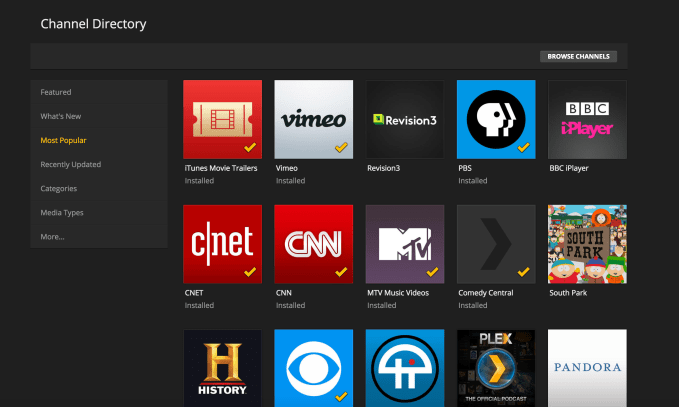
The Plugins feature allows users to add various channels and other third-party add-ons to their account, so they can access online content, including video, audio and other photo services. Among the most popular were plugins for services like Pandora, CNN, Vimeo, and others.

But Plex says that less than 2% of people were using Plugins, and it was built with an outdated protocol that’s difficult to support. Essentially, it’s at the point where Plex would need to rebuild the feature to keep it around, but can’t justify doing so when so little of the user base takes advantage of the option.

Plugins also make less sense for Plex’s business as it continues its push into live TV streaming, as many of the Plugins were workarounds for not being able to access TV content – like ABC, CBS, or NBC shows, for instance, or a newscast of some sort. But Plex itself bought a streaming news service, Watchup, last year and quickly added a dedicated news hub right in its app as a result. It has also added native support for podcasts, as another means of getting news and informational content.

The company explained its reasoning for all the closures in a blog post:

The Plex ecosystem is quite large, and over the years, we’ve sometimes added things that might have made sense at the time, but didn’t age well. We’ve also been incredibly reluctant to take anything away from people who may be using a given feature. Or kill support for a platform with low usage or other challenges. And while any given case might not be significant, they can add up over a decade to a death by a thousand (paper) cuts. So we set out to do some house-cleaning…

We didn’t approach the process lightly; we looked over usage numbers and took into account maintenance costs and general customer satisfaction. In some cases, we have plans for a future in which a better replacement shows up. Other things, we’re just stabbing in the chest repeatedly with a wooden stake (and hoping it’s not a zombie). But the philosophy is the same—we want to focus our finite energy on providing awesome functionality that works great and makes the folks who use it happy.

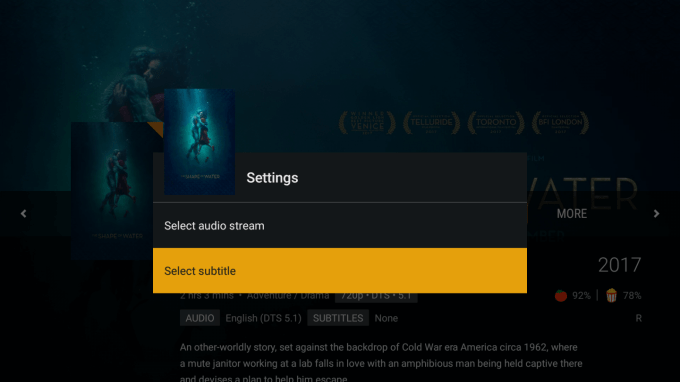
Alongside the shutdowns, Plex also added support for subtitles, which will roll out to Plex Pass Preview in the days ahead with launches on web (desktop), Xbox One, most LG TVs, Plex Media Player, Android mobile, and Android TV with iOS and Apple TV to follow.


Source: TechCrunch http://j.mp/2NHS5Jz

Sony is finally opening Fortnite cross-play on the PS4

Cross-play has been one of the biggest selling post for Fortnite, allowing players to engage in the battle royale, regardless of platform. There has, however, been one major holdout — until now. While PS4 have been able to play one another, Sony has been dragging its heels at the seemingly inevitable update.

Today, however, the company is taking key steps toward letting users battle it out, regardless of platform. Sony Interactive Entertainment President and CEO John Kodera announced via blog post that the company is opening up cross-play beta, beginning with the crazy popular sandbox survival game.

“Following a comprehensive evaluation process,” the exec writes, “SIE has identified a path toward supporting cross-platform features for select third party content. We recognize that PS4 players have been eagerly awaiting an update, and we appreciate the community’s continued patience as we have navigated through this issue to find a solution.”

That “path forward” will feature the major platforms that support the title, including, Android, iOS, Nintendo Switch, Xbox One, Windows and macOS. As Kodera notes, the update is a pretty sizable policy shift, so the company, “will update the community once we have more details to share, including more specifics regarding the beta timeframe, and what this means for other titles going forward.”

Until now, Sony has suggested that such a move could pose a security risk to users.  Observers, on the other hand, have suggested it was holding out purely out of monetary concern for the company.


Source: TechCrunch http://j.mp/2Oc6zkc

Inside Facebook Stories’ quest for originality amidst 300M users

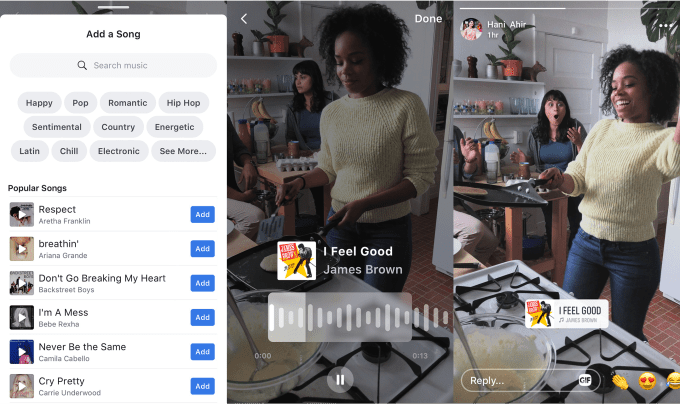
There’s a secret Facebook app called Blink. Built for employees only, it’s how the company tests out new video formats its hoping will become the next Boomerang or SuperZoom. They range from artsy Blur effects to a way even old Android phones can use Slo-Mo. One exciting format involves audio beat detection that syncs visual embellishments to songs playing in the background or added via the Music stickers that are  coming to Facebook Stories after debuting on Instagram.

“When we first formed the team . . . we brought in film makers and cinematographers to help the broader team understand the tropes around storytelling and filmmaking” says Dantley Davis, Facebook Stories’ Director Of Design. He knows those tropes himself, having spent seven years at Netflix leading the design of its apps and absorbing creative tricks from countless movies. He wants to democratize those effects once trapped inside expensive desktop editing software. “We’re working on formats to enable people to take the video they have and turn it into something special.”

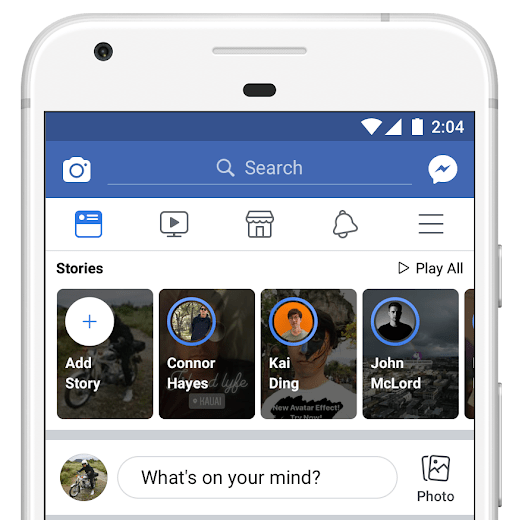
For all the jabs about Facebook stealing Stories from Snapchat, it’s working hard to differentiate. That’s in part because there’s not much left to copy, and because it’s largely succeeded in conquering the prodigal startup that refused to be acquired. Snapchat’s user count shrank last quarter to 188 million daily users. Facebook’s versions continue to grow. After announcing in May that Facebook Stories had 150 million users, with Messenger citing 70 million last September, today the company revealed they have a combined 300 million daily users.

With the success of any product comes the mandate to monetize it. That push ended up pushing out the founders of Facebook acquisition WhatsApp, and encroachment on product decision making did the same to Instagram’s founders who this week announced they were resigning. Now the mandate has reached Facebook Stories which today opened up to advertisers globally. As Stories sharing is predicted to surpass feed sharing in 2019, Facebook is counting on the ephemeral slideshows to sustain its ad revenue. Fears they wouldn’t lopped $120 billion off Facebook’s market cap this summer.

But to run ads you need viewers and that will require responses to questions that have dogged Facebook Stories since its debut in early 2017: Why do I need Stories here too when I already have Instagram Stories and WhatsApp Status.

The answer may be creativity, but Facebook is taking a scientific approach to determining which creative tools to build. Liz Keneski is a user experience research manager at Facebook. She leads the investigative trips, internal testing, and focus groups that shape Facebook’s products. Keneski laid out the different types of research Facebook employs to go from vague idea to polished launch.

Foundational Research – “This is the really future looking research. It’s not necessarily about any specific products but trying to understand people’s needs.”

Contextual Inquiry – “People are kind enough to invite us into their homes and talk with us about how they use technology.” Sometimes Facebook does “street intercepts” where they find people in public and spend five minutes watching and discussing how they use their phone. It also conducts “diary studies” where people journal about how they spend their time with tech.

Descriptive Research – “When we’re exploring a defined product space”, this lets Facebook get feedback on exactly what users would want a new feature to do.

Participatory Design – “It’s kind of like research arts and crafts. We give people different artifacts and design elements and actually ask them to a deign what an experience that would be ideal for them might look like.”

Product Research – “Seeing how people interact with a specific product, the things they’re like or don’t like, the things they might want to change” lets Facebook figure out how to tweak features it’s built so they’re ready to launch.

Last year Facebook went on a foundational research expedition to India. Devanshi Bhandari who works on the globalization. She discovered that even in emerging markets where Snapchat never got popular, people already knew how to use Stories. “We’ve been kind of surprised to learn . . . Ephemeral sharing wasn’t as new to some people as we expected” she tells me. It turns out there are regional Stories copycats around the globe.

As Bhandari dug deeper she found that people wanted more creative tools, but not at the cost of speed. So Facebook began caching the Stories tray from your last visit so it’d still appear when you open Facebook Lite without having to wait for it to load. This week, Facebook will start offering creative tools like filters inside Facebook Lite Stories by enabling them server side so users can do more than just upload unedited videos.

That trip to India ended up spawning whole new products. Bhandari noticed some users, especially women, weren’t comfortable showing their face in Stories. “People would sometimes put their thumb over the video camera but share the audio content” she tells me. That led Facebook to build Audio Stories

But to make Stories truly Facebook-y, it had to build them into all its products. Facebook recently launched Group and Event Stories, where members can collaborate by all contributing clips that show up in the Stories tray atop the News Feed. Now Facebook is going to start building its own version of Snapchat’s Our Stories. Facebook is now testing holiday-based collaborative Stories, starting with a festival in Vietnam. Users can opt to post to this themed Story, and friends (but not the public) will see those clips combined.


Source: TechCrunch http://j.mp/2OctPOV

Monday, September 24, 2018

The 7 most important announcements from Microsoft Ignite today

Microsoft is hosting its Ignite conference in Orlando, Florida this week. And although Ignite isn’t the household name that Microsoft’s Build conference has become over the course of the last few years, it’s a massive event with over 30,000 attendees and plenty of news. Indeed, there was so much news this year that Microsoft provided the press with a 27-page booklet with all of it.

We wrote about quite a few of these today, but here are the most important announcements, including one that wasn’t in Microsoft’s booklet but was featured prominently on stage.


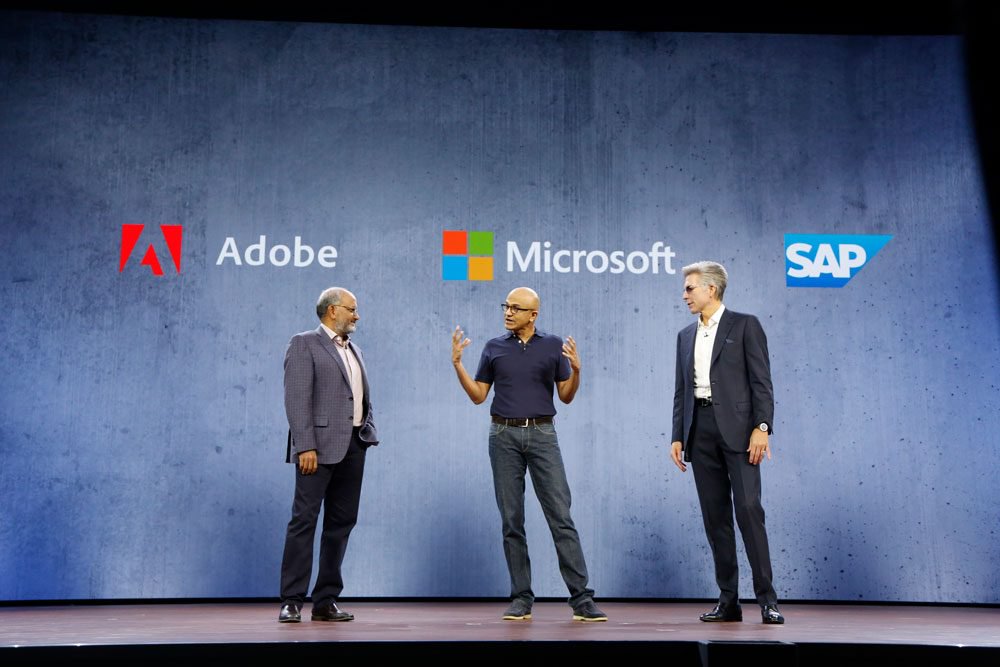
1. Microsoft, SAP and Adobe take on Salesforce with their new Open Data Initiative for customer data

What was announced: Microsoft is teaming up with Adobe and SAP to create a single model for representing customer data that businesses will be able to move between systems.

Why it matters: Moving customer data between different enterprise systems is hard, especially because there isn’t a standardized way to represent this information. Microsoft, Adobe and SAP say they want to make it easier for this data to flow between systems. But it’s also a shot across the bow of Salesforce, the leader in the CRM space. It also represents a chance for these three companies to enable new tools that can extract value from this data — and Microsoft obviously hopes that these businesses will choose its Azure platform for analyzing the data.


2. Microsoft wants to do away with more passwords

What was announced: Businesses that use Microsoft Azure Active Directory (AD) will now be able to use the Microsoft Authenticator app on iOS and Android in place of a password to log into their business applications.

Why it matters: Passwords are annoying and they aren’t very secure. Many enterprises are starting to push their employees to use a second factor to authenticate. With this, Microsoft now replaces the password/second factor combination with a single tap on your phone — ideally without compromising security.


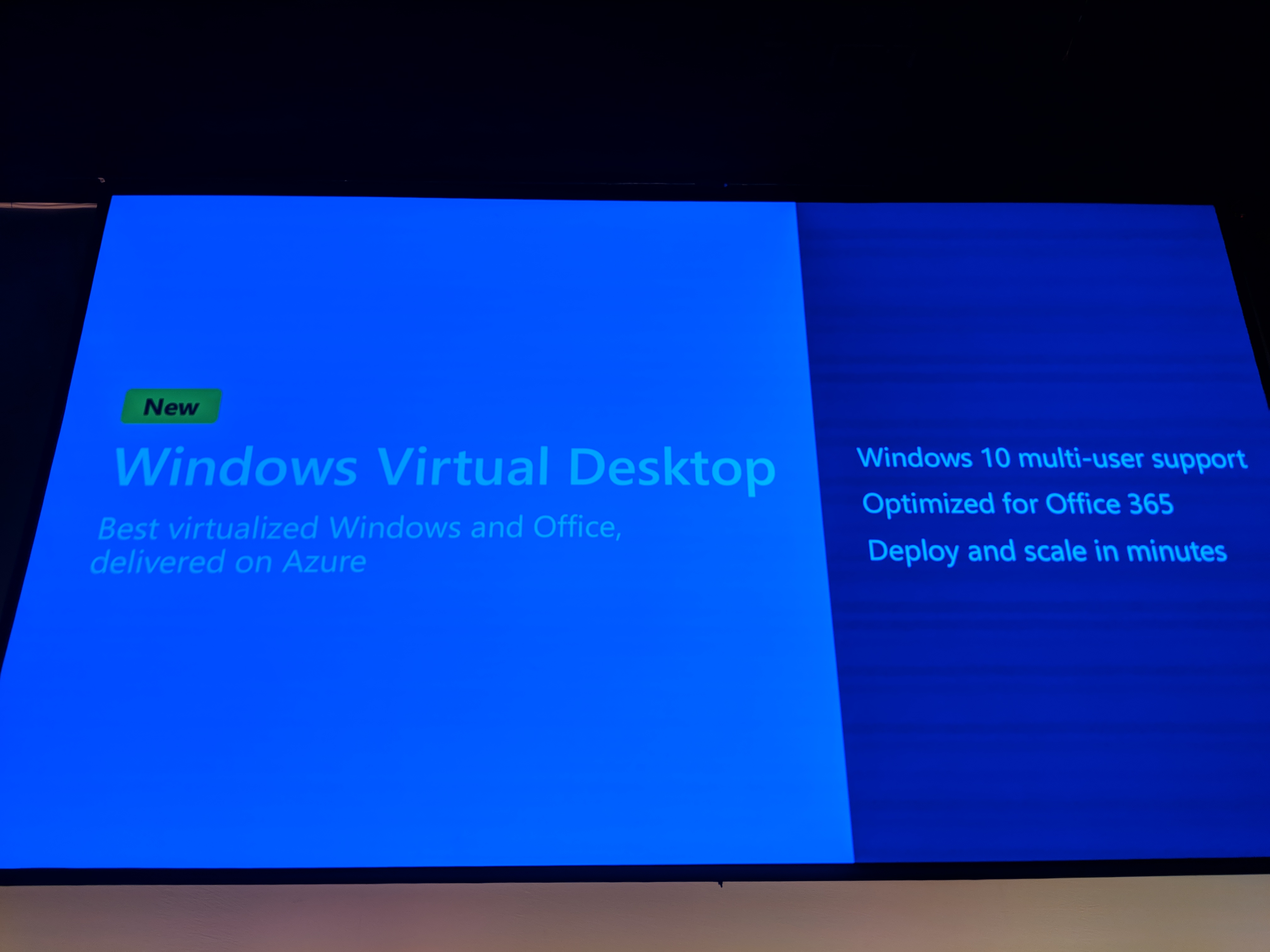
3. Microsoft’s new Windows Virtual Desktop lets you run Windows 10 in the cloud

What was announced: Microsoft now lets businesses rent a virtual Windows 10 desktop in Azure.

Why it matters: Until now, virtual Windows 10 desktops were the domain of third-party service providers. Now, Microsoft itself will offer these desktops. The company argues that this is the first time you can get a multiuser virtualized Windows 10 desktop in the cloud. As employees become more mobile and don’t necessarily always work from the same desktop or laptop, this virtualized solution will allow organizations to offer them a full Windows 10 desktop in the cloud, with all the Office apps they know, without the cost of having to provision and manage a physical machine.


4. Microsoft Office gets smarter

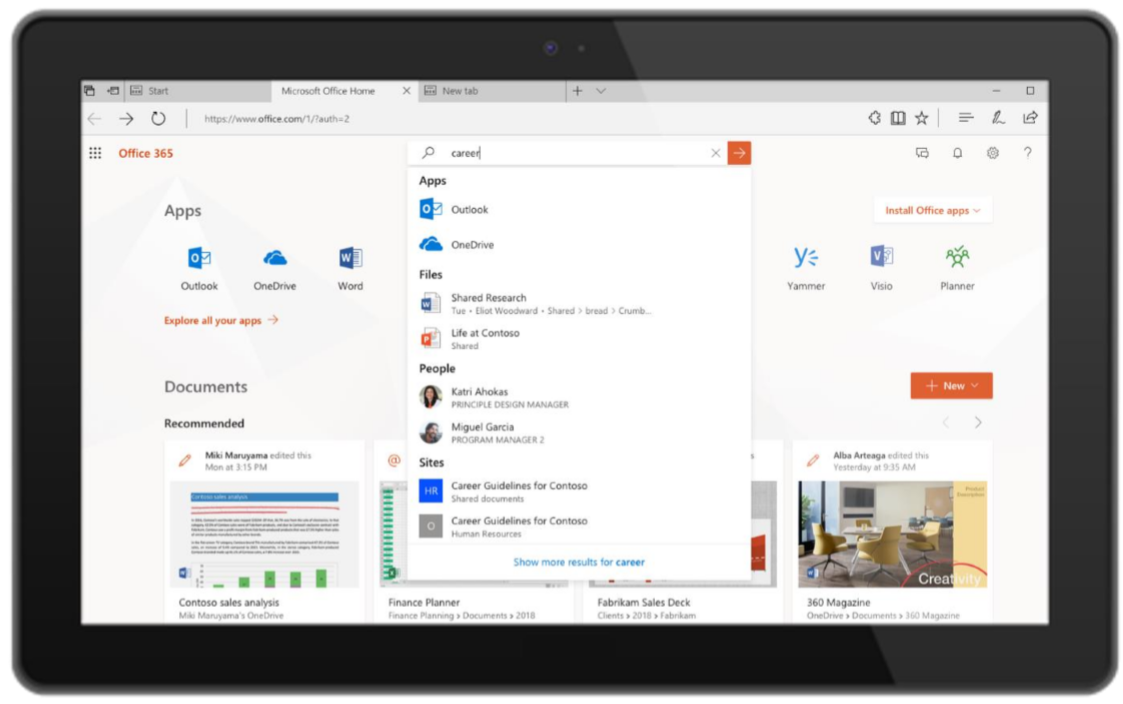
What was announced: Microsoft is adding a number of new AI tools to its Office productivity suite. Those include Ideas, which aims to take some of the hassle out of using these tools. Ideas may suggest a layout for your PowerPoint presentation or help you find interesting data in your spreadsheets, for example. Excel is also getting a couple of new tools for pulling in rich data from third-party sources. Microsoft is also building a new unified search tool for finding data across an organization’s network.

Why it matters: Microsoft Office remains the most widely used suite of productivity applications. That makes it the ideal surface for highlighting Microsoft’s AI chops, and anything that can improve employee productivity will surely drive a lot of value to businesses. If that means sitting through fewer badly designed PowerPoint slides, then this whole AI thing will have been worth it.


5. Microsoft’s massive Surface Hub 2 whiteboards will launch in Q2 2019

What was announced: The next version of the Surface Hub, Microsoft’s massive whiteboard displays, will launch in Q2 2019. The Surface Hub 2 is both lighter and thinner than the original version. Then, in 2020, an updated version, the Surface Hub 2X, will launch that will offer features like tiling and rotation.

Why it matters: We’re talking about a 50-inch touch-screen display here. You probably won’t buy one, but you’ll want one. It’s a disappointment to hear that the Surface Hub 2 won’t launch into next year and that some of the advanced features most users are waiting for won’t arrive until the refresh in 2020.


6. Microsoft Teams gets bokeh and meeting recordings with transcripts

What was announced: Microsoft Teams, its Slack competitor, can now blur the background when you are in a video meeting and it’ll automatically create transcripts of your meetings.

Why it matters: Teams has emerged as a competent Slack competitor that’s quite popular with companies that are already betting on Microsoft’s productivity tools. Microsoft is now bringing many of its machine learning smarts to Teams to offer features that most of its competitors can’t match.


7. Microsoft launches Azure Digital Twins

What was announced: Azure Digital Twins allows enterprises to model their real-world IoT deployments in the cloud.

Why it matters: IoT presents a massive new market for cloud services like Azure. Many businesses were already building their own version of Digital Twins on top of Azure, but those homegrown solutions didn’t always scale. Now, Microsoft is offering this capability out of the box and for many businesses, this may just be the killer feature that will make them decide on standardizing their IoT workloads on Azure. And as they use Azure Digital Twins, they’ll also want to use the rest of Azure’s many IoT tools.

more Microsoft Ignite 2018 coverage


Source: TechCrunch http://j.mp/2QVjxkP