
Everyone hates spam texts, but only some Android users are reporting they’re seeing alerts about a new spam protection feature from Google in their Messages app.
Source: Gizmodo http://j.mp/2SnijPC
Everyone hates spam texts, but only some Android users are reporting they’re seeing alerts about a new spam protection feature from Google in their Messages app.
We are living in an interstitial period. In the early 1980s we entered an era of desktop computing that culminated in the dot-com crash – a financial bubble that we bolstered with Y2K consulting fees and hardware expenditures alongside irrational exuberance over Pets.com. That last interstitial era, an era during which computers got smaller, weirder, thinner, and more powerful, ushered us, after a long period of boredom, into the mobile era in which we now exist. If you want to help innovate in the next decade, it’s time to admit that phones, like desktop PCs before them, are a dead end.
We create and then brush up against the edges of our creation every decade. The speed at which we improve – but not innovate – is increasing and so the difference between a 2007 iPhone and a modern Pixel 3 is incredible. But what can the Pixel do that the original iPhone or Android phones can’t? Not much.
We are limited by the use cases afforded by our current technology. In 1903, a bike was a bike and could not fly. Until the Wright Brothers and others turned forward mechanical motion into lift were we able to lift off. In 2019 a phone is a phone and cannot truly interact with us as long as it remains a separate part of our bodies. Until someone looks beyond these limitations will we be able to take flight.
While I won’t posit on the future of mobile tech I will note that until we put our phones away and look at the world anew we will do nothing of note. We can take better photos and FaceTime each other but until we see the limitations of these technologies we will be unable to see a world outside of them.
We’re heading into a new year (and a new CES) and we can expect more of the same. It is safe and comfortable to remain in the screen-hand-eye nexus, creating VR devices that are essentially phones slapped to our faces and big computers that now masquerade as TVs. What, however, is the next step? Where do these devices go? How do they change? How to user interfaces compress and morph? Until we actively think about this we will remain stuck.
Perhaps you are. You’d better hurry. If this period ends as swiftly and decisively as the other ones before it, the opportunity available will be limited at best. Why hasn’t VR taken off? Because it is still on the fringes, being explored by people stuck in mobile thinking. Why is machine learning and AI so slow? Because the use cases are aimed at chatbots and better customer interaction. Until we start looking beyond the black mirror (see what I did?) of our phones innovation will fail.
Every app launched, every pictured scrolled, every tap, every hunched-over moment davening to some dumb Facebook improvement, is a brick in bulwark against an unexpected and better future. So put your phone down this year and build something. Soon it might be too late.


Gfycat, a home for GIF-making tools and an online community, is rolling out a new way to create GIFs – it will now let you keep the sound on. With “Gfycat Sound,” as the feature is called, GIF makers will have the option to retain the audio from the video file they’re using to create their “GIF” – something Gfycat believes will be especially popular among gamers.
The company had already experimented with other types of non-traditional GIFs, like longer GIFs, AR GIFs, HD GIFs, and 360 GIFs, for example – in order to evolve the concept of the GIF beyond the classic, grainy loop.
Of course, the resulting GIFs aren’t necessarily “.gifs” at this point – they’re short-form videos.
The same holds true for “Gfycat Sound.” But end users don’t necessarily care about the GIFs’ technical underpinnings – they just want to create and share short clips pulled from longer pieces of content.
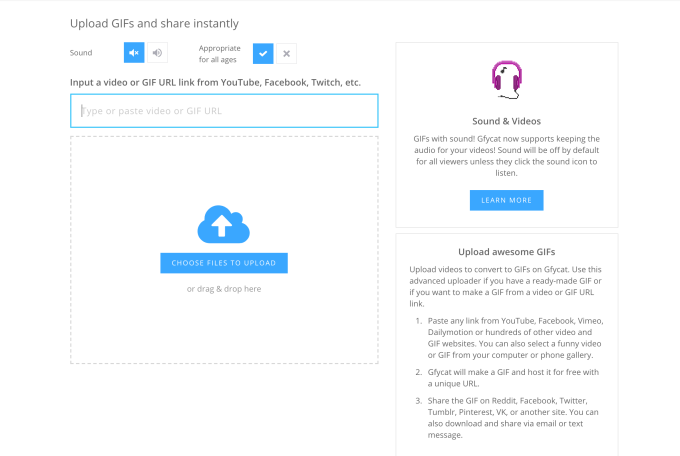
The company says it decided to roll out support for sound after polling its community for their top feature requests earlier this year. “GIFs with sound” came back as number one the demand from users.
To take advantage of the added support, GIF creators will be able to toggle a switch in Gfycat’s upload tool to keep the sound on or remove it before creating their GIF. As before, GIFs can be created using a video file you upload, or through a link you paste from a site like YouTube, Facebook, Twitch or elsewhere. And if users upload a .gif file or a video that doesn’t have sound, the software will detect that on its end.
The GIF editing software lets you select the start and stop times for the GIF and add captions before sharing, as well.
Once the GIF is uploaded to Gfycat’s site, users will be able to view the audio GIFs while browsing by clicking the icon on the top right of the GIF to turn the sound on. (The site will default to sound off, thankfully – you won’t all of a sudden be bombarded with noise.)

These new “audio GIFs” work on all mobile and desktop browsers at launch, and will come to Gfycat’s iOS and Android apps in 2019, as well as to its API documentation for developers.
“We see our creators using gaming first and foremost for Gfycat Sound, as eSports has become a global phenomenon,” explains Gfycat CEO Richard Rabbat. “Now, a gamer can share their achievement with the sound of the ‘shot’ that won her or him the game and achieve more virality for their content, “he says. “We also see our sports content benefiting from Gfycat Sound because you can now share the emotions of the audience,” Rabbat added.
While an actual GIF file cannot have sound, Gfycat is not the first GIF toolmaker that has expanded to include short-form video alongside its traditional collection of .gifs – Imgur did the same back in May. The reasoning in that case was similar – sometimes you need to hear the clip to really enjoy the content. Plus, advertisers love video, too.
Despite their silly nature, GIFs are a big business these days. Google acquired a top GIF platform Tenor earlier this year. At the time, the company was seeing more than 12 billion searches per month.
Gfycat in April said it had 180 million monthly active users, and 500 million page views.


Epic Games had as good a year in 2018 as any company in tech. Fortnite became the world’s most popular game, growing the company’s valuation to $15 billion but it has helped the company pile up cash, too. Epic grossed a $3 billion profit for this year fuelled by the continued success of Fortnite, a source with knowledge of the business told TechCrunch.
Epic did not respond to a request for comment.
Fortnite, which is free to play but makes money selling digital items, has popularized the battle royale category — think Lord of the Flies meets Hunger Games — almost single-handedly and it has been the standout title for the U.S-based game publisher.
Epic, which was founded way back in 1991, hasn’t given revenue figures for its smash hit — which has 125 million players — but this new profit milestone, combined with other pieces of data, gives an idea of the success that the company is seeing as a result of a prescient change in strategy made six years ago.
This past September Epic commanded a reported valuation of nearly $15 billion, according to the Wall Street Journal, as marquee investors like KKR, Kleiner Perkins and Lightspeed piled in on a $1.25 billion round to grab a slice of the red-hot development firm. However, the investment cards haven’t always been stacked in Epic’s favor.
China’s Tencent, the maker of blockbuster chat app WeChat and a prolific games firm in its own right, became the first outside investor in Epic’s business back in 2012 when it injected $330 million in exchange for a 40 percent stake in the business.
Back then, Epic was best known for Unreal Engine, the third-party development platform that it still operates today, and top-selling titles like Gears of War.
Why would a proven company give up such a huge slice of its business? Executives believed that Epic, as it was, was living on borrow time. They sensed a change in the way games were headed based on diminishing returns and growing budgets for console games, the increase of ‘live’ games like League of Legends and the emerging role of smartphones.
Speaking to Polygon about the Tencent deal, Epic CEO Tim Sweeney explained that the investment money from Tencent allowed the company to go down the route of freemium games rather than big box titles. That’s a strategy Sweeney called “Epic 4.0.”
“We realized that the business really needed to change its approach quite significantly. We were seeing some of the best games in the industry being built and operated as live games over time rather than big retail releases. We recognized that the ideal role for Epic in the industry is to drive that, and so we began the transition of being a fairly narrow console developer focused on Xbox to being a multi-platform game developer and self publisher, and indie on a larger scale,” he explained.
Tencent, Sweeney added, has provided “an enormous amount of useful advice” while the capital enabled Epic to “make this huge leap without the immediate of fear of money.”
Epic never had a problem making money — Sweeney told Polygon the first Gear of Wars release grossed $100 million on a $12 million development budget — but with Fortnite the company has redefined modern gaming, both by making true cross-platform experiences possible and by pulling in vast amounts of money.
As a private company, Epic keeps its financials closely guarded. But digging beyond the $3 billion figure — which, to be clear, is annual profit not revenue — there are clues as to just how big a money-spinner Fortnite is. Certainly, there’s room to wonder whether analyst predictions this summer that Fortnite would gross $2 billion this year were too conservative.
The most recent data comes from November when Sensor Tower estimates that iOS users alone were spending $1.23 million per day. That helped the game bank $37 million in the month and take its total earnings within Apple’s iOS platform to more than $385 million.
But, as mentioned, Fortnite is a cross-platform title that supports PlayStation, Xbox, Switch, PC, Mac, Android and iOS. Aggregating revenue cross those platforms isn’t easy, and the only real estimate comes from earlier this year when Super Data Research concluded that the game made $318 million in May across all platforms.
That is, of course, when Fortnite was fresh on iOS, non-existent on Android and with fewer overall players.
We can deduct from Sensor Tower’s November estimate that iOS pulled in $385 million over eight months — between April and November — which is around $48 million per month on average. Android is harder to calculate since Epic skipped Google’s Play Store by distributing its own launcher. While it quickly picked up 15 million Android users within the first month, tracking that spending off-platform is a huge challenge. Some estimates predicted that Google would miss out on around $50 million in lost earnings this year because in-app purchases on Android would not cross its services.
There are a few factors to add further uncertainty.
Fornite spending tends to spike around the release of new seasons — updated versions of the game — since users are encouraged to buy specific packages at the start. The latest, Season 7, dropped early this month with a range of tweaks for the Christmas period. Give the increased velocity that Fortnite is picking up players and the appeal of the festive period, this could have been its biggest revenue generator to date but there’s not yet any indicator of how it performed.
More broadly, Fortnite has undoubtedly lost out on revenue in China, which frozen new game licenses nine months ago thereby preventing any publishers from monetizing new titles over that period.
Tencent, which publishes Fortnite in China, did release the game in the country but it hasn’t been able to draw revenue from it yet. The Chinese government announced last week that it is close to approving its first batch of new titles but it isn’t clear which games are included and when the process will be done.
Already, the effects have been felt.
Games are forecast to generate nearly $40 billion in revenue in China this year, according to market researcher Newzoo. However, the industry saw its slowest growth over the last 10 years as it grew 5.4 percent year-over-year during the first half of 2018, according to a report by Beijing-based research firm GPC and China’s official gaming association CNG.
Fortnite and PUBG — another battle royale title backed by Tencent — have perhaps suffered the most since they are universally popular worldwide but unable to monetize in China. It seems almost certain that those two titles will receive a major marketing push if, as and when they receive the license and, if Epic can keep the game competitive as Sweeney believed it could back in 2012, then it could go on and make even more money in 2019.
But Epic isn’t relying solely on Fortnite.
A more lowkey but significant launch this month was the opening of the Epic Game Store which is aimed squarely at Steam, the leader in digital game sales.
While Fortnite is its most prolific release, Epic also makes money from other games, Unreal Engine and a recently launched online game store that rivals Steam. Epic’s big differentiator for the store is that it gives developers 88 percent of their revenue, as opposed to Value — the firm behind Steam — which keeps 30 percent, although it has added varying rates for more successful titles. Customers are promised a free title every two weeks.
Either way, Epic is betting that it can do a lot more than Fortnite which could mean that its profit margin is even higher come this time next year.


Whether you have friends or family members who work and live different schedules than you, or you find yourself sending more “happy belated birthday” messages than you’d like, having the ability to schedule text messages ahead of time is an incredibly useful feature.
Google has scrambled to remove third-party apps that led users to child porn sharing groups on WhatsApp in the wake of TechCrunch’s report about the problem last week. We contacted Google with the name of one these apps and evidence that it and others offered links to WhatsApp groups for sharing child exploitation imagery. Following publication of our article, Google removed that app and at least five like it from the Google Play store. Several of these apps had over 100,000 downloads, and they’re still functional on devices that already downloaded them.
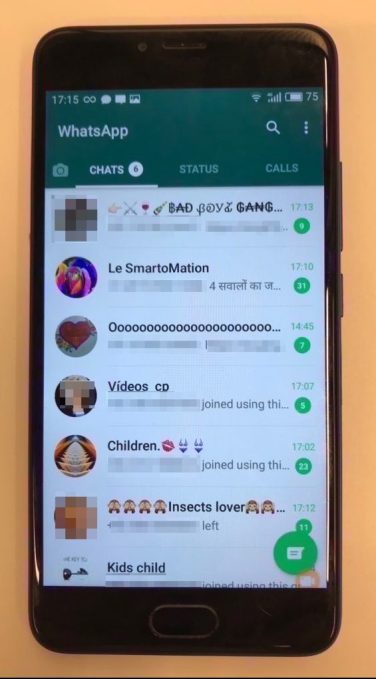
A screenshot from today of active child exploitation groups on WhatsApp. Phone numbers and photos redacted
WhatsApp failed to adequately police its platform, confirming to TechCrunch that it’s only moderated by its own 300 employees and not Facebook’s 20,000 dedicated security and moderation staffers. It’s clear that scalable and efficient artificial intelligence systems are not up to the task of protecting the 1.5 billion user WhatsApp community, and companies like Facebook must invest more in unscalable human investigators.
But now, new research provided exclusively to TechCrunch by anti-harassment algorithm startup AntiToxin shows that these removed apps that hosted links to child porn sharing rings on WhatsApp were supported with ads run by Google and Facebook’s ad networks. AntiToxin found 6 of these apps ran Google AdMob, 1 ran Google Firebase, 2 ran Facebook Audience Network, and 1 ran StartApp. These ad networks earned a cut of brands’ marketing spend while allowing the apps to monetize and sustain their operations by hosting ads for Amazon, Microsoft, Motorola, Sprint, Sprite, Western Union, Dyson, DJI, Gett, Yandex Music, Q Link Wireless, Tik Tok, and more.
The situation reveals that tech giants aren’t just failing to spot offensive content in their own apps, but also in third-party apps that host their ads and that earn them money. While these apps like “Group Links For Whats” by Lisa Studio let people discover benign links to WhatsApp groups for sharing legal content and discussing topics like business or sports, TechCrunch found they also hosted links with titles such as “child porn only no adv” and “child porn xvideos” that led to WhatsApp groups with names like “Children 
 ” or “videos cp” — a known abbreviation for ‘child pornography’.
In a video provided by AntiToxin seen below, the app “Group Links For Whats by Lisa Studio” that ran Google AdMob is shown displaying an interstitial ad for Q Link Wireless before providing WhatsApp group search results for “child”. A group described as “Child nude FBI POLICE” is surfaced, and when the invite link is clicked, it opens within WhatsApp to a group called “Children ”. (No illegal imagery is shown in this video or article. TechCrunch has omitted the end of the video that showed a URL for an illegal group and the phone numbers of its members.)
Another video shows the app “Group Link For whatsapp by Video Status Zone” that ran Google AdMob and Facebook Audience Network displaying a link to a WhatsApp group described as “only cp video”. When tapped, the app first surfaces an interstitial ad for Amazon Photos before revealing a button for opening the group within WhatsApp. These videos show how alarmingly easy it was for people to find illegal content sharing groups on WhatsApp, even without WhatsApp’s help.
In response, a Google spokesperson tells me that these group discovery apps violated its content policies and it’s continuing to look for more like them to ban. When they’re identified and removed from Google Play, it also suspends their access to its ad networks. However, it refused to disclose how much money these apps earned and whether it would refund the advertisers. The company provided this statement:
“Google has a zero tolerance approach to child sexual abuse material and we’ve invested in technology, teams and partnerships with groups like the National Center for Missing and Exploited Children, to tackle this issue for more than two decades. If we identify an app promoting this kind of material that our systems haven’t already blocked, we report it to the relevant authorities and remove it from our platform. These policies apply to apps listed in the Play store as well as apps that use Google’s advertising services.”
| App | Developer | Ad Network | Estimated Installs | Last Day Ranked |
| Unlimited Whats Groups Without Limit Group links | Jack Rehan | Google AdMob | 200,000 | 12/18/2018 |
| Unlimited Group Links for Whatsapp | NirmalaAppzTech | Google AdMob | 127,000 | 12/18/2018 |
| Group Invite For Whatsapp | Villainsbrain | Google Firebase | 126,000 | 12/18/2018 |
| Public Group for WhatsApp | Bit-Build | Google AdMob, Facebook Audience Network | 86,000 | 12/18/2018 |
| Group links for Whats – Find Friends for Whats | Lisa Studio | Google AdMob | 54,000 | 12/19/2018 |
| Unlimited Group Links for Whatsapp 2019 | Natalie Pack | Google AdMob | 3,000 | 12/20/2018 |
| Group Link For whatsapp | Video Status Zone | Google AdMob, Facebook Audience Network | 97,000 | 11/13/2018 |
| Group Links For Whatsapp – Free Joining | Developers.pk | StartAppSDK | 29,000 | 12/5/2018 |
Facebook meanwhile blamed Google Play, saying the apps’ eligibility for its Facebook Audience Network ads was tied to their availability on Google Play and that the apps were removed from FAN when booted from the Android app store. The company was more forthcoming, telling TechCrunch it will refund advertisers whose promotions appeared on these abhorrent apps. It’s also pulling Audience Network from all apps that let users discover WhatsApp Groups.
A Facebook spokesperson tells TechCrunch that “Audience Network monetization eligibility is closely tied to app store (in this case Google) review. We removed [Public Group for WhatsApp by Bit-Build] when Google did – it is not currently monetizing on Audience Network. Our policies are on our website and out of abundance of caution we’re ensuring Audience Network does not support any group invite link apps. This app earned very little revenue (less than $500), which we are refunding to all impacted advertisers.”
Facebook also provided this statement about WhatsApp’s stance on illegal imagery sharing groups and third-party apps for finding them:
“WhatsApp does not provide a search function for people or groups – nor does WhatsApp encourage publication of invite links to private groups. WhatsApp regularly engages with Google and Apple to enforce their terms of service on apps that attempt to encourage abuse on WhatsApp. Following the reports earlier this week, WhatsApp asked Google to remove all known group link sharing apps. When apps are removed from Google Play store, they are also removed from Audience Network.”
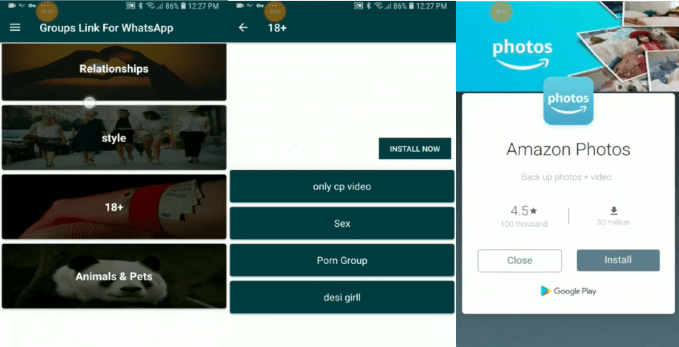
An app with links for discovering illegal WhatsApp Groups runs an ad for Amazon Photos
Israeli NGOs Netivei Reshet and Screen Savers worked with AntiToxin to provide a report published by TechCrunch about the wide extent of child exploitation imagery they found on WhatsApp. Facebook and WhatsApp are still waiting on the groups to work with Israeli police to provide their full research so WhatsApp can delete illegal groups they discovered and terminate user accounts that joined them.
AntiToxin develops technologies for protecting online networks harassment, bullying, shaming, predatory behavior and sexually explicit activity. It was co-founded by Zohar Levkovitz who sold Amobee to SingTel for $400M, and Ron Porat who was the CEO of ad-blocker Shine. [Disclosure: The company also employs Roi Carthy, who contributed to TechCrunch from 2007 to 2012.] “Online toxicity is at unprecedented levels, at unprecedented scale, with unprecedented risks for children, which is why completely new thinking has to be applied to technology solutions that help parents keep their children safe” Levkovitz tells me. The company is pushing Apple to remove WhatsApp from the App Store until the problems are fixed, citing how Apple temporarily suspended Tumblr due to child pornography.
Encryption has proven an impediment to WhatsApp preventing the spread of child exploitation imagery. WhatsApp can’t see what is shared inside of group chats. Instead it has to rely on the few pieces of public and unencrypted data such as group names and profile photos plus their members’ profile photos, looking for suspicious names or illegal images. The company matches those images to a PhotoDNA database of known child exploitation photos to administer bans, and has human moderators investigate if seemingly illegal images aren’t already on file. It then reports its findings to law enforcement and the National Center For Missing And Exploited Children. Strong encryption is important for protecting privacy and political dissent, but also thwarts some detection of illegal content and thereby necessitates more manual moderation.
With just 300 total employees and only a subset working on security or content moderation, WhatsApp seems understaffed to manage such a large user base. It’s tried to depend on AI to safeguard its community. However, that technology can’t yet perform the nuanced investigations necessary to combat exploitation. WhatsApp runs semi-independently of Facebook, but could hire more moderators to investigate group discovery apps that lead to child pornography if Facebook allocated more resources to its acquisition.
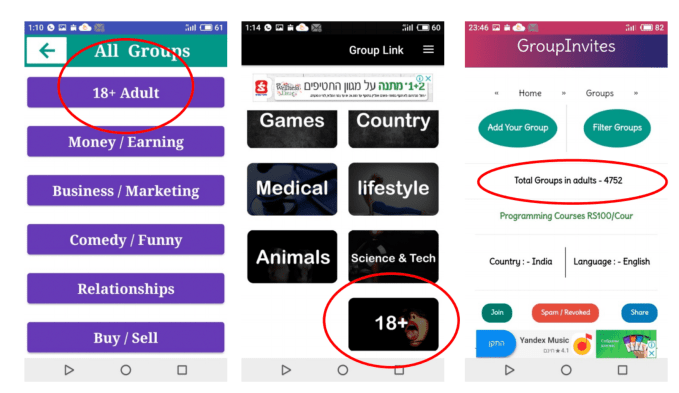
WhatsApp group discovery apps featured Adult sections that contained links to child exploitation imagery groups
Google and Facebook, with their vast headcounts and profit margins, are neglecting to properly police who hosts their ad networks. The companies have sought to earn extra revenue by powering ads on other apps, yet failed to assume the necessary responsibility to ensure those apps aren’t facilitating crimes. Stricter examinations of in-app content should be administered before an app is accepted to app stores or ad networks, and periodically once they’re running. And when automated systems can’t be deployed, as can be the case with policing third-party apps, human staffers should be assigned despite the cost.
It’s becoming increasingly clear that social networks and ad networks that profit off of other people’s content can’t be low-maintenance cash cows. Companies should invest ample money and labor into safeguarding any property they run or monetize even if it makes the opportunities less lucrative. The strip-mining of the internet without regard for consequences must end.


Everything to love about Android, there is still one deeply annoying problem. One that can be so annoying it could make you swear off the OS altogether. It takes forever for the Google’s OS updates to trickle down to products manufactured by companies like Samsung, OnePlus, and Huawei. So while Samsung S9 and OnePlus…

There might be occasions when you need to take a break from the usual phone and tablet tasks—emailing, social networking, gaming, messaging—and actually do something productive. If you need to edit files on the go, whether it’s audio from an interview or a PDF sent from the office, these are the apps you need to have…
Two years ago, Apple killed the headphone port. I still haven’t forgiven them for it.
When Apple announced that the iPhone 7 would have no headphone port, I was pretty immediately annoyed. I figured maybe I’d get over it in a few months. I didn’t. I figured if worse came to worse, I’d switch platforms. Then all of the other manufacturers started following suit.
This, of course, isn’t a new annoyance for me. I’ve been hating headphone adapters on phones right here on this very website since two thousand and nine. For a little stretch there, though, I got my way.
It was a world full of dongles and crappy proprietary audio ports. Sony Ericsson had the FastPort. Nokia had the Pop-Port. Samsung had like 10 different ports that no one gave a shit about. No single phone maker had claimed the throne yet, so no one port had really become ubiquitous… but every manufacturer wanted their port to become the port. Even the phones that had a standardized audio jack mostly had the smaller 2.5mm port, requiring an adapter all the same.
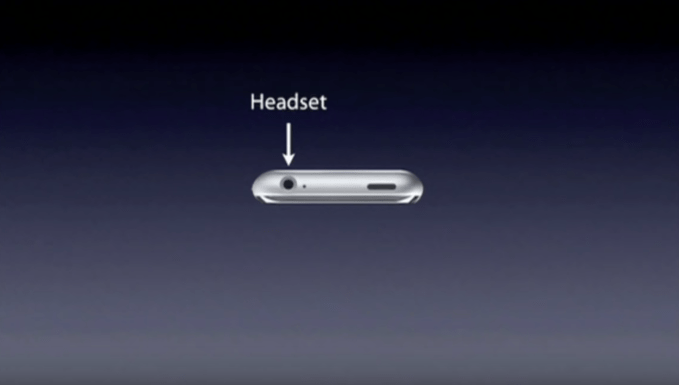
Then came the original iPhone with its 3.5mm headphone port. It was a weird recessed 3.5mm port that didn’t work with most headphones, but it was a 3.5mm port! Apple was riding on the success of the iPod, and people were referring to this rumored device as the iPod Phone before it was even announced. How could something like that not have a headphone port?
Sales of the iPhone started to climb. A few million in 2007. Nearly 12 million in 2008. 20 million in 2009. A tide shifted. As Apple’s little slab of glass took over the smartphone world, other manufacturers tried to figure out what Apple was doing so right. The smartphone market, once filled with chunky, button-covered plastic beasts (this one slides! This one spins!), homogenized. Release by release, everything started looking more like the iPhone. A slab of glass. Premium materials. Minimal physical buttons. And, of course, a headphone port.
Within a couple years, a standard headphone port wasn’t just a nice selling point — it was mandatory. We’d entered a wonderful age of being able to use your wired headphones whenever you damn well pleased.
Then came September 7th, 2016, when Apple had the “courage” to announce it was ditching the 3.5mm jack (oh and also by the way check out these new $150 wireless headphones!).
Apple wasn’t the first to ditch the headphone port — but, just as with its decision to include one, its decision to remove it has turned the tide. A few months after the portless iPhone 7 was announced, Xiaomi nixed the port on the Mi 6. Then Google ditched it from its flagship Android phone, the Pixel 3. Even Samsung, which lampooned Apple for the decision, seems to be tinkering with the idea of dropping it. Though leaks suggest the upcoming Galaxy S10 will have a headphone port, the company pulled it from the mid-range A8 line earlier this year. If 2016 was the year Apple took a stab at the headphone jack, 2018 was the year it bled out.
And I’m still mad about it.
Technology comes and goes, and oh-so-often at Apple’s doing. Ditching the CD drive in laptops? That’s okay — CDs were doomed, and they were pretty awful to begin with. Killing Flash? Flash sucked. Switching one type of USB port for another? Fine, I suppose. The new USB is better in just about every way. At the very least, I won’t try to plug it in upside down only to flip it over and realize I had it right the first time.
But the headphone jack? It was fine. It stood the test of time for one hundred damned years, and with good reason: It. Just. Worked.
I’ve been trying to figure out why the removal of the headphone port bugs me more than other ports that have been unceremoniously killed off, and I think it’s because the headphone port almost always only made me happy. Using the headphone port meant listening to my favorite album, or using a free minute to catch the latest episode of a show, or passing an earbud to a friend to share some new tune. It enabled happy moments and never got in the way.
Now every time I want to use my headphones, I just find myself annoyed.
Bluetooth? Whoops, forgot to charge them. Or whoops, they’re trying to pair with my laptop even though my laptop is turned off and in my backpack.
Dongle? Whoops, left it on my other pair of headphones at work. Or whoops, it fell off somewhere, and now I’ve got to go buy another one.
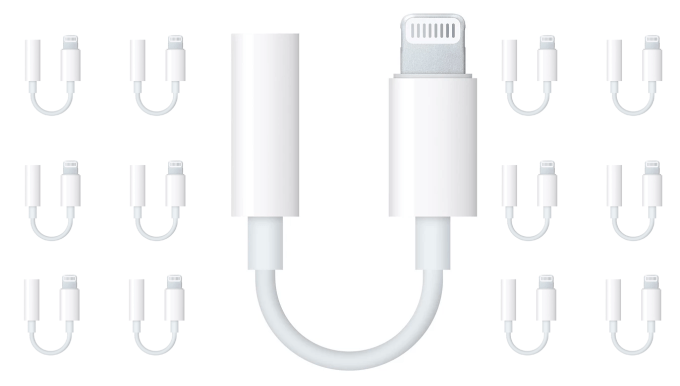
I’ll just buy a bunch of dongles, and put them on all my headphones! I’ll keep extras in my bag for when I need to borrow a pair of headphones. That’s just like five dongles at this point, problem solved! Oh, wait: now I want to listen to music while I fall asleep, but also charge my phone so it’s not dead in the morning. That’s a different, more expensive splitter dongle (many of which, I’ve found, are poorly made garbage).
None of these are that big of a deal. Charge your damned headphones, Greg. Stop losing your dongles. The thing is: they took a thing that just worked and just made me happy and replaced it with something that, quite often, just bugs the hell out of me. If a friend sent me a YouTube link and I wanted to watch it without bugging everyone around me, I could just use whatever crappy, worn out headphones I happened to have sitting in my bag. Now it’s a process with a bunch of potential points of failure.
“But now its water resistant!” Water-resistant phones existed before all of this, plenty of which had/have headphone ports. As a recent example, see Samsung’s Galaxy S9 with its IP68 rating (matching that of the iPhone XS.)
“But it can be slimmer!” No one was asking for that.
“But the batteries inside can be bigger!” The capacity of the battery barely jumped in the years from the 6S to the 8 — from 1,715mAh to 1,821mAh. It wasn’t until a few years later with the iPhone X, when the standard iPhone started getting wider and taller, that we saw super big jumps in its battery capacity.
Will this post change anything? Of course not. Apple blew the horn that told the industry it’s okay to drop the headphone port, and everyone fell right in line. The next year — and the year after that — Apple sold another 200M-plus phones. At this point, Apple doesn’t even bother giving you the headphone adapter in the box. Apple’s mind is made up.
But if you’re out there, annoyed, stumbling across this post after finding yourself with a pair of headphones and a smartphone that won’t play friendly together in a pinch, just know: you’re not the only one. Two years later, I’m still mad at whoever made this call — and everyone else in the industry who followed suit.


