Tuesday, September 29, 2020

The LG Wing Is the Funnest Phone of 2020

Out of all the ambitious phones of 2020 including the handsets with monstrous specs like the ROG Phone 3, forward-thinking devices like the Surface Duo, and futuristic phones like the Galaxy Z Fold 2, LG’s weird and wacky Wing is easily the funnest phone of the year.

Read more...


Source: Gizmodo https://ift.tt/3cHArPp

Google offers Europe more checks Fitbit data won’t be used for ads

Google has offered a second round of concessions to try to persuade European regulators to clear its acquisition of wearables maker Fitbit.

The deal has been stalled by concerns over its impact on consumer privacy and competition in the wearables market.

Last week the deadline for EU regulators to take a decision was extended for another couple of weeks — potentially pushing it out to almost the end of the year.

However a report by Reuters today claims the acquisition is set to be greenlit after the latest round of ‘commitments’ from Google — with the news agency citing ‘people familiar with the matter’.

The European Commission declined to comment on the report.

Google confirmed it has sent a new set of commitments to the European Commission — reiterating an earlier pledge not to use Fitbit health and wellness data for advertising, which it said it has now strengthened by providing for additional monitoring of the data separation requirements. 

It also said it’s committing to support third-party wearable manufacturers as part of the Android ecosystem (via Android APIs for wearable devices), and maintain third-parties’ existing access to Fitbit users’ data via APIs with user consent. 

“This deal is about devices, not data. The wearables space is highly crowded, and we believe the combination of Google and Fitbit’s hardware efforts will increase competition in the sector, benefiting consumers and making the next generation of devices better and more affordable,” a Google spokesperson said in a statement.

“We have been working with the European Commission on an updated approach to safeguard consumers’ expectations that Fitbit device data won’t be used for advertising.  We’re also formalizing our longstanding commitment to supporting other wearable manufacturers on Android and to continue to allow Fitbit users to connect to third party services via APIs if they want to.”


Source: TechCrunch https://ift.tt/2G3a1vA

Monday, September 28, 2020

Google Takes an Apple Approach to Android Apps, Will Require 30% Cut of Play Store Revenue

After some confusion—and after watching Apple take heat over its iOS App Store policies—Google is clarifying how and when it plans to take its cut of paid apps in the Google Play Store.

Read more...


Source: Gizmodo https://ift.tt/3jc2vgf

Microsoft outage leaves users unable to access Office, Outlook, Teams

Microsoft said it’s investigating an authentication outage with Office 365, preventing users from accessing some of the company’s most widely used services, including Office.com, Outlook.com, and Teams.

The company’s status dashboard said the issue started at 2:25pm PT, and has impacted mostly consumer users across the globe for the last few hours. Some government users may also be impacted, the company said.

In a series of tweets, Microsoft said that it tried to fix the issue, but was forced to roll back its changes after the fix failed.

For now, Microsoft said it was “rerouting traffic to alternate infrastructure to improve the user experience while we continue to investigate the issue.”

But that leaves millions on the U.S. west coast and users in Australia still unable to access their online services.

TechCrunch will keep you posted with developments. In the meantime, feel free to catch up with some of the bigger stories of the day.

Read more:


Source: TechCrunch https://ift.tt/2S3ZdQa

Daily Crunch: Judge delays TikTok ban

Americans can continue using TikTok for now, Google updates its developer policies and Uber gets approval to resume operations in London. This is your Daily Crunch for September 28, 2020.

The big story: Judge delays TikTok ban

The saga continues! The Trump administration’s ban on TikTok was scheduled to take effect today — but over the weekend, a federal court ruled that Americans can continue using the app while a legal challenge over the ban’s legality moves forward.

A federal judge had already put a similar injunction in place to prevent a ban on WeChat from moving forward.

Meanwhile, Oracle, Walmart and TikTok’s owner ByteDance have also reached a deal that’s been approved by the U.S. government and would allow the app to continue operating here. However, it seems like the various companies and governments involved in the deal aren’t exactly on the same page.

The tech giants

Google to better enforce Play Store in-app purchase policies, ease use of third-party app stores — Under threat of regulation, Google announced that it’s updating its Google Play billing policies to better clarify which types of transactions will be subject to Google’s commissions on in-app purchases.

Uber wins latest London licence appeal, but renewal is only for 18 months — The ride-sharing giant has faced a multi-year battle to have its license reinstated after the city’s transport regulator decided not to issue a renewal in 2017.

Roku introduces a new Ultra player, a 2-in-1 ‘Streambar’ and a new OS with support for AirPlay 2 — The Streambar combines 4K HDR streaming and premium audio into one product.

Startups, funding and venture capital

SoftBank will bring Bear’s serving robots to Japan, amid restaurant labor shortages — The investor detailed plans to bring Bear’s Servi robot to Japan in an effort to address restaurant labor issues.

GV bets on young team behind high school social app HAGS — The team is building an old-school social play focused on Gen Z high school socialization.

N26 hires Adrienne Gormley as its new chief operating officer — Gormley has spent the last six years working for Dropbox in Dublin.

Advice and analysis from Extra Crunch

2 strategies for creating top-of-funnel marketing content — Even when you’re excellent at making the sale, you still need people to know you exist in the first place.

Deep Science: Robot perception, acoustic monitoring, using ML to detect arthritis — Devin Coldewey rounds up the latest research and discoveries.

(Reminder: Extra Crunch is our subscription membership program, which aims to democratize information about startups. You can sign up here.)

Everything else

Healthcare giant UHS hit by ransomware attack, sources say — The attack hit UHS systems early on Sunday morning, according to two people with direct knowledge of the incident.

Cannabis vape companies are experiencing a sales boom during the pandemic — From startups to major players, several leading manufacturers told TechCrunch that their companies are seeing a boom in sales since the start of the crisis.

The Daily Crunch is TechCrunch’s roundup of our biggest and most important stories. If you’d like to get this delivered to your inbox every day at around 3pm Pacific, you can subscribe here.


Source: TechCrunch https://ift.tt/2S9lHiO

Google Demands Its 30% Cut From App Developers in Play Store

Some companies like Netflix and Spotify had avoided making the payment when people paid for something inside their apps.

Source: NYT > Technology https://ift.tt/2EJepPC

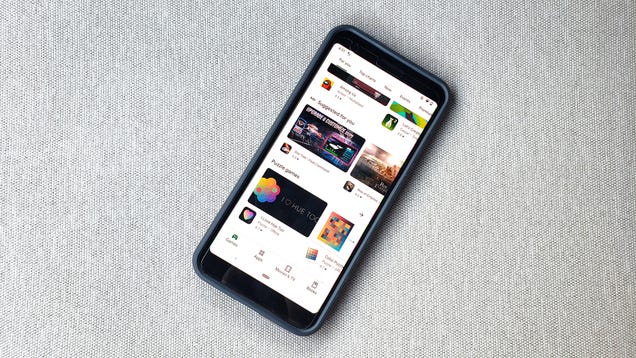
Google Play to better enforce in-app purchase policies, ease use of third-party Android app stores

Under threat of regulation, Google announced today it’s updating its Google Play billing policies to better clarify which types of transactions will be subject to Google’s commissions on in-app purchases. While the more detailed language doesn’t actually change the earlier policy’s intention, it will impact a percentage of developers who don’t currently use Google Play’s billing system when selling digital goods in their app. In addition, the company announced it will make changes in Android 12 that will make it easier for users to install and use third-party app stores as an alternative to Google Play.

The company says that its current billing policies only apply to less than 3% of apps on Google Play. Of those apps, 97% already use Google Play’s billing library. That means there’s only a small percentage of apps that will need to come into compliance under the clarified terms.

To make the transition easier, app developers will be given an extended 1-year grace period to introduce Google Play’s billing library into their apps, had they previously skirted Google’s policies around digital purchases.

Google will also give some businesses impacted by the pandemic the ability to opt-out of its payment policies for the next 12 months. This could apply to those businesses that had to move their previously physical services online — such as live events.

Apple recently did the same for Facebook’s paid events business on the iOS App Store.

Google also said it won’t limit developers’ ability to communicate with customers, including about alternative ways to pay — in stark contrast with Apple.

“To clarify, Google Play does not have any limitations here on this kind of communication outside of a developer’s app. For example, they might have an offering on another Android app store or through their website at a lower cost than on Google Play,” the company noted. “We understand the importance of maintaining the customer relationship. As such, we have also always allowed developers to issue refunds to their customers and provide other customer support directly,” it said.

Bloomberg had previously reported Google was planning to increase its push for a cut of Play Store apps’ in-app purchases.

The policy updates indicate how Google is responding to the increased regulatory scrutiny of its Android mobile platform and how it operates its app store, Google Play. These matters have recently been the subject of antitrust investigations in the U.S. and other markets, where governments are attempting to determine if the current crop of tech giants have been abusing their power by way of anti-competitive business practices.

At issue is the fact that app stores have become the default way — and in some cases, the only possible way — for developers to distribute apps to mobile consumers. But these app stores also commission many of the apps they distribute, even when the platform maker itself offers a competing product. For example, the stores distribute alternative music streaming services, like Spotify, and take a cut of its subscription revenues. At the same time, they also offer their own music streaming service, like Apple Music or Google’s YouTube Music.

In other cases, larger app publishers like Epic Games don’t want to pay app stores for distribution and billing services, as they’re capable of providing the platform and tools for distribution and can bill their customers directly. In Apple’s case, Epic has engaged in a lawsuit over the matter which is still ongoing. A group of developers, including Epic, also last week launched a coalition to demand more “fairness” in the app industry and to fight back against what they perceive to be app stores’ overreach.

Google’s app store business hasn’t received quite the same level of attention as Apple’s because it already offers users the ability to sideload apps. That means users can toggle a setting to install apps hosted outside of the Google Play Store.

In an announcement today, Google also says it will make changes in next year’s release of Android 12 that will make it easier for consumers to use other app stores on Android devices, without compromising Android’s existing safety measures. Google hasn’t said what these changes may include, but one area of concern has been how the Android OS approaches the messaging around sideloading apps.

Today, it presents the option as only as a serious security risk that users must manually enable. More recently, it limited sideloading in its Advanced Protection Program which is designed for high-profile Google users, like politicians or public figures, or those whose accounts could be targeted by hackers, like journalists or political dissidents.

That means reasonably safe alternatives to Google Play have more difficulty acquiring users.

The company said the changes related to third-party app stores were directed by developer feedback.

Google stressed, too, that its policies are applied universally, even to its own apps.

“Our policies apply equally to all apps distributed on Google Play, including Google’s own apps. We use the same standards to decide which apps to promote on Google Play, whether they’re third-party apps or our own apps,” the company said, in an announcement. “In fact, we regularly promote apps by Google’s competitors in our Editors Choice picks when they provide a great user experience. Similarly, our algorithms rank third-party apps and games using the same criteria as for ranking Google’s own apps,” it added.


Source: TechCrunch https://ift.tt/3n0J3oH

Roku introduces a new Ultra player, a 2-in-1 ‘Streambar,’ and a new OS with support for AirPlay 2

Streaming media device maker Roku is updating its lineup in advance of the holiday season with the addition of two new products: a redesigned version of its high-end Roku Ultra which, for the first time, adds Dolby Vision support as well as Bluetooth. The company is also introducing a combination player and soundbar device, called the Roku Streambar. And the Roku OS software update will bring a handful of new features to customers, including, most notably, Apple AirPlay 2 and HomeKit support.

On the hardware front, Roku continues its strategy of refreshing devices and plugging other holes in the market with the launch of the two new players.

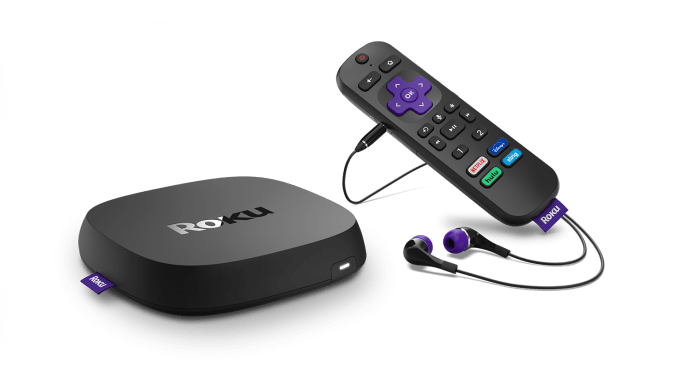
With the revamp of the Roku Ultra, the company promises up to 50% more wireless range and the addition of Bluetooth support. The expanded range will allow customers to use their Ultra even further away from the internet router without compromising their streaming quality and experience. Meanwhile, the addition of Bluetooth means you’ll be able to pair your smartphone with the device in order to stream music or other audio through the Roku Ultra to the TV.

Image Credits: Roku

The updated Roku Ultra adds Dolby Vision support along with Dolby Atmos sound, to cater to customers who have Dolby Vision TVs. And Roku is future-proofing the device with the addition of the AV1 codec, which offers higher quality video at a lower bitrate.

The device will ship with an HDMI cable as well as the Roku Voice remote with TV power and volume buttons, personal shortcut buttons, headphones for private listening and the lost remote finding functionality. The price remains the same, at $99.99.

Image Credits: Roku

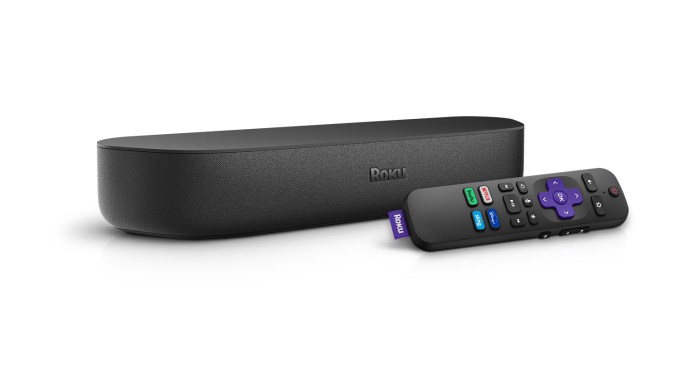
The second new device is the Roku Streambar. This 2-in-1 device combines 4K HDR streaming and premium audio into one product. On the player side, the egg carton-sized device is the equivalent of the Roku Streaming Stick+ and works with both Amazon Alexa and Google Assistant. The soundbar attaches to the TV via an HDMI cable, and if the TV offers ARC support that’s all you’ll need to get started. Otherwise, you can use the included optical cable that comes in the box.

The soundbar has four premium drivers including two forward-facing drivers to bring out the dialogue and center channel and two on the side, angled to help fill the room with sound. The device will also support Roku features, like the ability to quiet loud commercials, boost the volume of voices, or optimize the sound for night listening.

The device also supports Bluetooth, Spotify Connect, Alexa and Google Assistant, and a voice remote that controls the TV, sound and streaming.

Image Credits: Roku

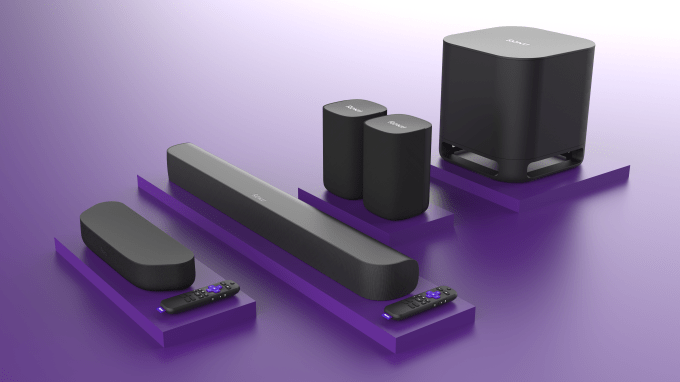
While the soundbar is largely being pitched as an entry level device for newcomers to Roku or an all-in-one solution for use with a new TV, it still allows a customer to expand their home theater setup over time. Customers can choose to later add surround sound with Roku’s Wireless Speakers and bass with the Roku Wireless Subwoofer, says Roku.

Over the next few week, these devices and others will be able to download the Roku OS 9.4 update which brings a number of new features, including AirPlay 2 and HomeKit support. With AirPlay 2, customers with Apple device will be able to stream content directly to their Roku player — whether that’s personal content from their own library or from other streaming apps.

Image Credits: Roku

The addition will be particularly useful for those times a streaming service launches without Roku support. In recent months, Roku has gotten bogged down in negotiations with media companies now that it runs its own subscription channel platform through its own hub, The Roku Channel. During its negotiations with NBCU, for example, a dispute led to NBCU threatening to pull its TV Everywhere apps off Roku before the two sides worked things out. Today, HBO Max, another major new streaming app, is still not available on Roku. Customers are the ones who really lose in these sorts of battles, of course, so the AirPlay 2 support will be a decent workaround for those times when apps are not available.

Roku OS 9.4 will also bring HomeKit support to select 4K devices so customers can control their Roku via the Home app and Siri on iPhone, iPad, Mac, Apple Watch or HomePod.

Image Credits: Roku

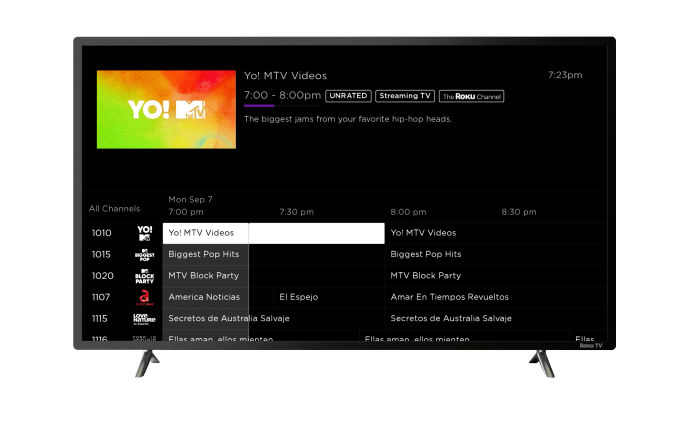
The update will also bring a new “Live TV” tile to the homescreen featuring a live guide to The Roku Channel’s over 115 free live channels. Users will also see helpful hints on using voice commands on their TV at times and will receive updated theme packs with optional sounds. These will feature themes like Jungle, Western, Nautical, Kids, and more, which can be swapped in place of the standard background and design. The update will bring other performance improvements, more free channels to The Roku Channel, and surround level control for multi-channel audio, among other things.

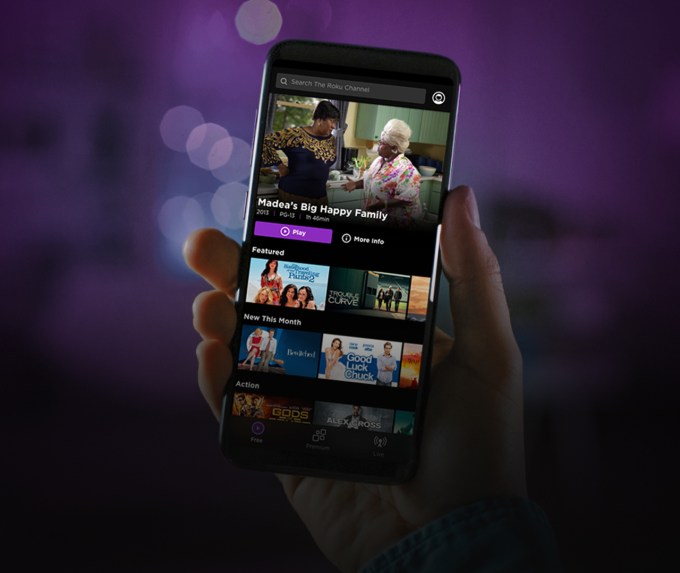
Roku will also soon ship a dedicated free app for The Roku Channel for iOS and Android smartphones.

The Roku OS 9.4 update will roll out this month and will reach all supported players, including the new Ultra and Streambar, in the weeks ahead. Roku TVs will get the update in the coming months.

The new players, meanwhile, are available for pre-order today on Roku’s website, and will ship in October. They’ll also arrive in major retailers and online next month.


Source: TechCrunch https://ift.tt/3n08pTF

Saturday, September 26, 2020

This Week in Apps: Redesigning the iOS 14 home screen, app makers form ‘fairness’ coalition, latest on TikTok ban

Welcome back to This Week in Apps, the TechCrunch series that recaps the latest OS news, the applications they support and the money that flows through it all.

The app industry is as hot as ever, with a record 204 billion downloads and $120 billion in consumer spending in 2019. People are now spending three hours and 40 minutes per day using apps, rivaling TV. Apps aren’t just a way to pass idle hours — they’re a big business. In 2019, mobile-first companies had a combined $544 billion valuation, 6.5x higher than those without a mobile focus.

In this series, we help you keep up with the latest news from the world of apps, delivered on a weekly basis.

Top Stories

iOS 14 Home screen Customization Craze

The release of iOS 14 included one of the biggest updates to the iPhone’s user interface in years. Apps can now be stored off screen in the new App Library where they’re organized for you, as opposed to you being forced to categorize apps yourself into various folders. And Apple finally allows for home screen widgets — a development that left Android users snickering about how “behind” their iPhone-using counterparts have been all this time.

But as with iOS apps, Apple’s design constraints and rules around widgets mean there’s a standard that all widgets have to meet to be approved. As a result, widgets have a consistent look-and-feel, thanks to things like size limitations and other design guidelines. They can’t be stretched out indefinitely or moved all over the screen, either.

Apple may have originally envisioned widgets as a way for existing iOS apps to gain a larger presence on users’ home screens, while delivering key information like news, weather or stock updates, for example. But a handful of iOS developers instead built apps that allowed users to design widgets themselves — by selecting colors, fonts, sizes, backgrounds and what information the widget would display.

Meanwhile, TikTok users and other Gen Z’ers began teaching each other how to create custom icons for their apps using Apple’s Shortcuts app. These tutorials were starting to trend even before iOS 14’s release, but the addition of the App Library and widgets meant users could now finally customize their entire home screen. That prompted a more enthusiastic adoption of the icon customization technique.

On the Twitter hashtag #iOS14homescreen, users shared their creations — a showcase of creativity where home screens looked fully themed at last, with custom icons, widgets, decorative photos, matching wallpapers and more. The results have been fantastic.

And at the top of the App Store, there now sit a trio of must-have tools for this new era: Widgetsmith, Color Widgets and Photo Widget today continue to claim the top three spots on the free apps chart.

Users are also now demanding Apple to change how app shortcuts open. Currently, an app shortcut first launches Apple’s Shortcuts app, which then opens the target app. With the popularity of custom icons, users want that intermediate step cut out.

Apple is aware of the customization craze as it has in the days since iOS 14’s release run App Store editorial features about iOS 14’s design changes, suggested widgets to try, creative tools and more. It also featured apps at the top of the App Store, which are benefiting from the trend, like apps offering great widgets, like Fantastical, or those that are booming, like Pinterest — which recently broke its daily download record.

App makers team up to take on Apple and Google

A number of top app makers have banded together to fight against Apple’s control of its App Store and, to a lesser extent, Google’s control of the Play Store — a topic of increased regulatory scrutiny in recent months. Today, 13 app publishers, including Epic Games, Deezer, Basecamp, Tile, Spotify and others, have launched the Coalition for App Fairness.

The new organization formalizes efforts the companies already have underway that focus on either forcing app store providers to change their policies, or ultimately pushing the app stores into regulation.

On the coalition’s website, the group details its key issues, which include anti-competitive practices, like the app stores’ 30% commission structure, and the inability to distribute software to billions of Apple devices through any other means but the App Store, which the group sees as an affront to personal freedom.

Google allows apps to be side-loaded, so it’s not as much of a target on this front. In fact, much of the focus of the coalition’s efforts have to do with Apple’s business, given its stricter guidelines.

The group has also published a list of 10 “App Store Principles” it would like to see enacted industry-wide. These include the ability to distribute apps outside of app stores, protections from having their own data used against them to compete, timely access to developer documentation, the right to communicate with users through its app for legitimate business purposes, no requirements to use the app store’s payment systems, no requirements to pay unfair fees and more.

The website is also aiming to recruit new members to join the coalition. App makers who feel similarly oppressed by Apple’s practices are able to fill out a form to request to join.

Apple responded to the hardball tactics with a barrage of new material and data meant to highlight the benefits of its App Store platform. The company on Thursday revealed the number of rejections it enforces is quite low compared to the number of submissions. It said it rejected 150,000 apps in 2020 but sees 100,000 submissions per week. It also has removed more than 60 million user reviews it believed to be spam.

The company noted its Developer program has over 28 million developers worldwide, whose apps have seen over 50 billion promotions — meaning when a user sees an app Apple has promoted on the App Store, in emails, on social media or in other general advertising.

However, the backlash has also forced Apple to be more transparent about some of its until-now fairly secretive programs. For example, Apple has now published a page that clarifies how its Video Partner program works — a program that had before only been detailed via background conversations with reporters who then relayed the information to readers. The page reveals the program’s requirements and that over 130 premium subscription video entertainment providers have since joined. If the guidelines are followed, these providers can pay only a 15% commission to Apple instead of 20%.

Current members include Amazon Prime Video, Binge, Canadian Broadcasting Corporation (CBC), Claro, C More, DAZN, Disney+, Globo, HBO Max, Joyn, Molotov, MUBI, myCanal, STARZ and Viaplay, the website said.

TikTok deal chaos continues

No, seriously, what is going on with the TikTok deal? (We feel you, Walmart.)

The deal that Trump was poised to approve solved some but not all concerns by making Oracle a trusted technology partner responsible for hosting U.S. user data and ensuring other security requirements were in place. But issues around how the TikTok algorithm could be used to influence U.S. users or censor content were not addressed.

The ban got a week’s extension as a result of promising progress and the announcements that seemed to indicate the parties were in agreement on terms.

But this week, China jumped in to say it won’t approve a TikTok sale. In China Daily, an official English-language newspaper of the Chinese Communist Party, an editorial slammed the deal that would see Oracle and Walmart effectively taking over TikTok in the U.S. as one based on “bullying and extortion.”

At the same time, TikTok is chasing a legal means of preventing its ban in the U.S.

TikTok filed a motion to stop the Commerce Department from enforcing the Trump administration’s ban that would otherwise be set to start this weekend. The move came shortly after WeChat users were granted an injunction in a federal court last week that blocked the app from being banned. TikTok’s filing asks the court to set a hearing before the rules take effect at 11:59 PM on September 27, 2020. But unlike the WeChat case, TikTok is the one asking the court to stop the ban, not its users.

A federal judge said Thursday that the Trump administration must either delay the ban on U.S. app stores or file its legal response to defend the decision by 2:30 PM Friday. The Justice Department filed its opposition Friday, saying that U.S. user data being stored outside the country is a “significant” risk.  The judge will still need to rule on the injunction — that is, whether the ban should go into effect Sunday, as planned.

Stay tuned to TechCrunch for the latest on this never-ending saga.

Weekly News Round-up

Platforms

  • Google will increase its push for apps to give it a cut of in-app purchases. Following Apple’s lead, Google will begin to push harder to demand a cut of transactions on Android by enforcing a requirement for apps to use Google’s billing service, Bloomberg reports.
  • New Google Play Console arrives on November 2, 2020. Over 350K developers now use the new Play Console today. On November 2, it exits beta — meaning you’ll be redirected to the updated experience when you log in. The console features reorganized navigation, speed and performance improvements, personalized messaging, a new Publishing overview page, acquisition reports and more.
  • Apple temporarily waived App Store fees for Facebook’s online events. Facebook last month launched paid online events to help businesses impacted by the pandemic. But at the time, Apple wouldn’t waive its own fees. The company has now changed its mind, and will waive fees until December 31, but says this won’t apply to gaming creators.
  • Apple and Facebook fight over messaging. But all is not well between the two tech giants on other fronts. Now that Apple has lifted its rules over default apps for email and web browsing, Facebook is pushing the company to allow Messenger to become a default messaging app too.
  • iOS 14.0.1 and iPadOS 14.0.1 released. The update patches the bug that reset web browser and email apps back to Apple’s defaults after a restart, and other fixes.
  • iOS 14 adoption surpasses 25% in five days after release. According to data from Mixpanel, iOS 14 (including iPadOS 14) reached 25% of active devices by Monday, September 21. As of the time of writing, it has reached 30.7%.
  • Apple’s Swift comes to Windows. The programming language is available on Windows for the first time, six years after its debut on Apple platforms.
  • Schoolwork 2.1 beta released. The updated iPad app for teachers and students is now in beta. Apps that use the latest ClassKit will be more discoverable by teachers in Schoolwork.

Services

  • Amazon announces a gaming streaming service, Luna. A competitor to Microsoft xCloud and Google Stadia, Luna will allow gamers to stream titles to play across PC, Mac and iOS mobile web. Over 50 titles will be included at launch, including a Sonic game and Remedy Entertainment’s Control. Ubisoft titles will be available on subscription. Twitch integration will be a key selling point.
  • Microsoft launches Xbox remote play streaming on Android. This is not xCloud, but rather a rebrand of the service previously called Console Streaming. The games stream directly from your Xbox One console to your Android courtesy of Microsoft’s new Xbox app for Android.
  • UK launches a COVID-19 exposure notification app for England and Wales. Northern Ireland and Scotland had already launched official apps. All apps use smartphones’ Bluetooth radios to generate alerts of potential exposure to COVID-19.
  • Samsung TV+ comes to phones. Free, ad-supporting streaming service makes the leap to Samsung devices.
  • Adobe rolls out new ‘Liquid Mode’ in Adobe’s Acrobat Reader app for iOS and Android. The feature uses Adobe’s AI engine, Sensei, to analyze a PDF and automatically rebuild it for mobile devices. Adobe says it’s working on an API that will allow similar functionality for non-Adobe apps in the future.

Trends

  • Fintech apps top 1.2B installs worldwide in Q2 (report).
  • Time spent in education apps was up 90% year-over-year during the week of September 6, 2020, compared to last year, on a global basis. The numbers, via App Annie, were calculated on Android devices online. In the U.S., time spent was up 30%.
  • Home screen customization apps top the App Store. Top 20 iOS home screen customization apps reached at least 13.7 million installs and more than $1 million in consumer spending in the seven days following the iOS 14 release. Pinterest also broke its daily download record as users sought new inspiration.

Other News

  • Telepath launches a “kinder” social networking app. It aims to promote quality conversation and ban harassment and fake news. Easier said than done on today’s internet.
  • Child tips off security researchers about scam apps with 2.4 million downloads. The scam involved apps posing as entertainment, wallpaper images or music download apps targeting young users. Some served intrusive ads even when the app wasn’t active. Others charged users, gaining revenues of over $500K. The apps were available across iOS and Android.
  • Epic rejects Apple’s attempts to disparage its business. Apple tried to claim that interest in Fortnite declined 70% from October 2019 to July 2020. Epic said, no actually, daily active players grew 39% during those dates. The two sides are fighting over Apple’s right to commission Epic’s business in a continuing legal battle.

Funding and M&A (and IPOs)

  • Apple acquires Scout FM. Apple bought a startup called Scout FM that turns podcast listening into more of a traditional radio-like experience by leveraging the user’s listening history to know what sort of programming they like. Deal terms are unknown.
  • Epic Games acquires SuperAwesome. Epic acquired the kidtech pioneer whose digital engagement tools are used by 500 million kids per month across thousands of apps, including those from Lego, NBCU and Hasbro. Deal terms were not disclosed.
  • IRL app raises $16 million. Event discovery network IRL raised $16 million in Series B funding after refocusing its social calendar on virtual events during the pandemic. The move made the app, now with 5.5 million MAUs, accessible by a wider audience.
  • GoodRx IPO raises $1 billion+. GoodRx, an app that helps users comparison shop prices for prescription drugs, sold roughly 34.6 million shares at its IPO price to raise $1.14 billion at a valuation of $12.67 billion, sending its stock up 50%.
  • Robinhood raises $660 million. Stock trading app Robinhood raised $660 million in an extension of its Series G round announced last month when D1 Capital Partners invested $200 million. Robinhood is now valued at $11.7 billion.
  • Class for Zoom raises $16 million. Class for Zoom from ClassEDU is designed to make online teaching more engaging. The company was founded by former Blackboard CEO and former PrecisionHawk CEO Michael Chasen.
  • Mobile Premier League raises $90 million. Indian mobile gaming platform Mobile Premier League (MPL) raised $90 million as the company looks to expand its esports and gaming platform outside India.
  • Rappi raises over $300 million. Colombian delivery app Rappi raised over $300 million in a round from T. Rowe Price Associates and others.

Downloads

How could you not be customizing your iOS 14 home screen this week? The launch of the new mobile OS has delivered an entirely new category of apps — widget design tools. And alongside these apps, there are others that can help you get started creating a whole new look for your home screen. These could be creative tools, those for sourcing inspiration or those for building custom icons. Want a weekend project? These apps below can get you going:

  • Pinterest: Search for ideas and inspiration to get your motivation. Download wallpapers and other photos you may want to use with your icons.
  • Widgetsmith: The current No. 1 app lets you build all sorts of customized widgets in a range of colors and sizes.
  • Color Widgets: The current No. 2 app offers a customizable widget that can feature the date, time, day of the week and battery percentage for the top of your home screen.
  • Photo Widget: Simple: Another top app that lets you pick a single photo for placement on your home screen.
  • Motivation – Daily Quotes: A top 30 app lets you pin some daily inspirational quotes to your home screen.
  • Launcher and Launch Center Pro: these two apps include tools for creating custom icons.
  • PicsArt: For more creative types, PicsArt is great for sourcing photos and designing backgrounds and icons either from scratch or by remixing those others have already made.
  • Canva: The DIY design tool has added a collection of iOS home screen templates.
  • TuneTrack: If you want a Spotify widget, this app is your best option for now as no official widget is available.
  • Fonts: Why stop at the home screen? customize your keyboard theme to match your new design.
  • Fantastical: Now includes a dozen widgets for date, weather, calendar, events and more.
  • Etsy: Can’t DIY? Designers are turning to Etsy to sell packs of icons and widget cover photos that will let you create a beautiful home screen without doing all the creative work yourself.



Source: TechCrunch https://ift.tt/2EGiTXi